The Release Report: March 2026
From customizable workflows in Vincent to a new mobile app and seamless DMS integrations, this quarter brought major advances in legal AI, helping firms turn their standards, best practices, and established ways of working into scalable, everyday workflows. Here’s what’s new.
In the first quarter of 2026, we expanded Vincent with firm-specific intelligence and high-velocity work management. With the launch of Vincent Studio, native DMS connectivity, the Vincent Mobile app, and Legal Pad, we’re giving firms new ways to scale legal AI around their unique standards, workflows, and expertise.
Vincent Studio: Build custom legal AI workflows
Vincent by Clio already helps firms bring legal AI into everyday work. With the launch of Vincent Studio, firms can now extend that value through a no-code makerspace for building workflows that reflect their unique guidelines, standards, and established ways of working. This ensures every AI output matches the high quality and personalized touch your clients have come to expect.
Vincent Studio is built on a three-tier architecture, meaning workflows are structured in three connected layers that define what gets done, how it gets done, and the logic behind it:
- Workflows: What gets done. These define the overall legal or business process.
- Tasks: How it gets done. These break each workflow into discrete units of work.
- Steps: The logic behind it. These provide the detailed instructions that guide how Vincent performs each task.
Together, these layers help firms build repeatable workflows that reflect their unique standards, scale best practices across every matter, and maintain control over the final work product.
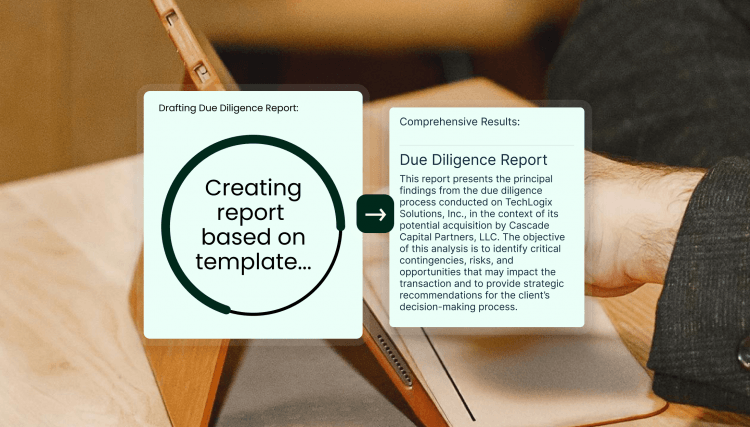
Learn more about Vincent Studio.
DMS Integrations: Securely connect your documents to Vincent’s legal AI
Moving sensitive documents from a document management system to an AI platform has traditionally required manually downloading files to local devices. We removed that friction with direct integrations for iManage, NetDocuments, SharePoint, and Google Drive.
By letting users select documents directly from their firm’s existing DMS folder structure, data stays within the firm’s secure environment and never touches local hardware. Teams can seamlessly analyze case facts alongside the law to generate context-aware outputs grounded in the details of each matter.

Learn more about DMS Integrations.
Legal Pad: Draft, refine, and finalize work with AI in one place
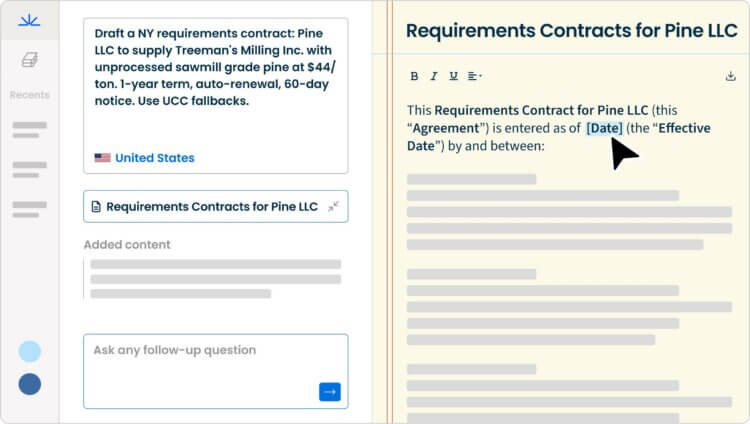
Moving AI-generated research into a separate document often requires a manual process of copying and pasting fragmented outputs. Legal Pad removes this hurdle by providing a lightweight, side-by-side editing space directly within the Vincent interface.
Attorneys can now perfect ideas and refine strategy in real-time, working collaboratively with Vincent to turn raw analysis into a cohesive first draft. Your draft can then be exported for final formatting in your preferred world processor.
Vincent on Mobile: Legal AI for work beyond the desk
Legal work frequently takes you away from your desk, but your access to legal AI shouldn’t be left behind. The Vincent by Clio mobile app brings the full power of AI to your phone, allowing you to use Vincent from the courtroom, between meetings, or while traveling.
The app introduces mobile-native features like document capture and voice dictation to help you work on the go. Use your camera to instantly upload and analyze physical documents, or trigger complex research with your voice. These tools make your transition from the office to the field seamless.

Download the app from the App Store. Download the app from the Google Play Store.
Goal-oriented Vincent: A partner for legal outcomes
Lawyers tend to work toward outcomes rather than piecing together disconnected tasks. Vincent by Clio now features a sophisticated skills infrastructure that allows it to act as a collaborative partner focused on achieving your overall goals.
Describe your desired outcome and Vincent will autonomously plan and execute multi-step legal tasks end-to-end, utilizing the existing capabilities from its standalone workflows. You maintain full visibility and control as Vincent shows you exactly how it is progressing toward your objective.
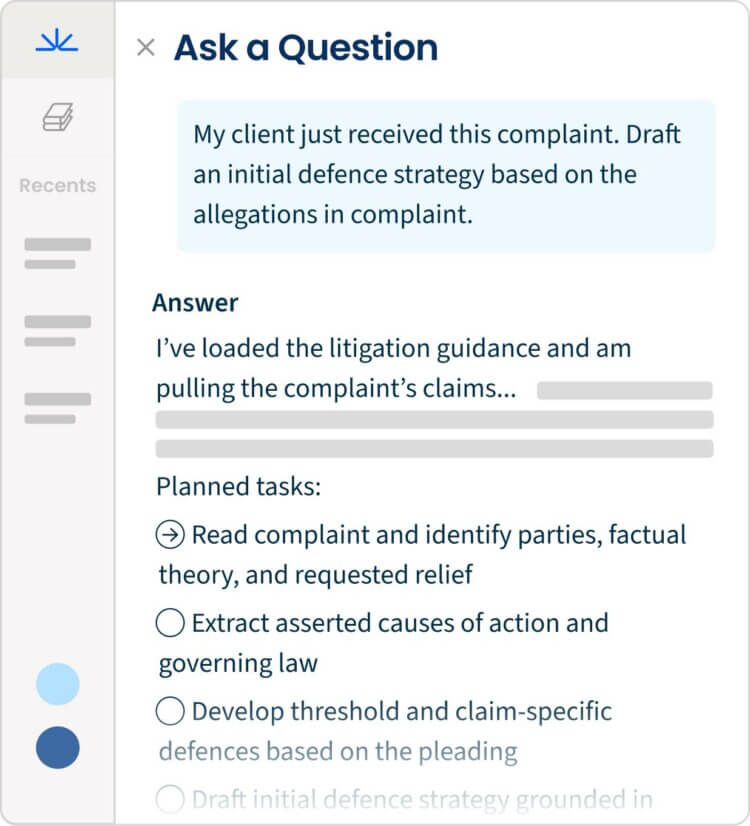
Learn more about Vincent’s agentic capabilities.
Performance & Precision
Studio Asset Management: Publishers can now add up to 10 files directly from document collections as Workflow Assets, removing the need for manual downloads.
Optimized PDF Processing: We have significantly increased the speed and reliability of our document processing engine to better support high-volume analysis.
| File Size | Previous Processing Time | New Processing Time | Time Saved |
| 1–10 MB | 12 seconds | 7 seconds | 5 seconds (42%) |
| 10–100 MB | 48 seconds | 27 seconds | 21 seconds (44%) |
| 100+ MB | 190 seconds | 70 seconds | 120 seconds (63%) |
Enhanced Table Navigation: Vincent Tables now defaults to 25 rows per page to provide a more responsive experience during complex document reviews.
Interface Enhancements: We have implemented subtle UI updates across the platform to streamline navigation and improve overall ease of use.
Richer Source Coverage for Vincent: We have added 29 new U.S. research sources, including Congressional Bills and Ethics Opinions, alongside significant data pipeline improvements for our international libraries in Canada, Belgium, and Latin America.
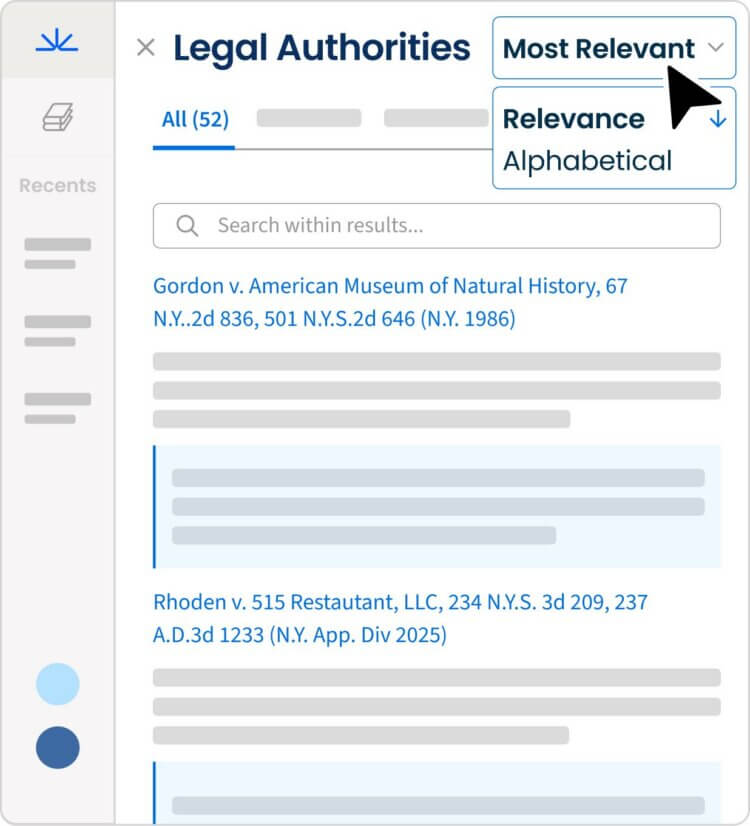
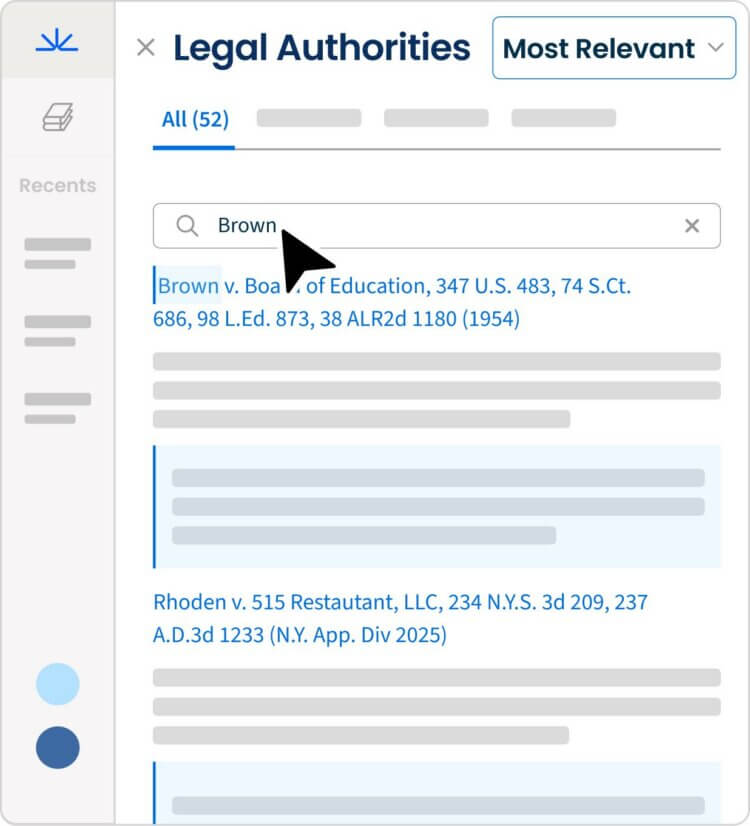
Advanced Authorities Sorting: Attorneys can now sort retrieved authorities by relevance or alphabetically and can pinpoint specific terms instantly with the “Search within Results” feature.
|
|

|
Governance & Security
Collection Sharing Warnings: An intercept warning now appears when a user attempts to share a document collection organization-wide to prevent the accidental exposure of sensitive data.
Ownership Transparency: Users can instantly identify the creator of a shared collection by hovering over the permissions column for better internal accountability.
External URL Verification: We have added a verification step for external links generated by Vincent to ensure attorneys confirm the destination before navigating away from the platform.
We’re excited to see how your team uses these new tools to push the boundaries of your practice. See you next month for our April update!