

The intelligent legal work platform for large law

Each matter draws on the law we publish, the record your firm has built, and the way your best lawyers already work.

Person in a blue suit holding a silver laptop.
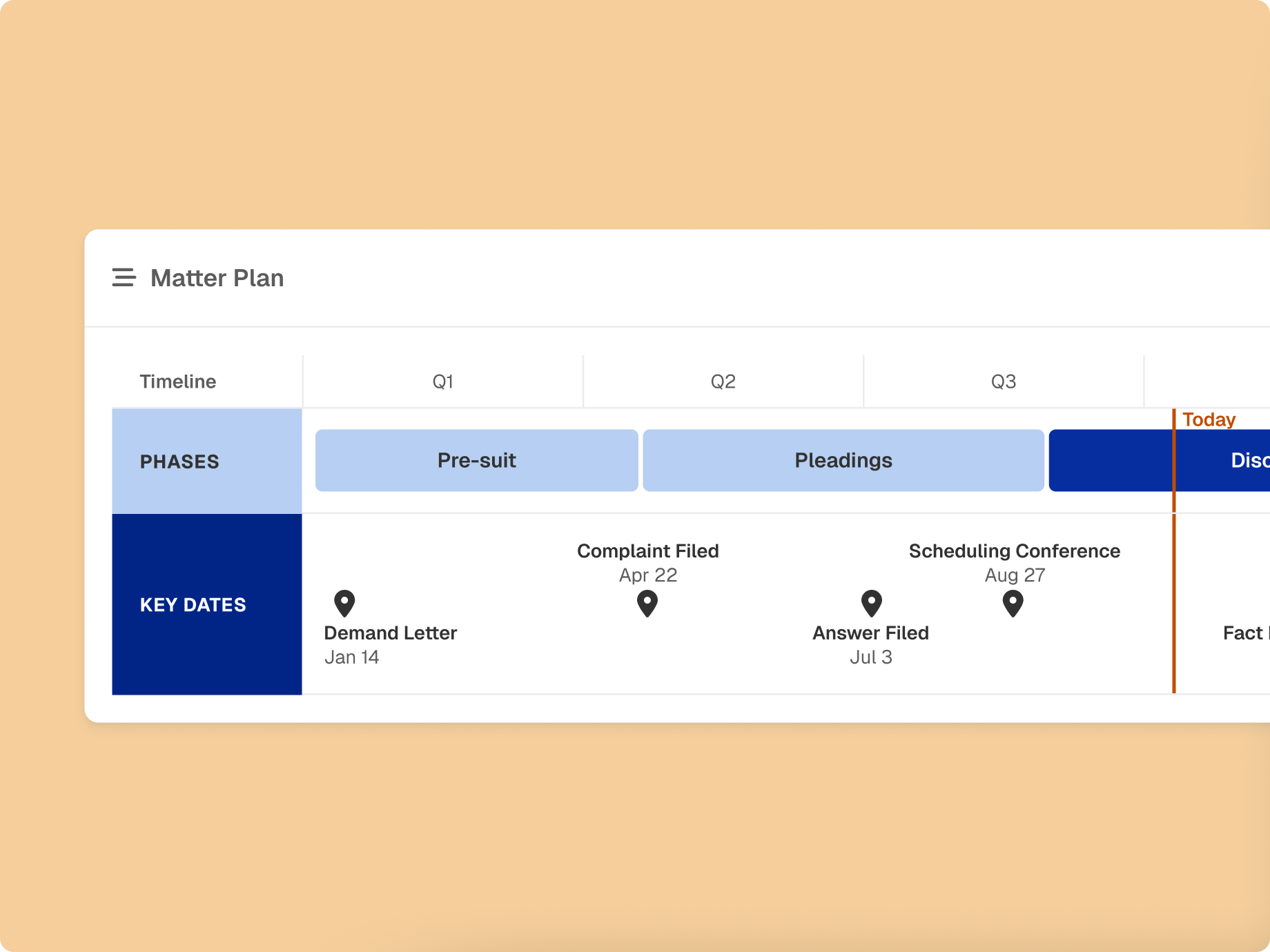
A Matter Plan timeline showing legal phases (Pre-suit, Pleadings) and key dates like Demand Letter and Complaint Filed.

Clio Operate

Every matter starts from where your best lawyers would

Your firm has a way of running matters: the order of the work, the checks and balances, the standards each practice holds.

Clio Operate turns that approach into the system the work runs on, so matters move the way your firm intended and each practice adapts it to its own jurisdictions and work types.
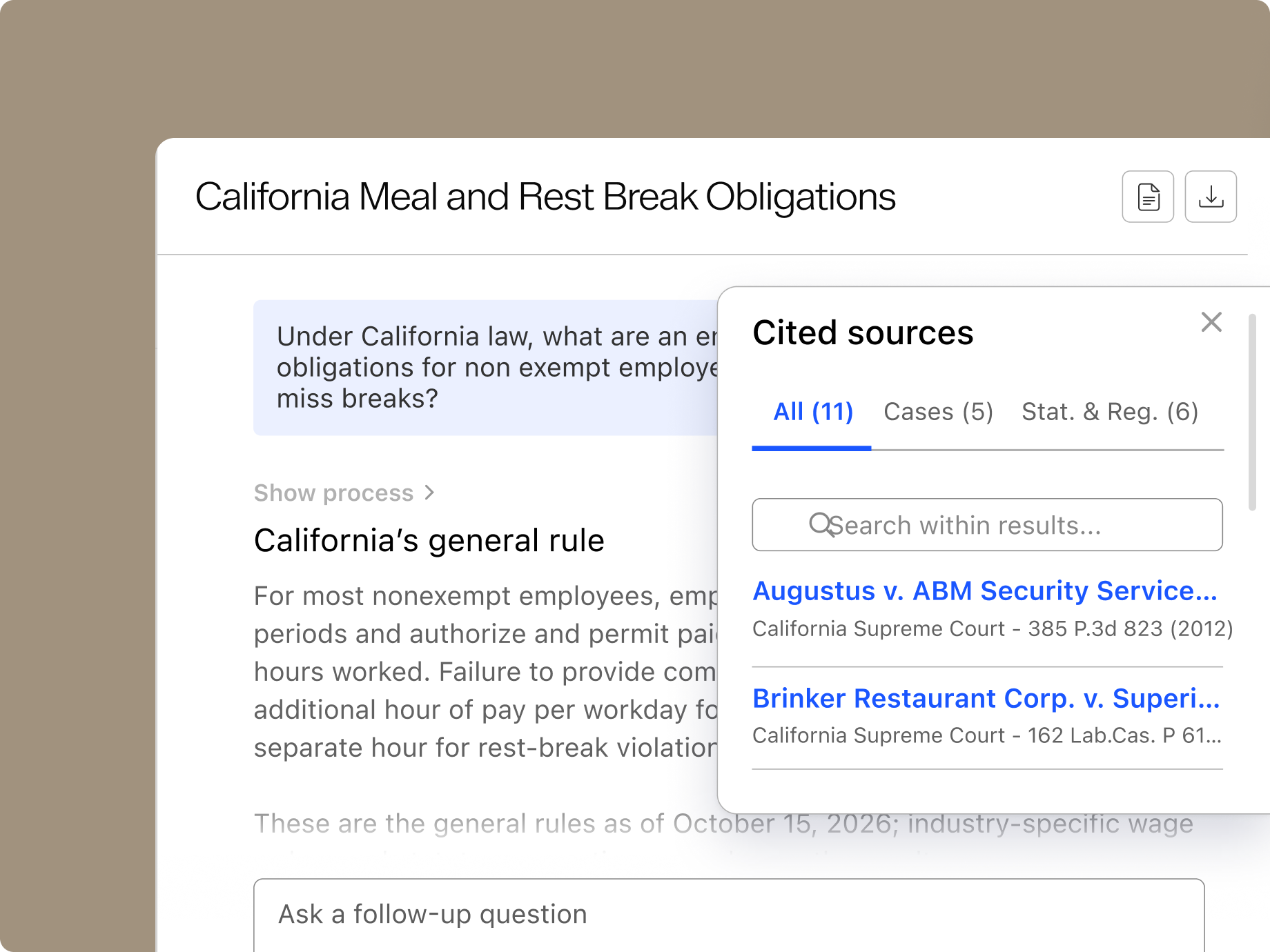

A document titled "California Meal and Rest Break Obligations" with an overlapping "Cited sources" pop-up listing legal cases.

Vincent

Give your lawyers more to reason from

Your firm holds decades of judgement: in closed matters, in separate systems, in the heads of your best lawyers.

Vincent reasons from the law Clio publishes, the matter in front of it, and the way your teams work. Your lawyers start from what the firm already knows.

Handle matters from intake to resolution in one platform

Move the work without chasing it

Workflows and business rules carry each matter to its next stage. Vincent prepares the next steps and writes results back to the file once a lawyer approves them.

Keep permissions on the matter

Govern the work once. Set permissions, information barriers, and rules for using Vincent in the work type, and every matter follows them.

Reason from current, citable law

Vincent reasons from the primary law Clio publishes and updates daily, checks that an authority still stands, and matches it to the relevant matter.

Track progress, capacity, and profitability

See where matters sit in their lifecycle, utilisation rates, and how profitable the work is.

Where large law firms like yours start

Work that starts from the matter

Vincent reasons over the statements of case, chronology, and documents already on the file in Clio Operate, so your lawyers are not re-briefing a research tool each session and the findings save to the matter.

Review that holds one standard across the team

Vincent applies your firm’s review playbook across the documents on the matter and sets the findings out in one grid, so twenty reviewers work from the same columns and definitions rather than twenty standards.

Drafts that arrive in your firm’s form

Vincent builds a first draft from the evidence on the file and the authority supporting it, shaped by the standard your practice group has set, so the lawyer applies judgement to a sourced draft rather than a blank page.

I think with standardization comes, essentially, consistency. A high quality of work no matter what office is performing that work, no matter what attorney is performing that work.

Evan Shenkman

Former Chief Knowledge and Innovation Officer, Fisher Phillips LLP

FAQ

What is large law firm software?

Large law firm software is the system a firm’s legal work runs on, from instruction through to resolution, coordinating the people, deadlines, reviews, and approvals that keep matters moving. What separates Clio from competitors is the depth of context it gives AI to reason from: the law, the matters, and the firm’s own way of working.

How do Clio Operate and Vincent work together?

Clio Operate structures how matters run, and Vincent is built into it. Vincent reasons from the matter’s governed context, performs legal analysis within the workflow, and writes approved work back to the matter at the lawyer’s direction.

Can Clio integrate with our existing systems?

Yes. Clio Operate is API-first, with 40+ pre-built integrations and 400+ REST API endpoints for custom work. Vincent reasons over documents in iManage, NetDocuments, SharePoint, and Google Drive where they already live.

Can different practice groups work differently?

Yes. Matters can be configured by practice, jurisdiction, role, and work type, including how AI is used. AI can be switched on or off at different levels and governed to the same standard as the rest of the firm’s work.

Can Clio support firm playbooks and knowledge management?

Yes. Custom skills and review playbooks let teams encode approved instructions for recurring legal tasks and share them with the people who need them. Reviewers decide whether prior work fits the current matter.

How can lawyers verify Vincent’s work?

Vincent cites the authority behind its analysis, with links back to the primary law Clio publishes and updates daily. Judicial consideration shows whether an authority still stands, and outputs drawing on your own documents point to the material they used.

What does implementation involve?

Implementation is planned around the work being modelled, the systems involved, data migration, governance, and organisational change. Talk to sales to scope it for your firm.

Is Clio secure for large law firms?

Yes. Security certifications, data handling, and sub-processor detail are documented on Clio’s trust and security page.

Person in a pinstripe jacket entering a car in a city.

Start with one matter type