Family Law

Keep one family law record through negotiation, court, and variation

Clio is the legal AI platform for family law matters that move between advice, disclosure, negotiation, mediation, court, enforcement, and variation. The family, financial, safety, document, deadline, and communication history stays available as the route changes.

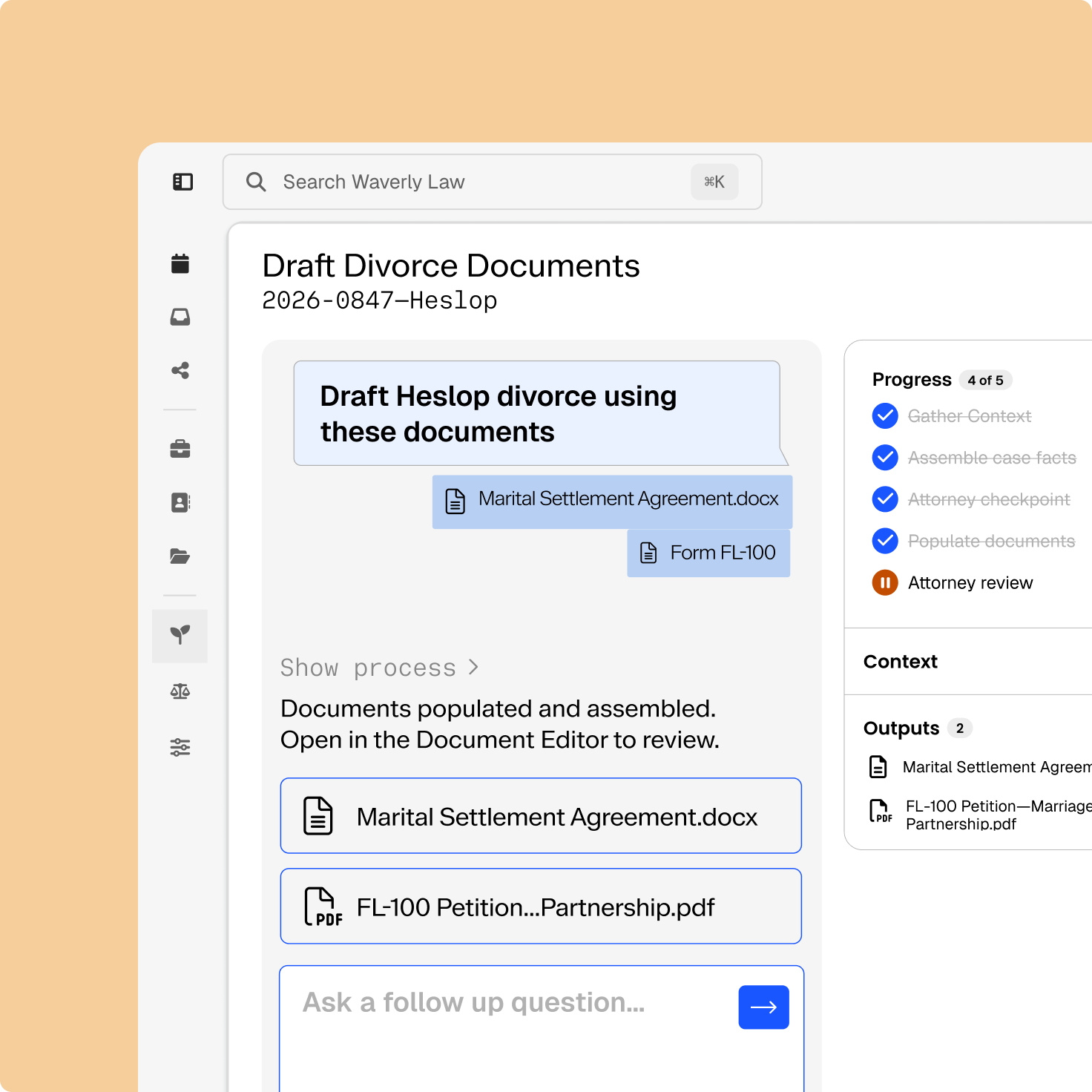
Legal AI interface for drafting divorce documents, showing populated forms and a progress tracker.

Handle urgent onboarding, disclosure, drafting, and follow-through on one matter

Capture family, safety, financial, and court context at onboarding

Use tailored client onboarding, related contacts, custom fields, conflict search, and matter permissions to record the people, relationships, children, assets, income, existing orders, urgent concerns, and upcoming dates that shape the matter.

Keep disclosure organised as the financial picture develops

Collect records securely, connect each document to the person, asset, debt, period, or issue it concerns, assign follow-up, and keep the source beside any chronology or summary Clio’s legal AI prepares for your review.

Prepare agreements, applications, statements, and court forms

Carry approved party, child, financial, and matter details into reusable templates, and pre-fill English, Welsh and Scottish court forms through the FormEvo integration. Prepare agreements, applications, witness statements, or client letters for professional review.

Turn agreements and orders into clear follow-through

Keep obligations, dates, tasks, communication, billing, client account activity, and payment tied to the agreement or order that created them, with the history ready for enforcement or variation.

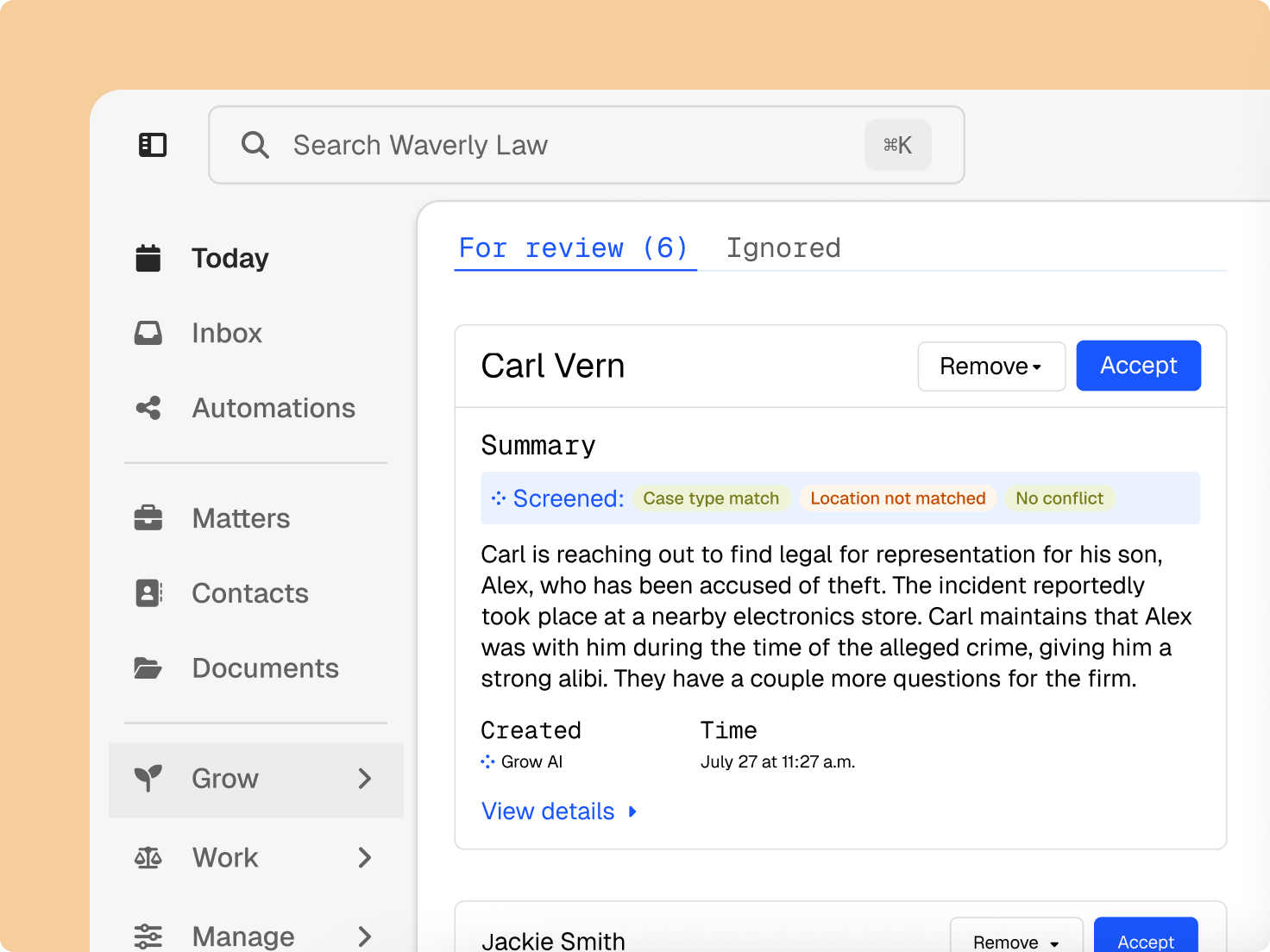
A legal software dashboard showing a client lead summary for a theft case, with options to accept or remove, and a sidebar navigation.

See the family, financial, and safety picture before choosing the route

A client may call after a separation, a dispute over child arrangements, a safeguarding concern, unpaid maintenance, or a proposed relocation. Some arrive with years of court history; others have nothing in writing. Either way, the first job is to build a reliable picture of the family, the immediate risk, and the decisions that cannot wait.

Clio starts that family record before the consultation. Tailored onboarding forms collect relationships, living arrangements, children, key dates, financial context, and upcoming court events. Those answers support conflict checks and engagement documents, then carry into the opened matter once the client instructs the firm.
What can you do with Clio’s family law software?

Turn disclosure into a financial record you can work from

Financial disclosure builds in fragments. Tax returns may arrive before bank statements. A business valuation gets delayed. Payslips change. One account leads to another request. Your firm is still expected to advise and negotiate while the picture is moving.

Clio gives that work one place to take shape. Clients upload records through the secure portal, and Clio’s legal AI can read them, summarise the key figures in a table, and flag gaps or inconsistencies for your review. Your firm organises each document by person, asset, debt, or issue, and the source documents stay with the matter.

Change legal routes without splitting the history

A family matter can change routes more than once. Early negotiation may lead to mediation. An interim issue may require court. A partial agreement may settle child arrangements while maintenance or property continues. The record has to follow those changes without turning each route into a separate version of the matter.

Clio keeps offers, mediator correspondence, expert material, applications, court documents, hearing notes, and client instructions with the same matter. Matter stages and task lists show where each issue stands — collecting disclosure, negotiating, preparing for mediation, filing, awaiting a hearing, or implementing an order.

Let every agreement and order create the follow-through

An agreement or order may resolve the immediate issue, but it also creates a new set of work: property transfers, maintenance payments, child arrangements, disclosure obligations, review dates, and filing steps.

Clio’s legal AI can read the agreement or order and prepare draft calendar events from the dates it finds, for your review. Your firm’s matter templates and workflows turn the rest into assigned tasks and matter stages, with the source document kept beside the work it created.

Give clients clear updates without widening access

Family law clients may be anxious, sharing devices, living under the same roof, or relying on relatives for practical help. In that setting, the way the firm communicates is part of protecting the client. A casual email thread can reveal more than intended.

Clio gives the firm a controlled place to share approved documents, messages, appointments, court dates, invoices, and payment links. Permission controls determine what each participant can access, and the communication history stays with the case, so your firm sees what was explained and what still needs an answer.

If I weren’t allowed to use this anymore, I might leave the practice of law. It’s actually made the practice of law fun again. My revenue has increased several thousand dollars per month.

Frank R. Mead

Lorona | Mead, PLC

Family Law Software FAQs

What is family law software?

Family law software helps firms manage client onboarding, family and financial information, documents, disclosure, court dates, client communication, billing, client account, and payments. In Clio, that same record powers the full family law workflow. The matter can move through negotiation, mediation, court, implementation, enforcement, and variation without rebuilding the history in separate systems.

How is Clio different from standalone family law legal software?

Clio was built so the family record, financial evidence, authoritative legal intelligence, documents, deadlines, communication, billing, payments, and client account activity work from one shared foundation. That context lets Clio prepare work for legal review and return the approved work to the matter. The record becomes more useful each time the family circumstances or legal route changes.

Can Clio help with divorce, child arrangements, maintenance, and family court documents?

Yes. Clio can turn the firm’s approved Word documents into reusable templates, apply conditional logic, manage versions, and send documents for electronic signature. English, Welsh and Scottish family court forms — including the C100, Form A and Form E — can be pre-filled from Clio matter data through the FormEvo integration, which is free to connect on any Clio plan and requires a FormEvo subscription. Your firm reviews every agreement, child arrangements order, application, witness statement, and filing package before use.

Can Clio support financial disclosure in family law cases?

Yes. Clients upload records through the secure portal, and Clio’s legal AI can read them, summarise the key figures in a table, and flag gaps or inconsistencies for your review. Custom fields, secure document requests, folders, and task lists organise the rest and track what remains outstanding. For financial remedy proceedings, a Form E can be pre-filled from Clio matter data through the FormEvo integration. Maintenance analysis, valuation, and legal judgment remain with your firm and any appropriate experts.

Does Clio include family law legal research?

Yes. Clio’s legal AI researches the Children Act 1989, the Matrimonial Causes Act 1973, the Family Procedure Rules, and case law on child arrangements, maintenance, and financial remedies, with Scotland searchable separately. It returns cited authority for you to evaluate and apply.

Book a walkthrough.

Does Clio support client account handling for family law retainers under the SRA Accounts Rules?

Yes. Clio manages client money directly, keeping client and office accounts on separate ledgers and logging every transaction against the right client and matter. You can run the client trial balance, cashbook, ledger, overdrawn and dormant balances reports, and a full audit log of every change. On a matter that runs for months, that keeps the retainer and the legal work on the same record. Your accountant builds the five-week reconciliation and the annual accountant’s report from that data. Scotland is supported under the Law Society of Scotland rules, including a Float report for firm’s interest in trust.

Let the record hold steady when the route changes

See how Clio supports family law work from urgent onboarding through disclosure, agreement, court, implementation, and future variation.