Family Law

Keep one family law record through negotiation, court, and modification

Clio is the legal AI platform for family law matters that move between advice, disclosure, negotiation, mediation, court, enforcement, and modification. The family, financial, safety, document, deadline, and communication history stays available as the route changes.

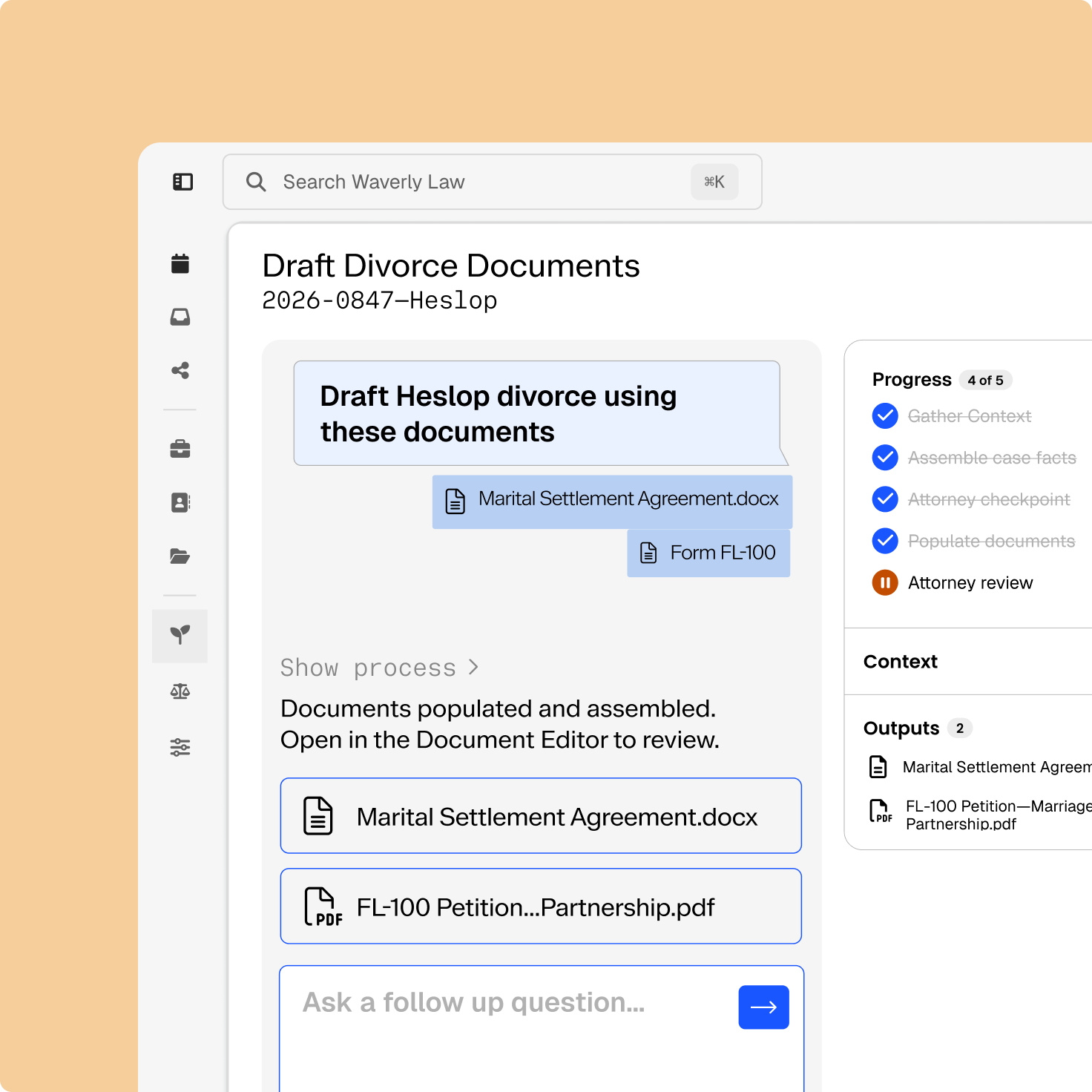
Legal AI interface for drafting divorce documents, showing populated forms and a progress tracker.

Handle urgent intake, disclosure, drafting, and follow-through in one matter

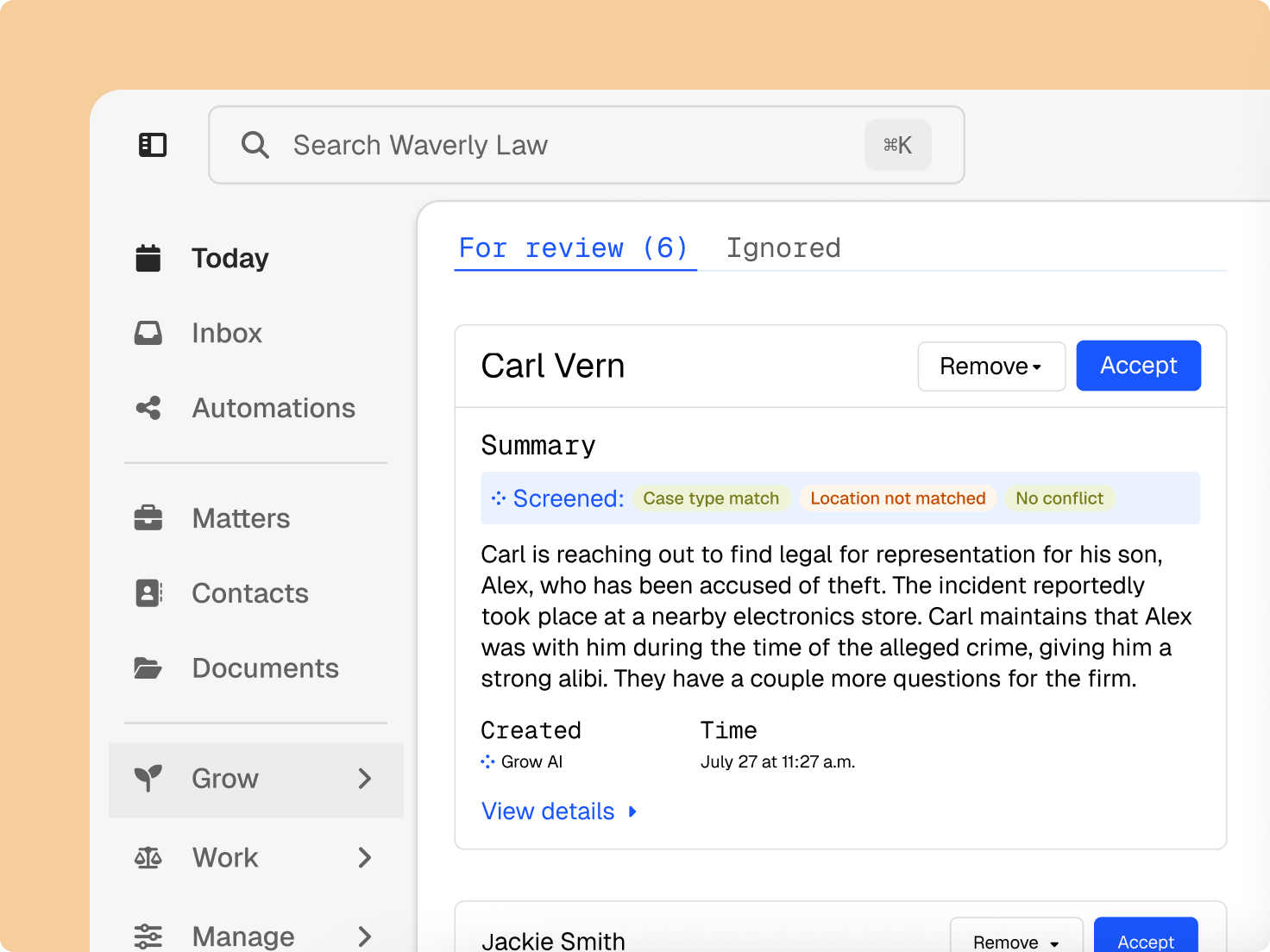
Capture family, safety, financial, and court context at intake

Use tailored intake, related contacts, custom fields, conflict search, and matter permissions to record the people, relationships, children, assets, income, existing orders, urgent concerns, and upcoming dates that shape the matter.

Keep disclosure organized as the financial picture develops

Collect records securely, connect each document to the person, asset, debt, period, or issue it concerns, assign follow-up, and keep the source beside any chronology or summary Clio’s legal AI prepares for your review.

Prepare agreements, pleadings, affidavits, and supported forms

Carry approved party, child, financial, and matter details into reusable templates. Prepare custom agreements, motions, affidavits, parenting provisions, or client letters for professional review.

Turn agreements and orders into clear follow-through

Keep obligations, dates, tasks, communication, billing, trust accounting, and payment tied to the agreement or order that created them, with the history ready for enforcement or modification.

A legal software dashboard showing a client lead summary for a theft case, with options to accept or remove, and a sidebar navigation.

See the family, financial, and safety picture before choosing the route

A client may call after a separation, a sudden parenting dispute, a protection concern, a missed support payment, a proposed move, or a change to an existing order. Some arrive with years of agreements and court history. Others have nothing in writing. Either way, the first job is to build a reliable picture of the family, the immediate risk, and the decisions that cannot wait.

Clio starts that family record before the consultation. Tailored intake forms collect family relationships, living arrangements, children, key dates, financial context, existing documents, and upcoming court events. Those answers support conflict checks and engagement documents, then carry into the opened case once the client retains the firm.

What can you do with Clio’s family law software?

Turn disclosure into a financial record you can work from

Financial disclosure builds in fragments. Tax returns may arrive before bank statements. A business valuation gets delayed. Pay records change. One account leads to another request. Your firm is still expected to advise and negotiate while the picture is moving.

Clio gives that work one place to take shape. Clients upload records through the secure portal, and Clio’s legal AI can read them, summarize the key figures in a table, and flag gaps or inconsistencies for your review. Your firm organizes each document by person, asset, debt, or issue, and the source documents stay with the case.

Change legal routes without splitting the history

A family case can change routes more than once. Early negotiation may lead to mediation. An interim issue may require court. A partial agreement may settle parenting while support or property continues. The record has to follow those changes without turning each route into a separate version of the case.

Clio keeps offers, mediator correspondence, expert material, pleadings, court documents, hearing notes, and client instructions with the same case. Case stages and task lists show where each issue stands — collecting disclosure, negotiating, preparing for mediation, filing, awaiting a hearing, or implementing an order.

Let every agreement and order create the follow-through

An agreement or order may resolve the immediate issue, but it also creates a new set of work: property transfers, support payments, parenting schedules, disclosure obligations, review dates, and filing steps.

Clio’s legal AI can read the agreement or order and prepare draft calendar events from the dates it finds, for your review. Your firm’s matter templates and workflows turn the rest into assigned tasks and case stages, with the source document kept beside the work it created.

Give clients clear updates without widening access

Family law clients may be anxious, sharing devices, living under the same roof, or relying on relatives for practical help. In that setting, the way the firm communicates is part of protecting the client. A casual email thread can reveal more than intended.

Clio gives the firm a controlled place to share approved documents, messages, appointments, court dates, invoices, and payment links. Permission controls determine what each participant can access, and the communication history stays with the case, so your firm sees what was explained and what still needs an answer.

Clio has provided us with a vast number of tools to improve the service we provide our clients. It’s difficult to imagine returning to a practice that doesn’t include Clio and also permits us to serve our clients as well as we do!

Beau Atkins

Evolve Family Law

Family Law Software FAQs

What is family law software?

Family law software helps firms manage intake, family and financial information, documents, disclosure, court dates, client communication, billing, trust accounting, and payments. In Clio, that same record powers the full family law workflow. The case can move through negotiation, mediation, court, implementation, enforcement, and future modification without rebuilding the history in separate systems.

See Clio in action.

How is Clio different from standalone family law legal software?

Clio was built so the family record, financial evidence, authoritative legal intelligence, documents, deadlines, communication, billing, payments, and trust accounting activity can work from a shared foundation. That shared context lets Clio prepare work for legal review and return the approved work to the case. The record becomes more useful each time the family circumstances or legal route changes.

Can Clio help with divorce, parenting, support, and family court documents?

Yes. Clio can turn the firm’s approved Word documents into reusable templates, populate fillable family court forms for British Columbia and Ontario from client and case data, apply conditional logic, manage versions, and send documents for electronic signature. Your firm reviews every agreement, parenting plan, pleading, affidavit, and filing package before use.

Book a demo.

Can Clio support financial disclosure in family law cases?

Yes. Clients upload records through the secure portal, and Clio’s legal AI can read them, summarize the key figures in a table, and flag gaps or inconsistencies for your review. Custom fields, secure document requests, folders, and task lists organize the rest and track what remains outstanding. Valuation, support analysis, and legal judgment remain with your firm and any appropriate experts.

Book a demo.

Does Clio include trust accounting for family law retainers?

Yes. Clio tracks trust and operating accounts on separate ledgers as Canadian regulators require, logging every deposit, transfer, disbursement, and refund against the right client and matter. Request the initial retainer, set an evergreen threshold for low balances, apply trust funds to invoices, and reconcile against your bank statement in Clio. On a matter that runs for months, that keeps the retainer and the legal work on the same record. Your firm remains responsible for compliance with its law society’s requirements.

Book a demo.

Does Clio include family law legal research?

Yes. Clio’s legal AI researches the federal Divorce Act, provincial family law statutes, and case law on custody, support, and property division across every province except Quebec. It returns cited authority for you to evaluate and apply.

Book a demo.

Let the record hold steady when the route changes

See how Clio supports family law work from urgent intake through disclosure, agreement, court, implementation, and future modification.