
Gather the family picture first
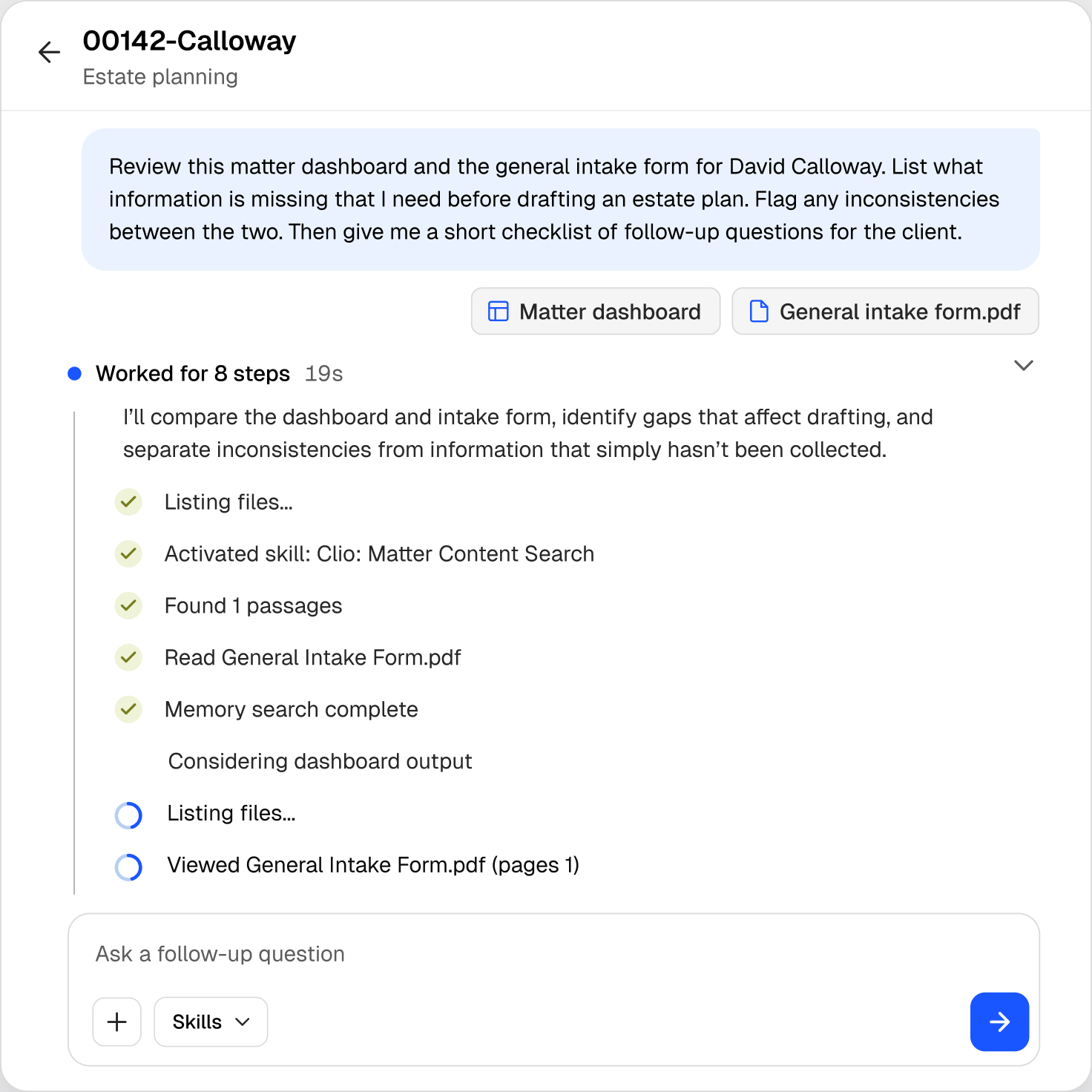
Collect family, asset, and beneficiary details through online intake forms and questionnaires that populate the matter record.
Collect family, asset, and beneficiary details through online intake forms and questionnaires that populate the matter record.
Generate wills, trusts, powers of attorney, and directives from the client’s approved answers, with conditional logic keeping each instrument consistent.
Pull up the last signed set and prior versions when a client returns after a marriage, birth, or sale, then revise only what’s affected.
Start a probate matter for the executor or estate trustee with the will, earlier advice, and related contacts already in Clio, tracked through matter stages and trust accounting.
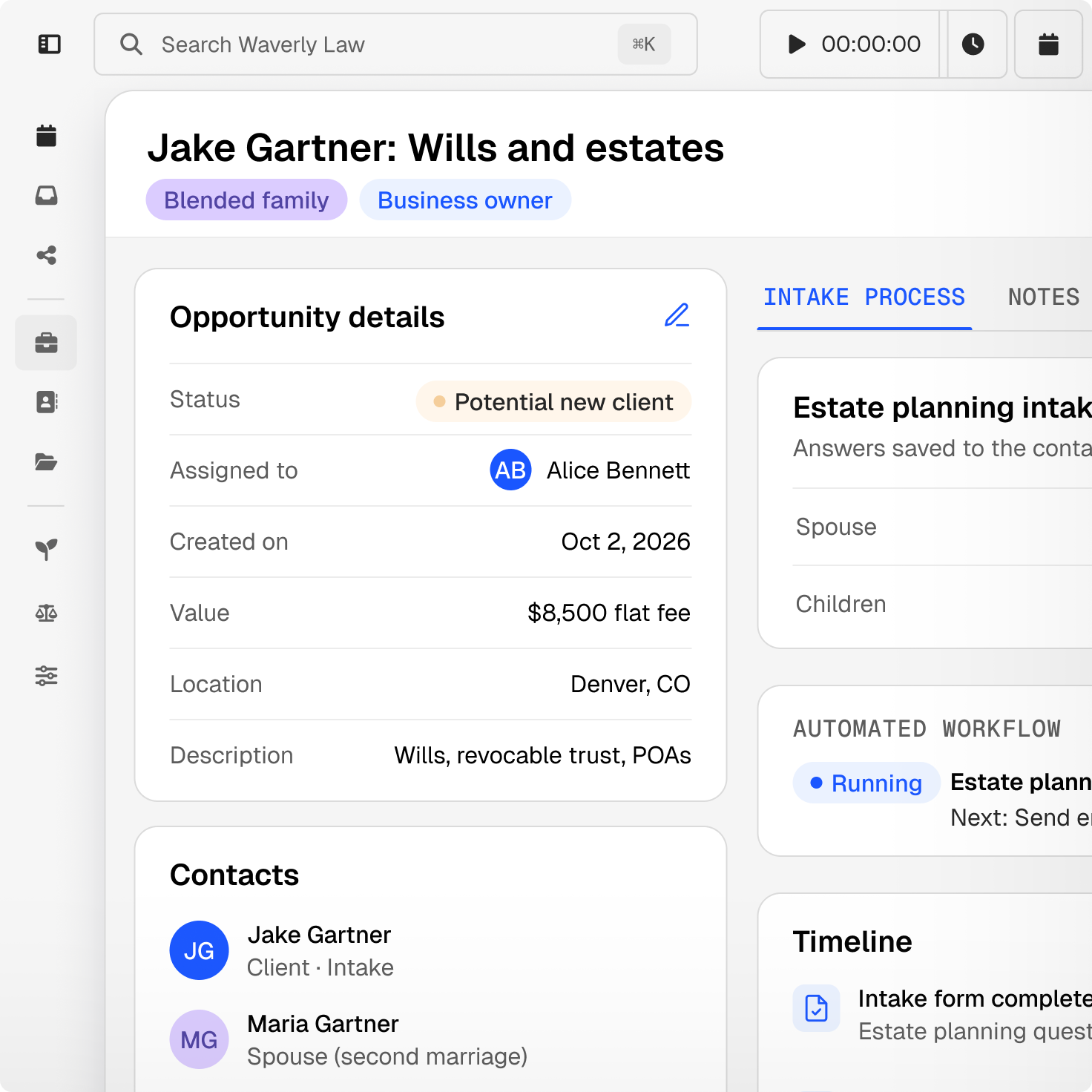
A first meeting can surface a blended family, a closely held business, and doubts about capacity. Online intake and related contacts record each spouse, child, executor, and trustee on the matter, and you decide how the plan treats them.
Matter permissions stay in force when the platform helps prepare the work. Firm data is not used to train third-party models, and cited research, drafts, and proposed next steps remain available for professional review before use.

Clio fills every document from your document templates and one client questionnaire, or Clio’s legal AI prepares a draft from the matter. You approve the language.
Capacity standards, witness requirements, and trust rules vary across jurisdictions. Clio researches your question across the provinces you choose and returns cited authority. You weigh how each source applies to the client’s plan.
Years later, a second marriage or a business sale can change what the plan must do. The last signed set and its prior versions stay on the matter, and Clio summarizes the file. You decide what to update.
After a client’s death, the will and earlier advice are already in Clio when the executor’s estate matter opens. Matter stages and task lists move notices, inventory, and distributions forward, and Estateably can import fiduciary and beneficiary details for accounting. You direct each step.
legal professionals trust Clio
law societies and bar associations recognize Clio
average rating across 13,000+ reviews
I’m earning about 40% more revenue per month based on the same amount of time and effort. A lot of that has to do with my ability to seamlessly flow clients from intake through to resolving their case.
Robert Jewett Law PLLC
It’s a system that holds an estate client’s family, fiduciaries, assets, documents, deadlines, and billing on one matter. Clio adds legal AI that prepares documents from that record, researches provincial law, and summarizes the file when the client returns, and each result goes to the lawyer for review. That history is there when an executor later needs help with probate.
Clio connects the documents you draft to intake answers, related contacts, cited research, deadlines, client messages, billing, and trust accounting on a single matter, so nothing is re-entered when an administration matter opens. Clio’s legal AI works from that shared context, and your firm approves everything it creates.
Your firm’s own wills, trusts, powers of attorney, representation agreements, health care directives, and client letters become reusable templates, filled from one questionnaire with conditional logic. Clio’s court forms library includes probate and estate administration forms for British Columbia and Ontario, and Clio can prepare a draft from the matter for unusual provisions. You review every instrument, and wills follow your province’s signing and witnessing rules.
Yes. Custom fields hold dates of birth, dates of death, asset details, and fiduciary roles, and related contacts link each spouse, child, executor, trustee, and beneficiary to the matter. Clients upload deeds, statements, and existing plans through the secure portal. When the file reopens, Clio can summarize those records for your review.
Yes. Clio’s legal AI covers federal and provincial law on testamentary capacity, trusts, guardianship, powers of attorney, and estate administration, including statutes such as Ontario’s Succession Law Reform Act and British Columbia’s Wills, Estates and Succession Act. Ask a question such as the witness requirements for a valid will, and it compares the provinces you select with cited authority. You evaluate each source before relying on it.
Yes. Calendaring keeps court dates, filing deadlines, and review dates on the matter, and Clio can read a court notice and propose calendar events that you confirm. Task lists track each probate filing on the estate matter. Your firm checks every date and filing before it goes out.
Yes. Clio keeps trust and operating funds on separate ledgers and records each deposit, transfer, and disbursement for the correct client and matter. Request a retainer by payment link, get an alert when an evergreen balance drops below your threshold, pay invoices from trust, and reconcile bank records, client ledgers, and trust balances together. Your firm remains accountable to the trust rules of its law society.
Yes. Clio connects with estate planning tools such as DecisionVault, Vaultie, and Gavel. Firms that handle administration can also connect Estateably for probate and fiduciary accounting work.