
Shape each matter to the work
Set up custom fields, tasks, documents, and deadlines for the work in front of you. An estate and a lease don’t have to follow the same steps.
General practice law
Clio is the legal AI platform for general practice firms whose work spans several areas of law. Intake, documents, cited research, drafting, billing, and trust accounting all stay connected, while each matter keeps the structure it needs.
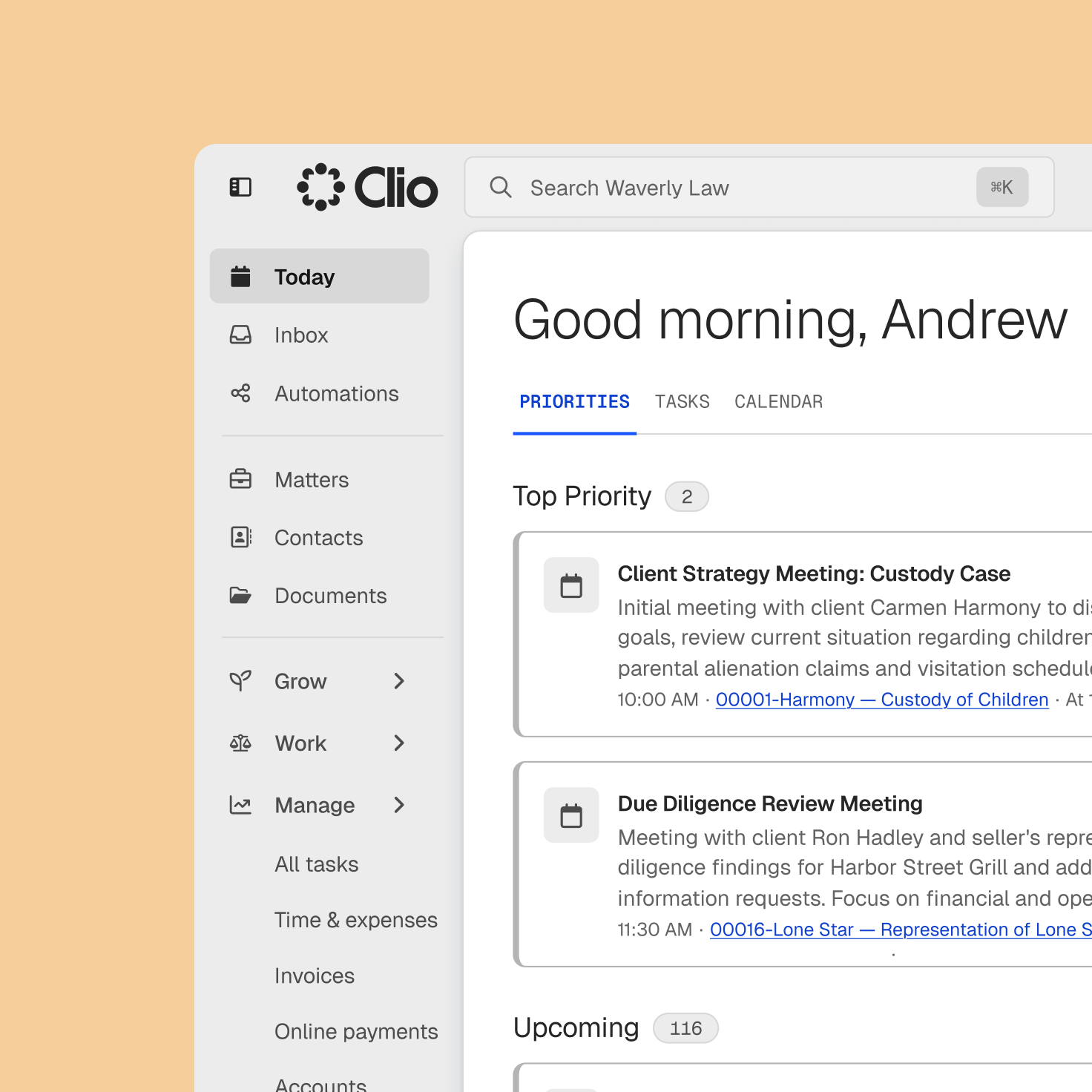
Set up custom fields, tasks, documents, and deadlines for the work in front of you. An estate and a lease don’t have to follow the same steps.
Save engagement letters, retainer agreements, questionnaires, and forms as templates once, then reuse them across matters. Legal advice and final review stay with you.
Clio’s legal AI can help you research an unfamiliar issue, review cited authority, analyze supporting documents, and prepare first drafts, with the matter’s facts and sources already in view.
Retainers, secure messaging, time tracking, billing, and trust activity stay aligned across every practice area, from the first email to the final payment.
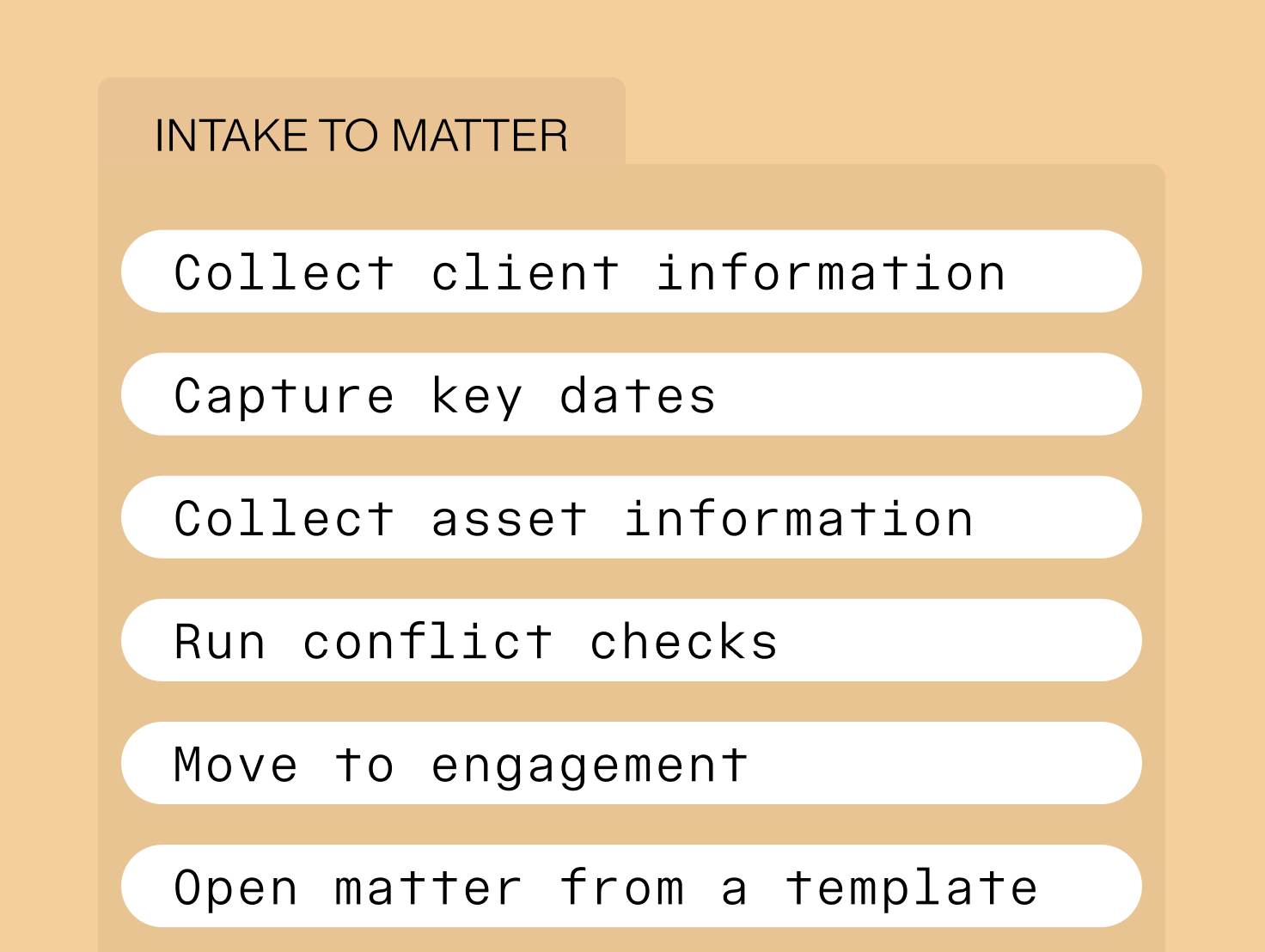
A business dispute can turn on a lease, and a family question can surface an outdated estate plan. Clio carries what you learn at intake into case management, and you decide what kind of matter to open once the scope is clear.

General practice brings statutes and procedures you haven’t handled before. With Clio, each question starts from what’s already on the matter. Legal research returns cited authority you can open and verify, and lets you compare how a rule applies across provinces in one table.
Engagement letters, leases, and wills follow a familiar pattern in your templates, while the facts inside them change with each client. Drafting prepares a first version of the demand letter, agreement, or planning document from the matter, for your review.
The next date can arise from a contract, a court rule, a closing condition, or a client commitment, and each needs an owner on the matter. Custom deadline sets put court and contract dates on the calendar with tasks and reminders, and Clio’s legal AI turns orders and notices into draft events.
Fee arrangements in a general practice vary as much as the work does, yet every invoice and trust balance still has to add up. Set hourly, flat-fee, or contingency fees on each matter, with billing and trust accounting kept in step across the firm.
legal professionals trust Clio
law societies and bar associations recognize Clio
average rating across 13,000+ reviews
Clio has streamlined our timekeeping and shaved time off our billing. The communication tools and e-sign options have allowed us to effectively manage our cases from a single platform rather than spreading across multiple platforms.
Managing Attorney, Donaldson Stewart, P.C. (Arizona)
General practice law software, sometimes called general law software, is legal practice management software for firms that handle several kinds of legal work. Wills, family matters, disputes, contracts, and real estate all run in one system. Intake, documents, deadlines, billing, and trust stay consistent, while each matter follows its own structure.
Standalone legal case management tools tend to cover one slice of the work, such as calendaring or time tracking, and leave the rest to other systems. In Clio, intake, deadlines, cited research, drafting, client communication, billing, and trust accounting share one record, so when a client who came in for a will returns with a lease dispute, the history is already there.
Clio includes fillable court forms for family and probate work in British Columbia, Ontario, and Alberta, plus a library of templates by province and practice area. Clio updates each form when the court revises it. For other work, such as civil pleadings and real estate documents, your firm automates its own templates.
Yes. You can screen new inquiries with tailored intake forms that collect the people involved, the client’s objective, key documents, urgency, and important dates, often before the matter type is clear. The conflict check and the engagement then happen on that same record, so nothing is retyped when the inquiry becomes a matter. You decide who to take on and how to structure the work.
Yes. When a matter takes you into an unfamiliar statute or procedure, Clio’s legal AI researches it against cited sources matched to the jurisdiction, with the client’s facts and documents at hand. You can also line up a rule across provinces in a single table, then open each citation and weigh it before you advise.
Yes. Custom deadline sets put the dates that follow a trial date, a discovery deadline, or a motion hearing on the calendar beside the order or notice that created them, with tasks and reminders for the people doing the work. Clio’s legal AI can also turn new orders into draft events for you to confirm.
Yes. Hourly, flat-fee, and contingency work run side by side, and a matter template can set the arrangement when the file opens. Client funds sit in trust, apart from operating money, and each deposit and transfer is logged to the matter it belongs to. Choose a floor for each retainer, and Clio alerts you when the balance dips below it. Compliance with your law society’s trust rules stays with your firm.
Clio supports different practice areas with matter templates, custom fields, and task lists set per kind of work, while the client record, time, billing, and payments stay consistent across all of them. A real estate matter can hold parties, conditions, and closing dates, a dispute its evidence and court events, and an estate its family roles and review dates.
Read up on how you can use general practice law software to improve your practice.