Elder Law

Keep the elder law record clear as capacity and authority change

Elder law software should do more than hold the file. With Clio’s legal AI platform, the client, decision-maker, payer, carer, care setting, benefits, assets, and legal authority stay connected through changes, while your firm keeps the advice and the capacity analysis.

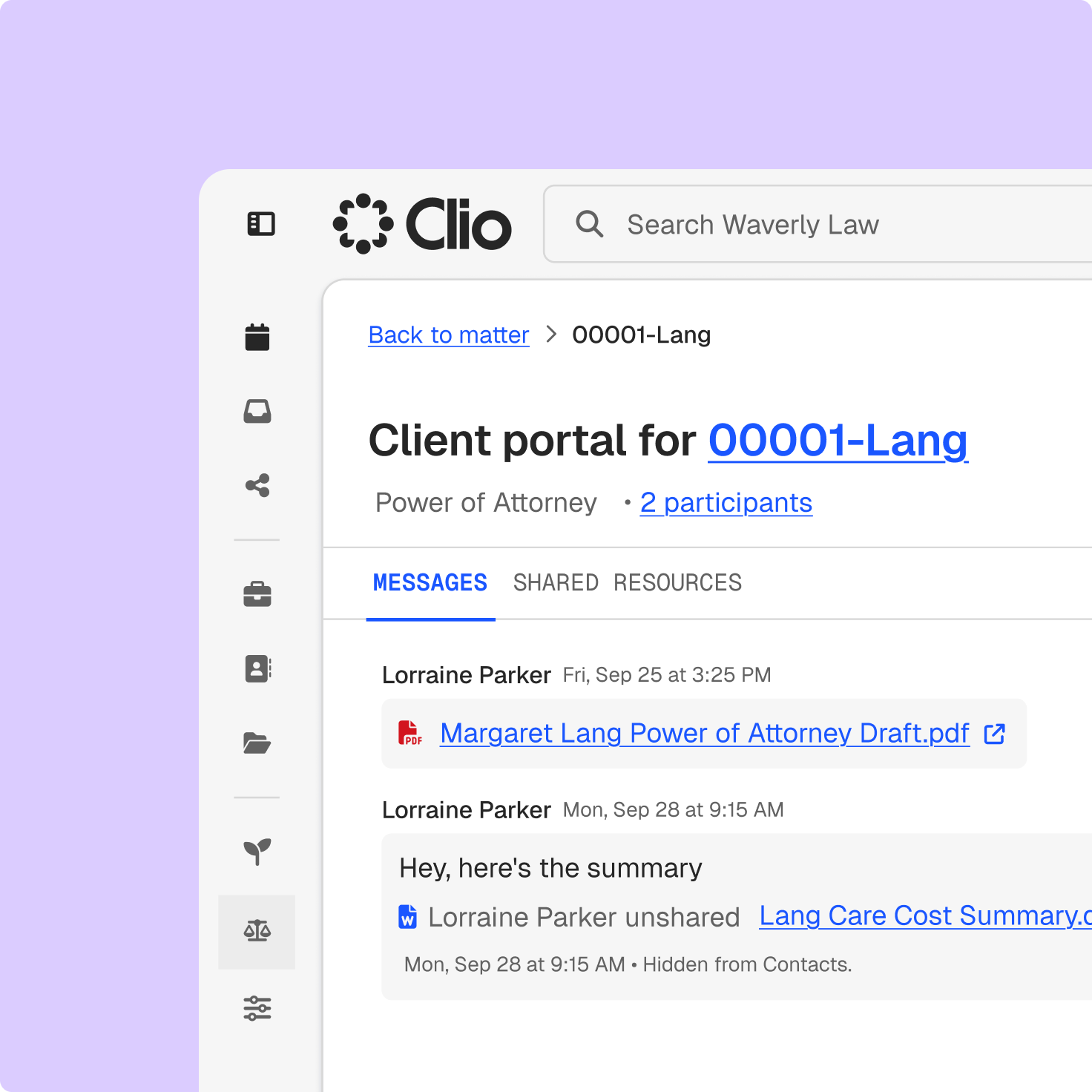
Clio client portal for a power of attorney matter, with a shared draft document and messages from the firm.

Manage elder law matters around the client, authorised circle, and the plan

Connect the client, carer, family, and payer to the matter

An elder law matter can involve a client, their family, carers, and payers. Related contacts, custom fields, and client account records give each person a defined role, so it is always clear who may act, who pays, and who may receive approved information.

Keep planning, capacity, care and benefits together

In elder law these move together. When capacity, care, or income changes, you can see what it means for the plan and the benefits, because directives, powers of attorney, deputyship or capacity records, assets, research, and deadlines share one matter.

Share securely with the people authorised to help

Approved documents and secure messages reach the client, carers, and other approved parties through the client portal. Inside Clio, matter permissions decide who can open the full matter, so sensitive matters stay with the right people.

Carry client account, third-party payment, billing, and follow-up through the same record

Accept approved client account funds from linked clients, track the client ledger, send bills and payment requests, and keep later reviews or applications connected to the earlier plan.

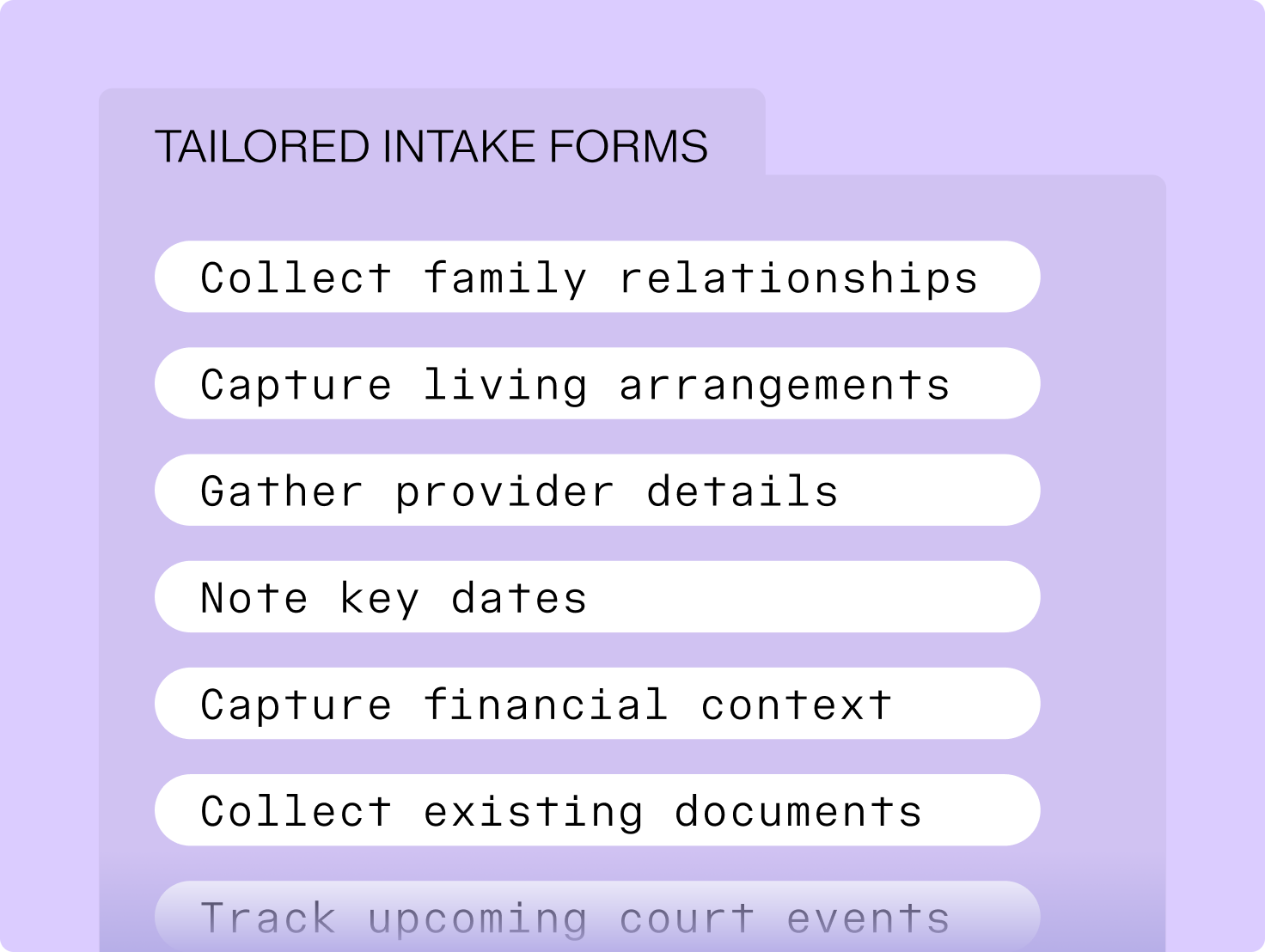
Tailored intake form fields for family relationships, living arrangements, provider details, key dates, and finances.

Start by establishing who the client is and who may act

An adult child may make the first call. A carer may hold the documents. A spouse may be paying the bill. An agent may already have authority, or the question may be whether authority is needed at all. Those roles are related, but they are not interchangeable.

Elder law software organises the client, the family, the authority and the plan. Clio gives each person a clear place in the record, capturing the legal client, carers, agents, deputies, providers, payers and agencies, along with the source and scope of any authority.

Woman in glasses and a green cardigan listens closely across a table in a quiet, book-lined room

Protect health, financial, family, and capacity information

Matter permissions govern access, and Clio is GDPR and SOC 2 compliant. Firm data is not used to train third-party models, and AI-supported work remains available for professional review.

What can you do with Clio’s elder law software?

Preserve the client’s voice as more people enter the matter

Elder law work can involve a growing circle of people around one client. Family members may help with care or records. An agent may manage finances. A health and welfare attorney may make decisions. An agency or court may require its own evidence.

Clio keeps the client’s goals, instructions, documents, and advice in the same matter while matter permissions control who can open it. Communication from a carer can be preserved without turning that person into the legal client.

Build a usable record of capacity, care, benefits, assets, and authority

The legal question may depend on a mix of health information, living arrangements, benefits, income, assets, existing powers, prior decisions, and family roles. Those details can change at different speeds.

Clio gives the firm one controlled place to organise the records, relationships, chronology, documents, tasks, and communication behind the advice. Your firm can see what has been received, what remains missing, and what needs professional or expert review.

Research the options with the client’s full circumstances in view

Care funding, social care, capacity and Court of Protection appointments, planning, housing, safeguarding, and the scope of existing authority are deeply jurisdiction-specific. The answer turns on the client’s facts and the authority already in place.

Because the client history and source documents already live in Clio, the legal professional can research the issue in context and review the cited authority behind it. The reasoning can move into advice or a draft without reconstructing the problem elsewhere.

Draft planning, benefits, and court documents from approved details

Names, relationships, attorneys, deputies, addresses, assets, benefit information, and client instructions repeat across lasting powers of attorney, advance decisions, benefit applications, witness statements, applications, notices, and client letters.

Clio can carry approved matter data into reusable templates and supported forms. For bespoke work, Clio’s legal AI can prepare an initial decision, authority document, benefit submission, witness statement, application, advice memo, or client letter from the current matter and cited law.

As a solo attorney specializing in estate planning, elder care, and supplemental needs planning, I rely on a strong foundation to support my law practice. Over the past decade, Clio has served as the operational backbone of my firm.

Heidi Eglash

Eglash Law Office

Elder Law Software FAQs

What is elder law software?

Elder law software helps firms manage clients, family and carer relationships, authority, capacity and care records, benefits, assets, documents, deadlines, communication, billing, client accounting, and payments. In Clio, that record is also the foundation of a legal AI platform built for the full practice. The client’s wishes and legal history stay intact as circumstances change.

Book a demo.

How is Clio different from standalone elder law software?

Clio was built so the client record and the work around it draw on one shared foundation. Related contacts and authority details, capacity and care records, cited research, document automation, signed versions, deadlines, communication, billing, payments, and client accounting all sit together. That shared context lets Clio prepare work for professional review and return the approved work to the matter, so the record holds as the client’s circumstances change.

Book a demo.

What should elder law practice management software include?

At minimum, look for client intake and onboarding with conflict checks; a clear record of the client, family, carers, attorneys, deputies, and payers, with the source and scope of any authority; capacity and care records; document automation; cited legal research; versioning and electronic signatures; review dates, tasks, and deadlines; secure communication; and billing, payments, client accounting, and reporting. The exact mix depends on whether the firm handles planning only or carries matters into the Court of Protection.

Book a walkthrough.

Can Clio track lasting powers of attorney, attorneys, deputies, and trustees?

Yes. Related contacts and custom fields record each person’s role and authority, while documents, communication, tasks, and deadlines remain with the matter. Matter permissions control who can open it.

Book a demo.

Can Clio help draft elder law documents?

Yes. Clio can turn the firm’s own capacity, deputyship, and planning precedents into reusable templates that populate from client and matter data. For bespoke work, Clio’s legal AI drafts and revises alongside you in the document editor or directly in Microsoft Word, with proposed edits shown as tracked changes. Your firm reviews the language and the authority relied on before anything is used.

Book a demo.

Does Clio include elder law legal research?

Yes. Clio’s legal AI researches the Mental Capacity Act 2005, the Court of Protection Rules 2017, and the Care Act 2014, alongside case law on capacity, deputyship, and lasting powers of attorney. Scotland can be searched separately, where the Adults with Incapacity (Scotland) Act 2000 applies instead. It returns cited authority for you to evaluate and apply.

Book a walkthrough.

Does Clio determine capacity or public-benefit eligibility?

No. Clio can organise the record, research governing law, and prepare work for professional review. It does not assess capacity, consent, undue influence, abuse, or benefit eligibility.

Book a demo.

Carry the client’s history through changing circumstances

See how Clio connects planning, authority, benefits, care, court work, communication, billing, and payment around the client record.