
Connect the client’s circle
Related contacts and custom fields give each family member, caregiver, and payer a defined role, so it’s clear who may act and who pays.
Elder law
Clio does more than hold the file. With Clio’s legal AI platform, the client, decision-maker, payer, caregiver, care setting, benefits, assets, and legal authority stay connected through changes, while your firm keeps the advice and the capacity analysis.
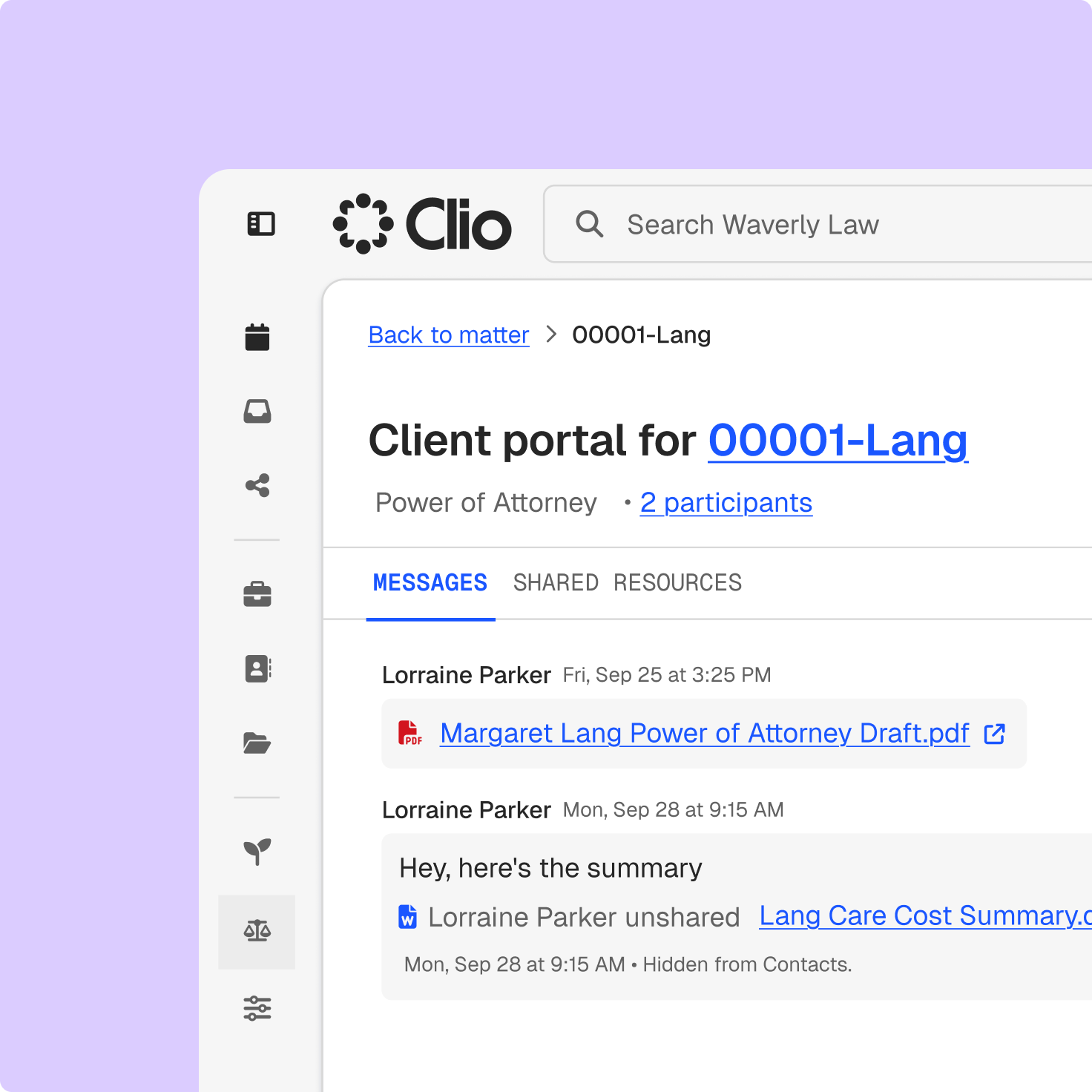
Related contacts and custom fields give each family member, caregiver, and payer a defined role, so it’s clear who may act and who pays.
When capacity, care, or income changes, you can see what it means for the plan, because directives, powers of attorney, and assets share one matter.
Approved documents and secure messages reach the client and authorized caregivers through the client portal, while matter permissions decide who can open the full matter.
Accept approved trust funds from linked clients, track the client ledger, send bills and payment requests, and keep later reviews or applications connected to the earlier plan.
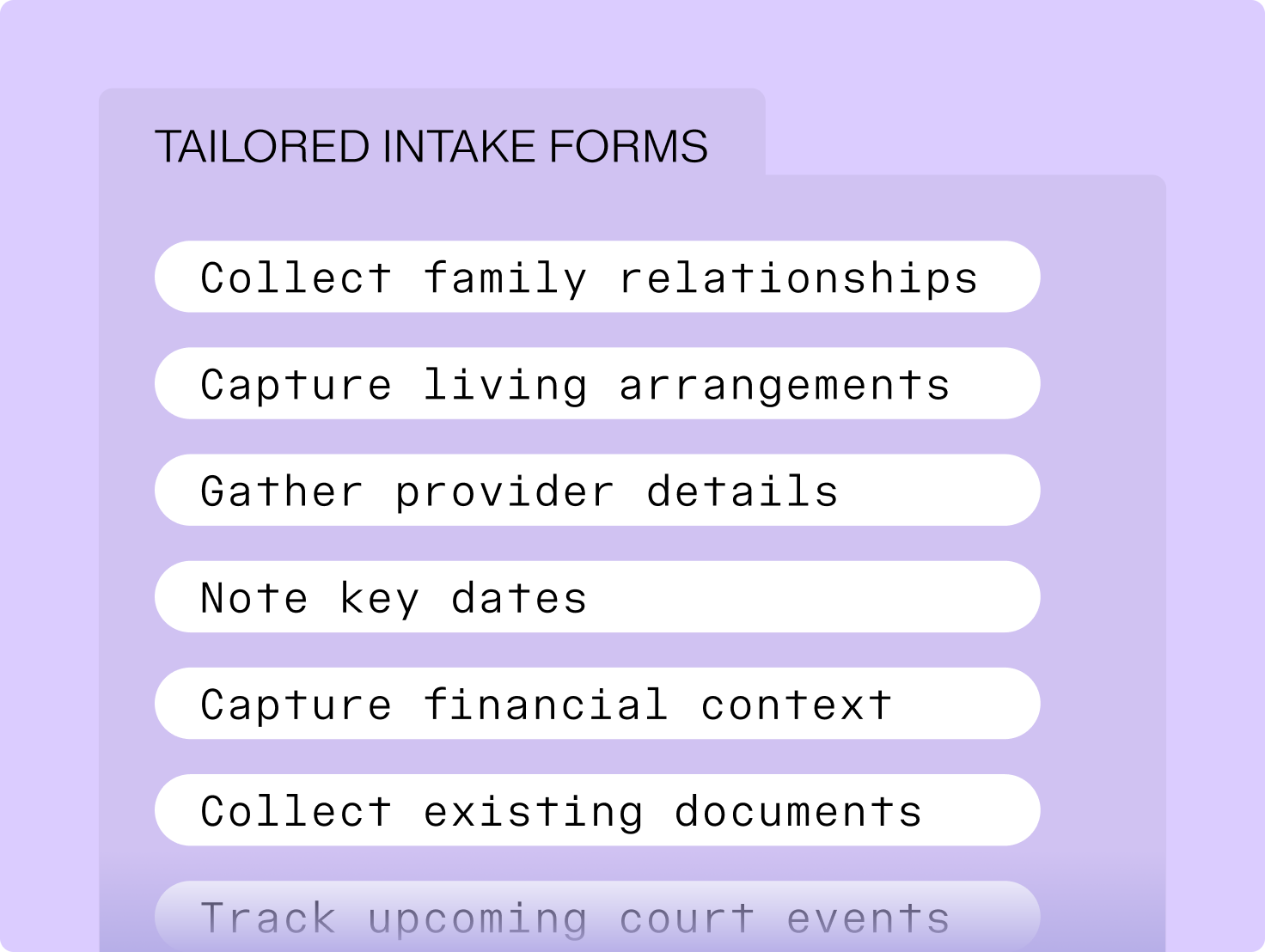
An adult child, a caregiver, or a spouse paying the bill may reach the firm before the client does, and an agent may already hold authority. Clio notes each person’s role at intake and in related contacts, and you decide whose instructions the firm follows.

Benefit and guardianship questions turn on facts the matter already holds. Legal research covers Medicaid eligibility and long-term care rules, guardianship and protective proceedings, powers of attorney, capacity standards, and trusts across federal law and all 50 states, each answer linked for you to evaluate and apply.
Document automation carries approved matter data into reusable templates for healthcare directives, powers of attorney, benefit applications, affidavits, and petitions, which your firm reviews before use. For bespoke work, Clio’s legal AI can prepare an initial draft from the matter and the cited law for you to refine.
A court fixes some dates, and the client’s plan drives the rest. Rules-driven calendaring reaches hundreds of US courts for guardianship and protective filings, and your firm verifies every date. Each date stays on the matter beside the work it governs.
Fees may come from the client, a family member, or an agent acting under a power of attorney. Manage client funds in a compliant trust account, track the client ledger, and run billing with flexible payment methods and plans.

Matter permissions govern who can open each file, and HIPAA-compliant workflows are available when the required add-on and business associate agreement are in place. Your firm’s data is never used to train third-party models, and every AI-supported result stays available for your review.
legal professionals trust Clio
law societies and bar associations recognize Clio, including all 50 state bar associations in the United States
average rating across 13,000+ reviews
As a solo attorney specializing in estate planning, elder care, and supplemental needs planning, I rely on a strong foundation to support my law practice. Over the past decade, Clio has served as the operational backbone of my firm.
Eglash Law Office
Elder law software keeps the client, the authorized circle, the capacity and care history, the benefits, the assets, and the legal authority in one connected record, so the plan holds as circumstances change and your firm keeps the advice and the capacity analysis. Get a demo.
Clio was built so the client record and the work around it draw on one shared foundation. Related contacts and authority details, capacity and care records, cited research, document automation, signed versions, deadlines, communication, billing, payments, and trust accounting all sit together. That shared context lets Clio prepare work for professional review and return the approved work to the matter, so the record holds as the client’s circumstances change. Get a demo.
At minimum, look for client intake and conflict checks; a clear record of the client, family, caregivers, agents, fiduciaries, and payers, with the source and scope of any authority; capacity and care records; document automation; cited legal research; versioning and electronic signatures; review dates, tasks, and deadlines; secure communication; and billing, payments, trust accounting, and reporting. The exact mix depends on whether the firm handles planning only or carries matters into guardianship and protective proceedings. Get a demo.
Yes. Related contacts and custom fields record each person’s role and authority, while documents, communication, tasks, and deadlines stay with the matter, and matter permissions control who can open it. The source and scope of each person’s authority can be recorded too. Get a demo.
The secure client portal and matter permissions can support secure sharing with clients and authorized caregivers. The legal professional remains responsible for confirming consent, authority, confidentiality, and exactly what each person may access. Get a demo.
Yes. Clio can carry approved matter data into reusable templates and supported court forms, and prepare an initial directive, authority document, benefit submission, affidavit, petition, or client letter from the current matter and the cited law. Your firm reviews the language, the authority relied on, and how the instruments work together before anything is used. Start a free trial.
Matter permissions govern access, HIPAA-compliant workflows are available with the required add-on and business associate agreement, and your firm’s data is never used to train third-party models. Permissions apply to the whole matter rather than to individual folders or documents. Get a demo.
No. Clio does not assess capacity, consent, undue influence, abuse, or benefit eligibility, and it does not provide a Medicaid eligibility engine. It keeps the record and the cited research, and your firm makes every legal determination. Get a demo.