Build the record early
Connect the parties, claims, defences, pleadings, deadlines, and evidence in one matter from the start, so the file reflects the case you’re building rather than scattered notes.
Connect the parties, claims, defences, pleadings, deadlines, and evidence in one matter from the start, so the file reflects the case you’re building rather than scattered notes.
Analyse supported documents in Clio, connect the systems your firm already uses, and keep source-linked summaries, timelines, and review notes beside the issues they inform.
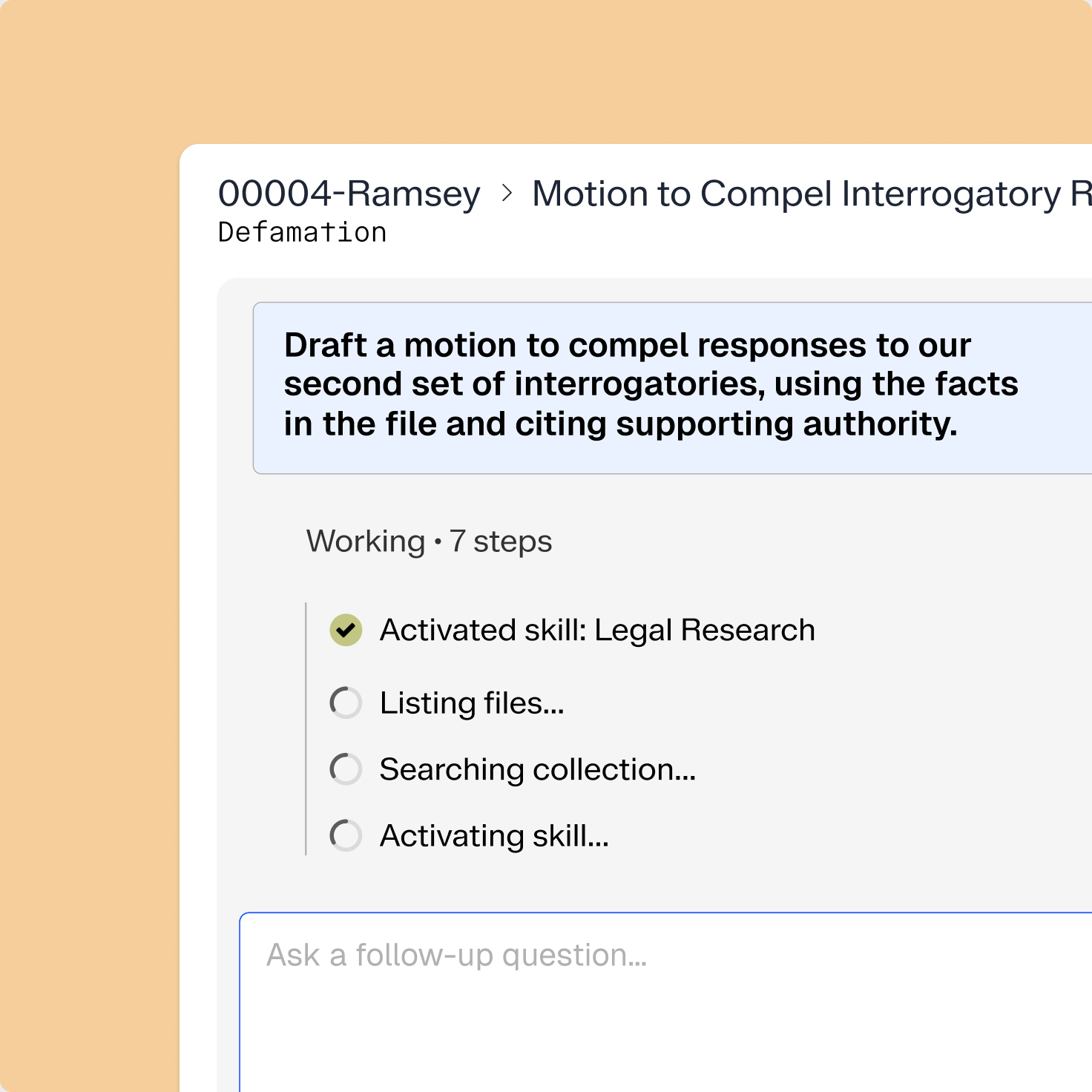
Research with cited authority, compare witness evidence against expert reports, and prepare first drafts and hearing materials for your review before anything leaves the firm.
Tie orders and notices to tasks, filing work, bills, and communication, so a change to the schedule reaches the people and the work it affects.
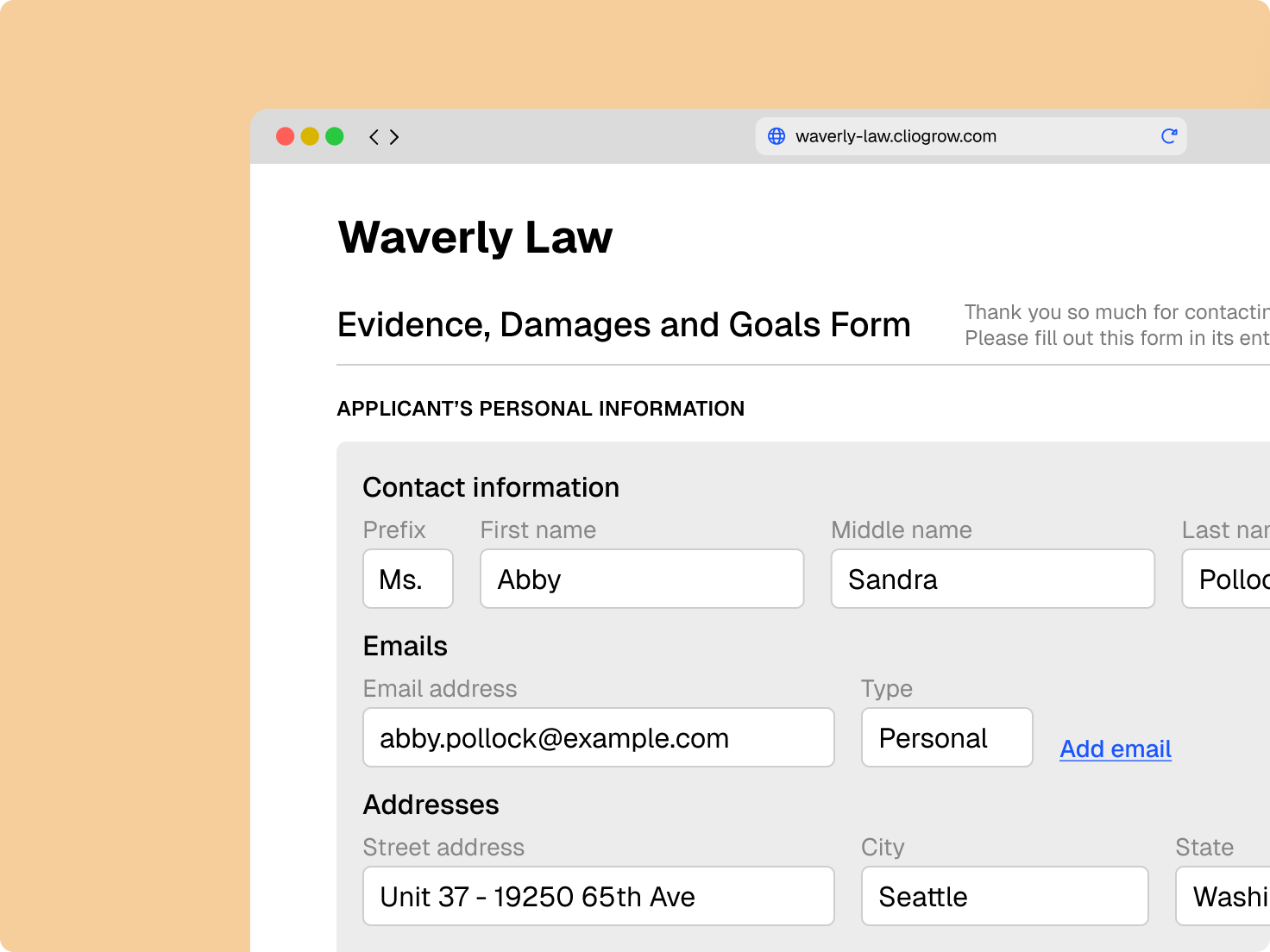
Start the case theory from what’s in the file. Clio keeps the intake answers, parties, and documents for the dispute on one matter. You decide what the record supports, and new facts land in the same place as they come in.

Hold court dates, limitation dates, and internal deadlines on the matter with the calendar and custom deadline sets, and keep each new order and notice beside the date it set. You review every date and decide who handles what.
Use legal research to ask the next question in context, and get jurisdiction-matched, cited authority from more than 1 billion legal sources. You open, check, and apply each authority to the matter.
Fill your templates with the matter’s details, or draft an application or letter with Clio’s legal AI from the facts and the law. You review and finalise every document before it goes out.
Record time against the matter as the work happens, and run billing across hourly, fixed-fee, and mixed arrangements. Track client funds in a trust account and reconcile it in Clio, and you review every bill before it goes out.
legal professionals trust Clio
law societies and bar associations recognise Clio
rating across 13,000+ reviews
Clio continuously keeps us bringing in $30,000 to $50,000 more each month. We wouldn’t see that if we went back to the old ways.
CEO, Rodriguez Law Group, Inc.
Civil litigation software keeps the evidence, court schedule, research, drafting, and billing for a disputed matter in one connected file, so the case stays organised from first assessment through settlement or trial.
A standalone case management tool tracks the matter. Clio also holds the legal work on it: research with cited authority, drafting, client communication, and billing all run from the same facts and documents. When an order shifts the schedule, your firm starts the next step from the current record instead of rebuilding context in another system.
No. Firms use Clio to analyse supported document productions and keep the results with the matter, but very large sets may still call for a dedicated review tool. Source-linked summaries and review notes from each production sit beside the issues they inform.
Yes. Your firm’s templates fill with the matter’s details, or Clio’s legal AI prepares a first draft of an application or letter from the facts and the law. Agreements and settlement documents go out for e-signature from the same matter. Every draft waits for your review and edits before it is filed or sent.
Yes. Ask about jurisdiction, admissibility, privilege, causation, remedies, or procedure with the matter’s facts and documents in view, and Clio’s legal AI returns jurisdiction-matched, cited authority from more than 1 billion legal sources. Each citation opens to its source, so you can read and weigh it before you rely on it in submissions or an application. Follow-up questions build on the same record as the case develops.
Yes. Clio holds every court date, limitation date, and internal deadline against the matter, with tasks and reminders attached. Each date stays beside the order or notice that set it. Dates are entered by your firm rather than calculated from court rules, and your firm stays responsible for verifying and meeting every date.
Yes. Track time and expenses on each matter, then invoice under hourly, fixed-fee, or mixed arrangements and let clients pay online. Money paid in advance for costs and other client funds sit in a trust account that you reconcile against the bank in Clio. You approve every bill before it is sent, and compliance with your state or territory’s trust accounting rules stays with your firm.