Screen the claim, preserve the evidence
Capture the incident, parties, insurance cover, injuries, treatment, and witnesses at intake, and at-risk evidence immediately becomes a dated task.
Capture the incident, parties, insurance cover, injuries, treatment, and witnesses at intake, and at-risk evidence immediately becomes a dated task.
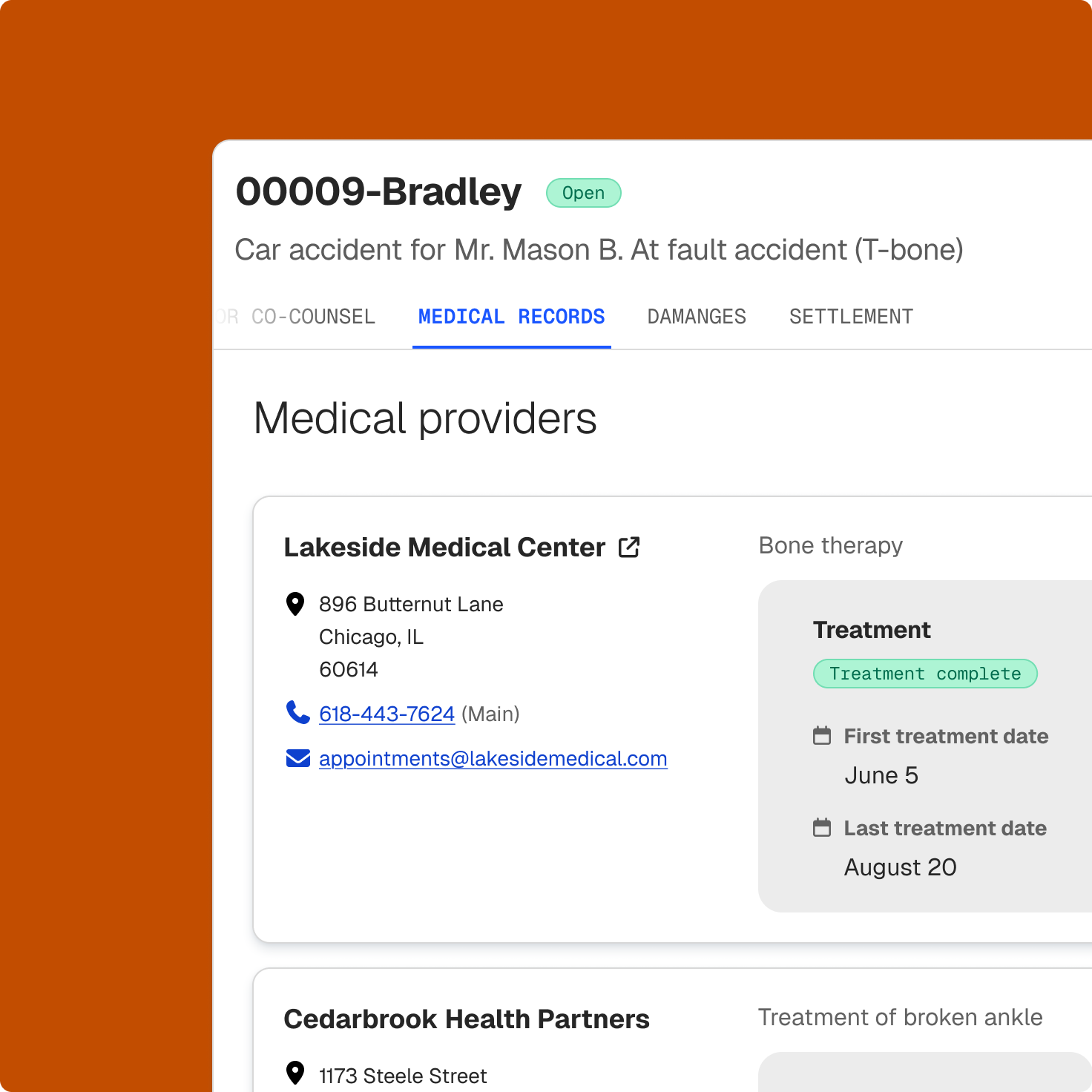
Organise records and medico-legal reports by provider, track what’s requested and outstanding, and keep disbursements and statutory refunds with the figures they affect.
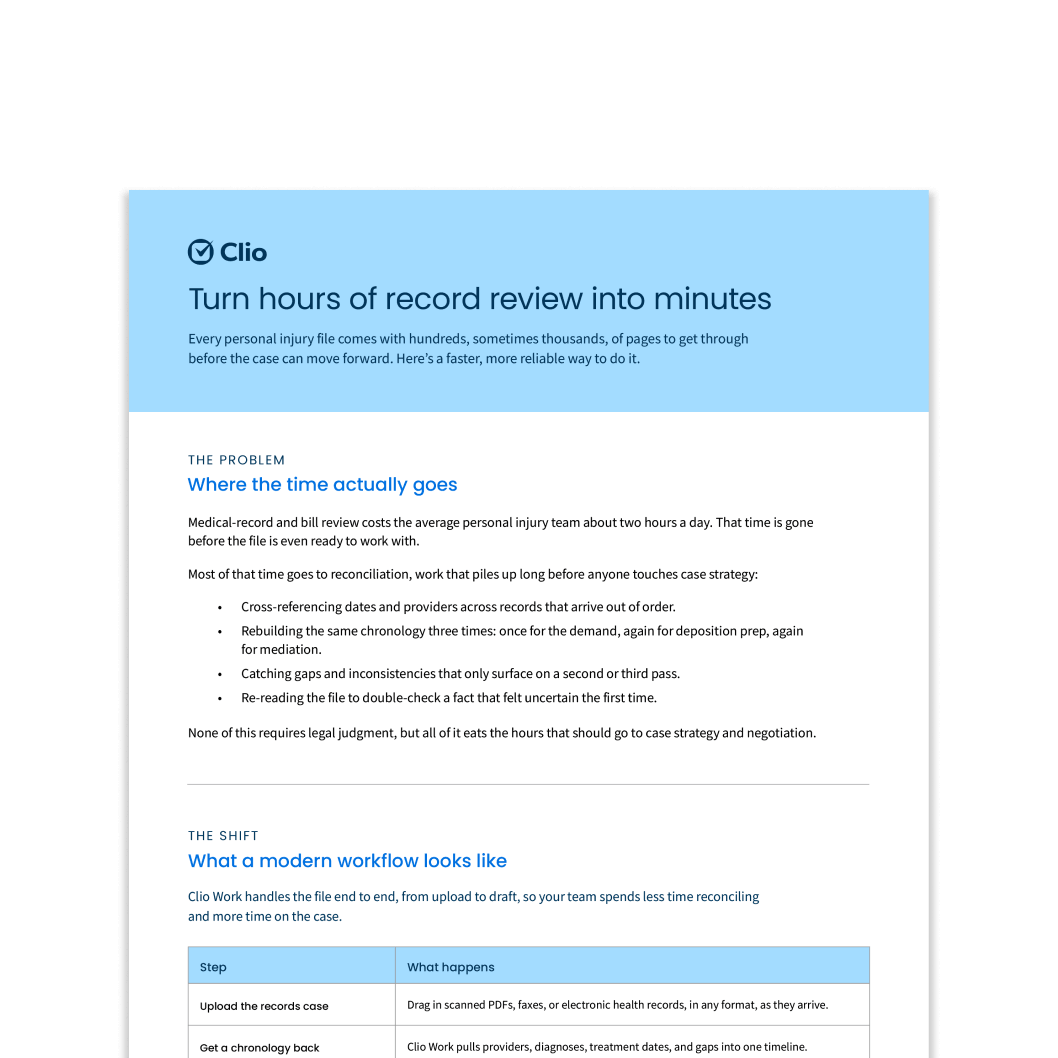
Build the chronology, research with cited authority, and prepare drafts, then carry the same record into pleadings, discovery, and applications.
Record the fees, disbursements, statutory refunds, and negotiated reductions as they’re confirmed, so nothing surfaces after the client has agreed.
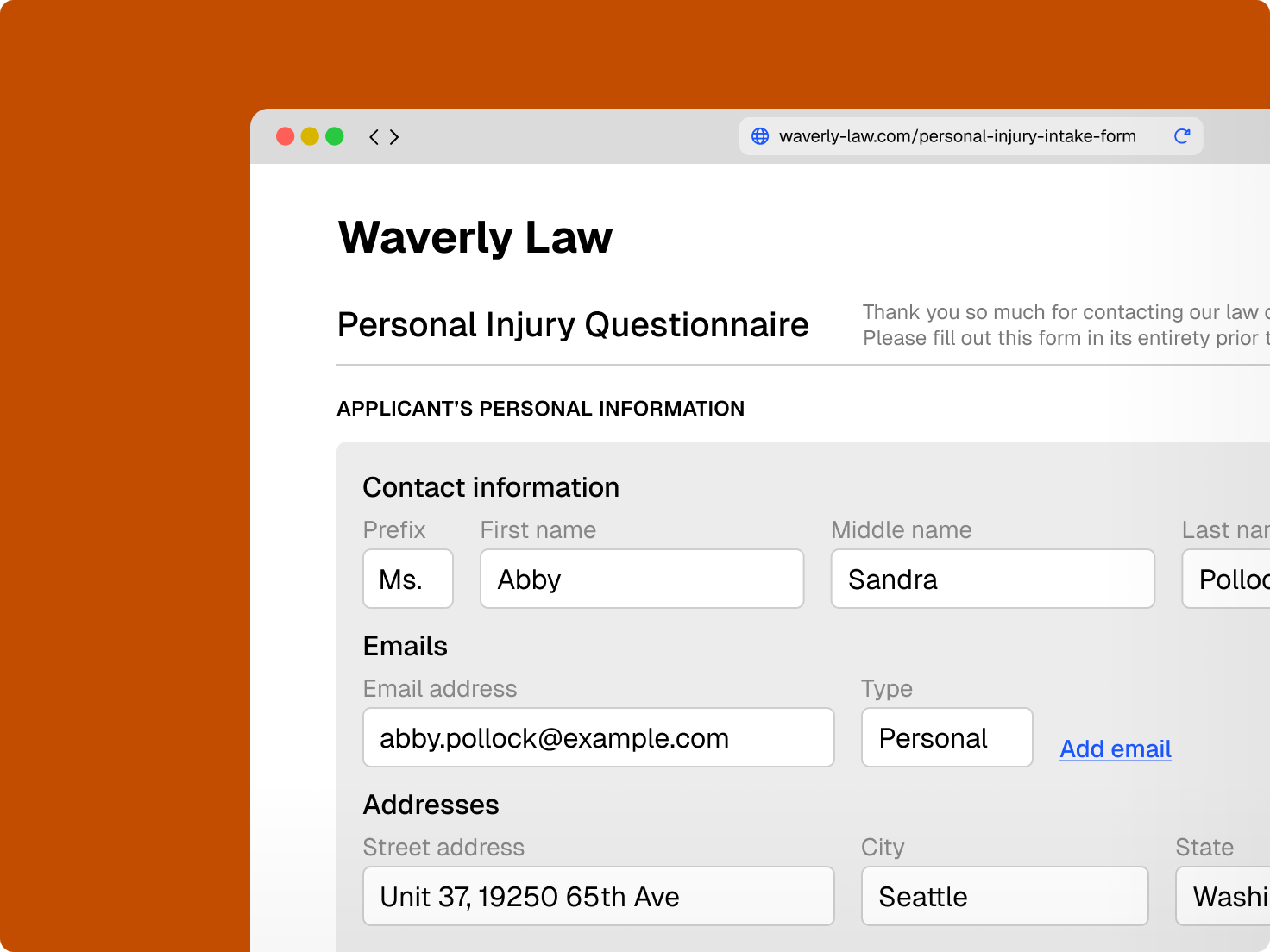
A personal injury case relies on evidence that runs the risk of fading from memory. Clio captures the incident and injuries through intake and keeps the parties, insurers, and treating doctors in related contacts, and you decide what to lock down first.

Clio stores medical records, medico-legal reports, and invoices against the matter, organised by provider. Custom fields track what’s requested and still outstanding, and keep disbursements and statutory refunds beside the figures they affect, so the damages record keeps pace with treatment.
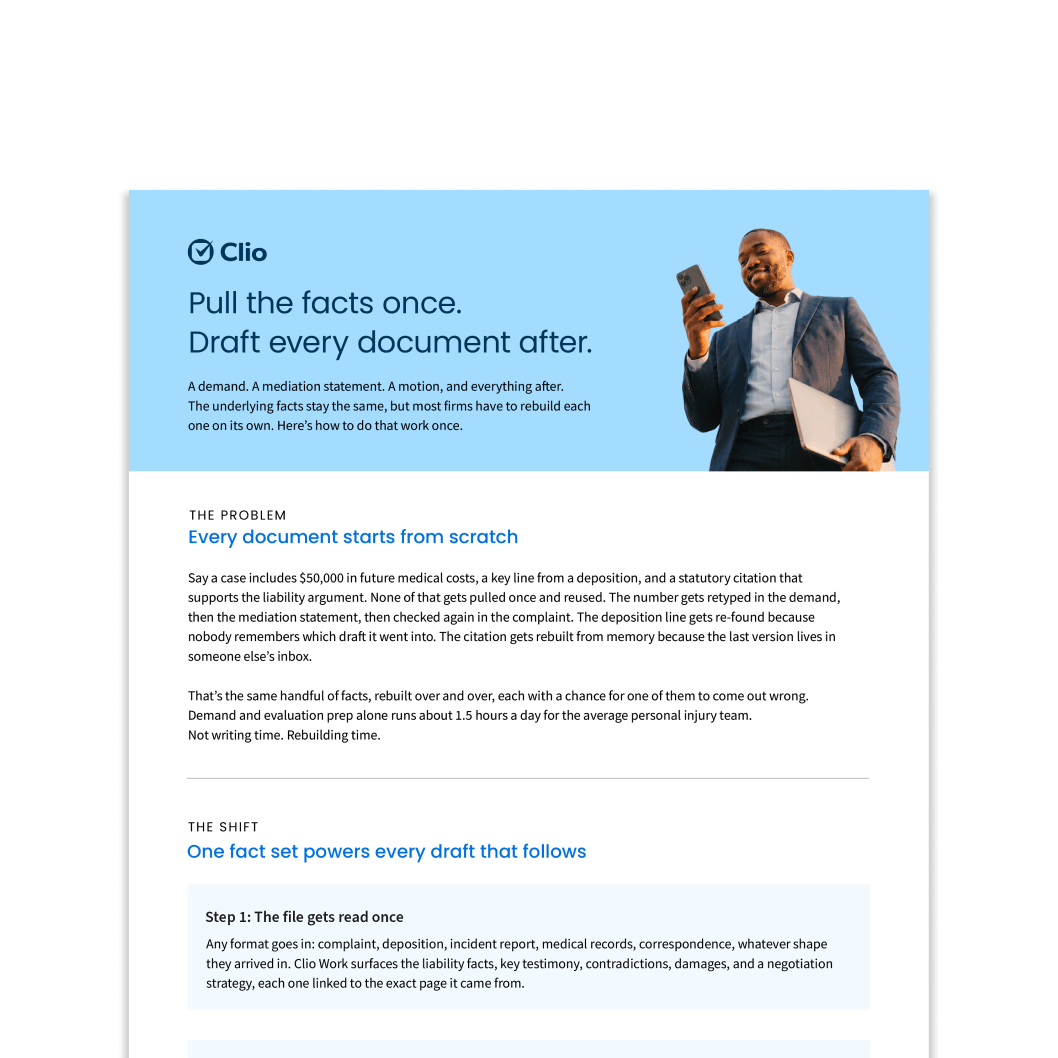
Clio’s legal AI reads the records, builds the chronology with each fact linked to its source, and prepares the letter of demand from your templates. If the claim doesn’t resolve, the same record carries into pleadings, discovery, and applications.
A trial date, a discovery deadline, and a date for serving expert reports each reset the week. Clio holds them with custom deadline sets on the calendar, and matter stages show where the case sits.
Clio records fees, disbursements, statutory refunds, and negotiated reductions as each is confirmed, so your firm can work out what the client receives and prepare the final statement. The settlement funds sit in trust until they are paid out.
legal professionals
law societies and bar associations recognize Clio, including all 50 state bar associations in the United States
/5 average rating across 13,000+ reviews
Clio Manage has completely transformed the way I run my legal practice. From client intake to final invoicing, everything is streamlined and accessible in one place. I love how intuitive it is, how easily I can keep track of every matter, and how much time it saves me. It’s not just software—it’s peace of mind for a busy lawyer!
Adele Anthony Legal
Personal injury case management software keeps liability evidence, medical records, damages, disbursements, and statutory refunds on one matter. In Clio, that matter is the foundation of a legal AI platform, so intake preserves evidence, the record builds the letter of demand, and the same file carries into litigation and settlement without re-entering a fact.
Intake, evidence, cited research, drafting, deadlines, billing, and trust accounting work from one matter rather than separate tools. That shared context lets Clio build the chronology and the letter of demand for your review and carry the record from the first call through settlement, so nothing is rebuilt at litigation.
Yes. Clio stores medical records, medico-legal reports, and invoices against the matter, organised by provider, and custom fields track what’s requested, what’s outstanding, and when it was last followed up. Clio tracks record requests but does not retrieve records; your firm or its chosen retrieval service obtains them.
Yes. Record the fees, disbursements, statutory refunds such as Medicare and Centrelink, and negotiated reductions as each is confirmed. Every deduction sits on the matter, so your firm can work out what the client receives and prepare the final statement from confirmed figures. You confirm every figure before funds move.
Yes. Clio’s legal AI covers limitation periods, the state and territory civil liability Acts, CTP and workers’ compensation schemes, and thresholds and caps on non-economic loss, and returns cited authority for you to evaluate and apply to the claim.
Yes. Custom deadline sets calculate dates from the trial date, a discovery deadline, or a hearing, and you can set and verify the limitation date and scheme notice deadlines on the matter.
Yes. Record the conditional costs agreement and any uplift fee on the matter, and time sits unbilled while the claim runs. Percentage-based contingency fees are prohibited for Australian lawyers, except under a group costs order in the Supreme Court of Victoria. The settlement funds go into trust, the invoice for your costs and disbursements is paid from it, and the rest goes to the client and anyone else owed until the ledger closes to zero. Your firm stays responsible for its state or territory’s trust accounting rules.
Health information is sensitive information under the Privacy Act 1988 (Cth) and the Australian Privacy Principles. Matter permissions determine who can open the case, and the platform works within those permissions. Compliance with the Privacy Act stays your firm’s responsibility.