
Start every matter clean
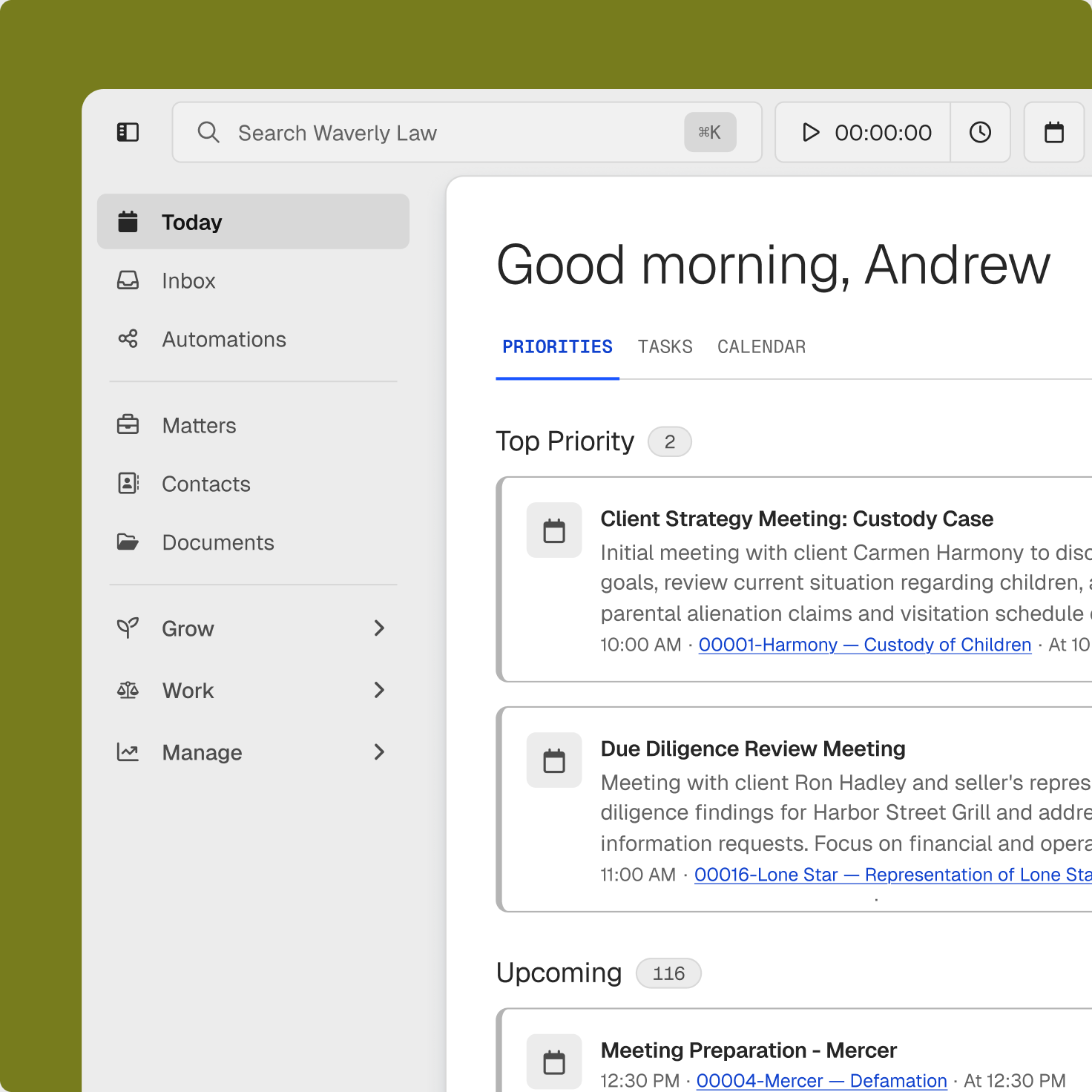
Use intake, conflict checks, and engagement details to collect the right information once and set firm staff up for success.
Use intake, conflict checks, and engagement details to collect the right information once and set firm staff up for success.
Assign work and matter stages so open questions stay visible before they become another email asking what’s next.
Staff prepare consistent work from approved templates and current matter data, and lawyers focus on substance.
Connect the matter’s financial lifecycle, from client update to payment, so nothing slips on the way to getting paid.
A missing document, a late bill, or a client asking for status often has the same root cause: how the matter was set up. Trace the gap back through the matter, then fix the template or workflow that created it, so one change improves every later handoff.

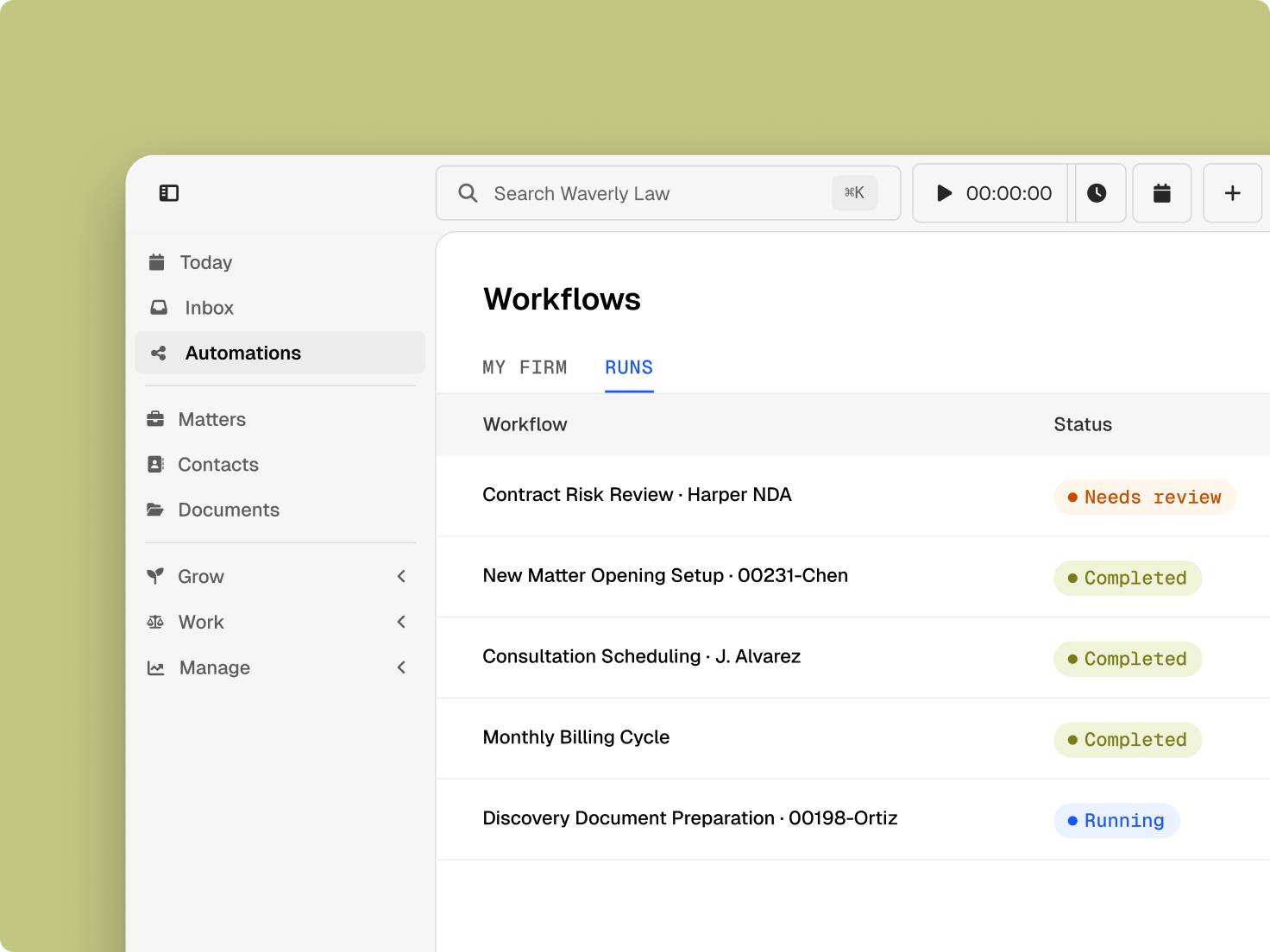
Approved Word documents can become smart templates, conditional logic applies the right language, and supported forms start with matter data in place. Staff prepare the work, a task routes it to the reviewing lawyer, and the approved version returns to the matter.
A process sticks when everyone can see who owns the next step, what’s missing, and what has to happen before the matter advances. Due dates, reminders, and a stage board that shows how long each matter has sat where it is make that responsibility visible across the team.
The same activity can create a deadline, a client communication, and billable work. Keeping those consequences on the matter shows what was completed and what still needs to reach the client or the billing team.
When something breaks, you need more than a warning. Notes and the firm’s activity feed show where the process changed and who made the change, so you know who needs to act next. You decide when an exception needs escalation.
legal professionals trust Clio
global legal documents
years serving legal professionals
Clio just works. It’s so easy to use. From an operations person’s perspective, it’s so nice to have a platform that just does it all for you. I’m able to focus on my actual job and not all of the IT stuff.
Legal Operations Manager, Stotler Hayes
Legal administrator software helps firms coordinate intake, matter setup, documents, communication, and billing. Clio connects those operational responsibilities to the legal and financial record behind each matter. See Clio in action.
Yes. Matter templates and task lists support repeatable processes, so a new matter opens with the fields, tasks, and owners the work needs instead of being assembled each time.
Yes. Approved Word documents become smart templates, matter data populates a whole set at once, and conditional logic applies the right language. Template editing isn’t permission-controlled, so most firms keep it with a small group. Get a demo.
Yes. Assign matters to specific user groups or block individual users, so a conflict or sensitive file stays closed to anyone who shouldn’t see it. Clio’s legal AI follows the same permissions.
Yes, on select plans. Clio supports SAML 2.0 with identity providers including Okta and Microsoft Entra ID. User accounts are added and removed in Clio, not provisioned automatically from your directory.
Yes. Filter tasks by assignee and status to find unassigned or overdue work, and sort matters by responsible lawyer to find any without one. The stage board shows how long each matter has sat where it is.
Clio can use permitted matter and operational context to summarize activity, surface missing information, and prepare updates or routine steps for review. Nothing is written to the matter until you approve it.
Yes. Time, invoicing, payments, and trust accounting run on the same matter record. Three-way reconciliation compares the bank statement, trust ledger, and client ledgers side by side. Get a demo.