
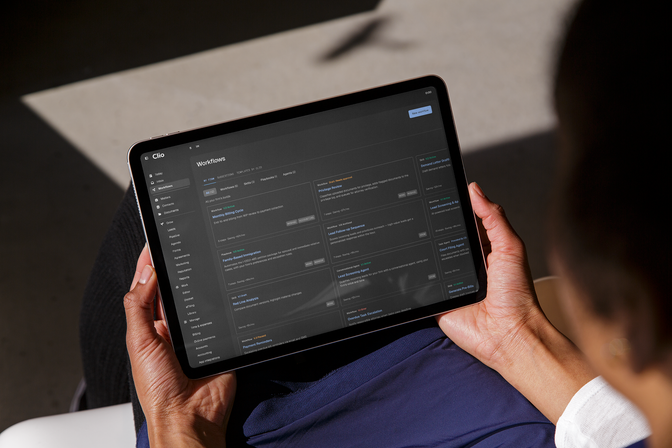
Clio Work Can Now Build Custom Interactive Tools On Demand
Visualizations turns what legal professionals need to see, understand, or track into a custom interactive tool built for that moment.
Clio, the global leader in legal AI, today introduced Visualizations in Clio Work, a new capability that lets legal professionals describe a tool or view they need — such as an interactive chronology, settlement calculator, client dashboard, or firm-wide performance view — and have Clio Work build it for them.
Visualizations can draw from the details of a single matter or bring together information across matters for a client, practice area, or the firm. Legal professionals simply describe what they want to see in natural language, and Clio Work determines what information is relevant, writes and runs the code, and builds a custom interactive view for the work at hand. Because Clio Work already understands what a firm is working on, there’s no need to connect another system, export data, or manually provide the underlying context.
Creating those kinds of visualizations has traditionally meant purchasing a separate tool. Legal professionals had to export data to a spreadsheet, slide deck, or word processor, and build the final product by hand. Now, legal professionals can generate those views in the same place they perform the rest of their legal work.
“Traditionally, lawyers have been limited by what their tools were built to show them,” said John Foreman, Chief Product Officer at Clio. “Clio Work changes that. Legal professionals can define what they need in the moment, instead of being limited to the reports, dashboards, and tools someone anticipated and built in advance. The experience can take shape around the work, rather than the work having to fit the tool.”
Create custom views for every role in the firm
Unlike traditional reporting tools that rely on predefined templates, Clio Work generates each visualization for the request. It identifies the relevant information in the matter, then writes and runs the code to create the visualization without requiring the legal professional to export the data or build the output somewhere else.
Building from the matter also means Clio Work can surface important details as it works. If a lawyer asks for a divorce settlement calculator, for example, it can recognize that the marital home is valued differently in the financial disclosure and a later appraisal, then account for that discrepancy in the model. When connected to Clio’s broader Intelligent Legal Work Platform, Clio Work can draw on additional context from across the firm.
Clio Work can visualize:
- Matter performance: Fees, hours, and who’s working the file, all in one view.
- Chronologies and deal timelines: Key events, documents, and dependencies mapped across a matter.
- Disclosure and closing: What’s received, what’s outstanding, and what’s due next.
- Client and practice views: Matters brought together by client or practice area.
- Firm-wide performance: Realization, utilization, caseload distribution, and new matter sources.
Every visualization remains subject to the lawyer's review before it leaves the firm, and each one can be downloaded and shared with a partner, a client, or a colleague without any additional tools. The feature supports roles across a firm, from the lawyer developing strategy for a divorce agreement to the business development representative bringing in new clients.
“Every matter is different, so the way you work with it should be different too,” said Foreman. “Visualizations lets Clio Work create the right view for the work at hand, so legal professionals can make more of the information they already have.”
Visualizations is now available to Clio Work customers. Learn more at clio.com/work.