Capture the property and terms
Record the parties and agents, the property and legal description, the price, the earnest money, the contingency dates, and the target close.
Record the parties and agents, the property and legal description, the price, the earnest money, the contingency dates, and the target close.
Draft inspection, financing, title, disclosure, and closing dates from the contract or notice that sets them, for your firm to check.
Analyze purchase agreements, leases, and title or diligence documents for terms, risks, and obligations, with cited sources for review.
Keep versions, client decisions, signatures, closing funds in trust, invoices, and recording steps with the transaction.
A transaction advances only when each condition is met, from inspection and financing to title and disclosure. Clio captures the property and terms through intake and ties every date to the matter, so you can track which conditions are still to be met before the deal closes.

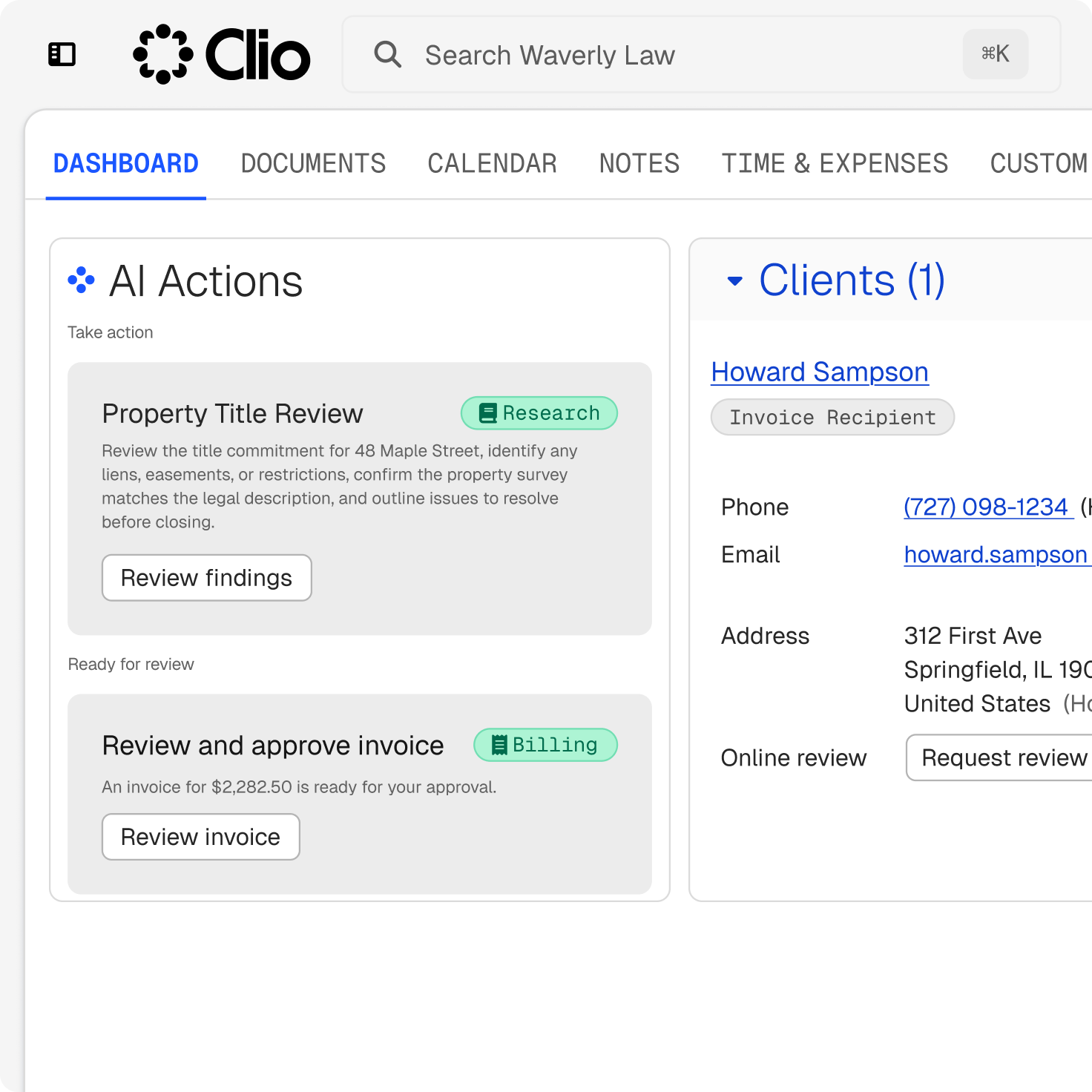
Preconfigured real estate fields record the property, price, and target close at intake. Clio’s legal AI reads the purchase agreement, proposes the inspection, financing, title, and closing dates as draft calendar events, and shows the source sentence for each one.
Inspection, financing, title, and disclosure each have a date, an owner, and a document behind them. Clio keeps each condition’s date, owner, and next task on the matter, and matter stages and reminders show what still has to clear.
Clio’s legal AI analyzes purchase agreements, leases, and title or diligence documents for key terms, risks, obligations, and jurisdictional questions, and returns conveyancing statutes, recording acts, and zoning rules as a state-by-state table with cited authority for your review.
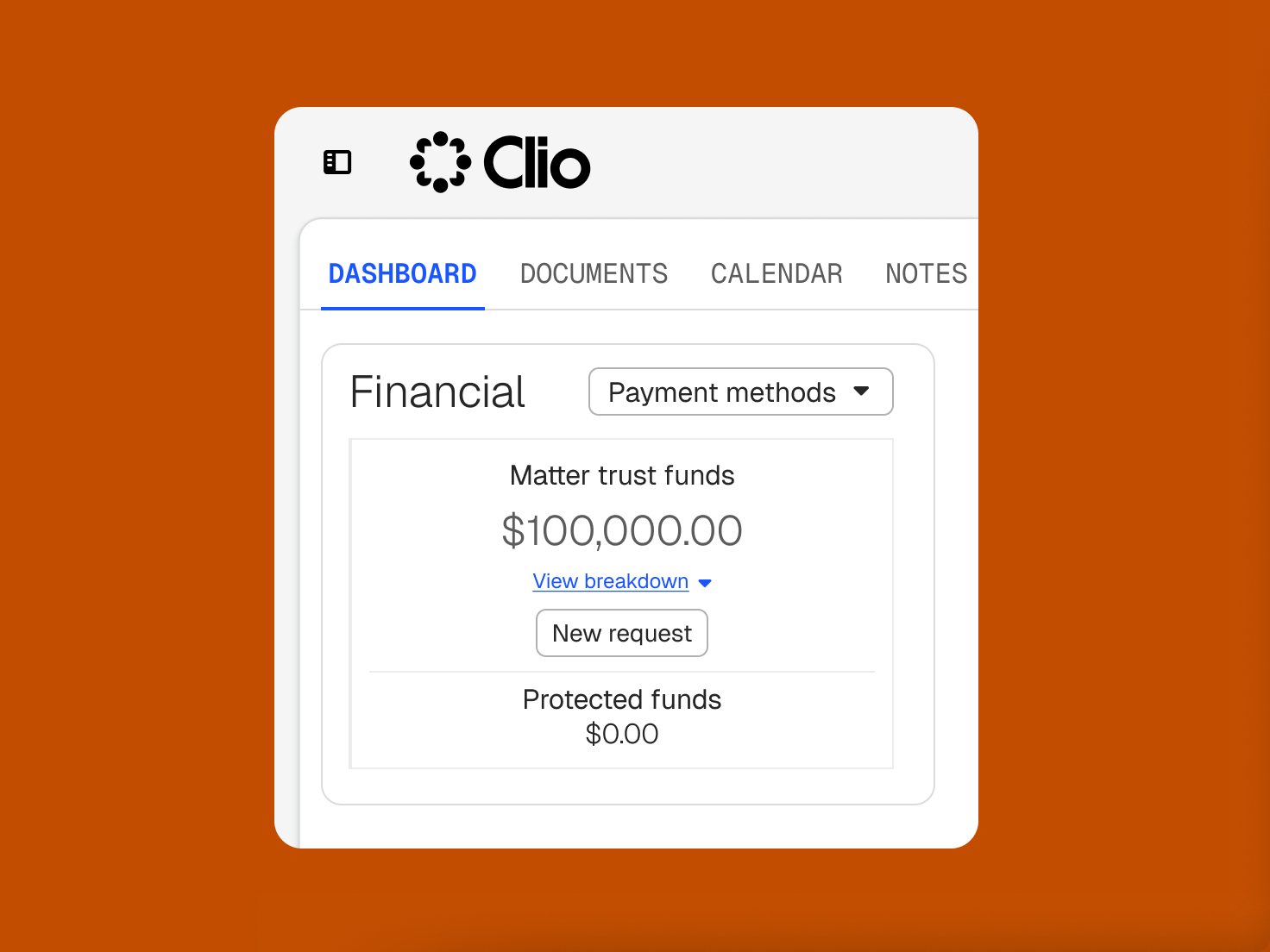
Where your firm runs the closing, it holds earnest money and closing funds in trust and disburses to the seller, lender, and county. Funds are protected on the matter, reconciled three ways, and post-close recording steps stay on the file with an owner and date.
legal professionals trust Clio
law societies and bar associations recognize Clio, including all 50 state bar associations in the United States
rating from 13,000+ reviews
Clio helps the members of our team stay in touch with the clients and keep track of the documents related to each client matter. This system reduces the need for us to duplicate work and effort.
Law Office of Caroline Cusick Crawford, PLLC
Real estate law software keeps the parties, property, agreements, title work, conditions, deadlines, and closing funds on one matter. In Clio, that matter is the foundation of a legal AI platform, so intake records the terms, the agreement drives the dates, and the file carries from the signed contract through recording and post-close.
The transaction file, documents, cited research, deadlines, trust funds, and billing work from one place rather than separate tools. That shared context lets Clio read the agreement, draft the dates, and keep each condition’s date and owner on the matter, so the deal moves toward an on-time close without the file scattering across systems.
Yes. Carry matter data into your firm’s own Word templates for deeds, contracts, and closing documents, with conditional logic adjusting clauses. You can also start from Clio’s free real estate conveyance templates. You review the language before anything is signed.
Yes. Clio’s legal AI analyzes purchase agreements, leases, and title or diligence documents for key terms, risks, obligations, and jurisdictional questions, with cited sources available for review. It surfaces the terms and dates for the lawyer to decide, and it doesn’t draw legal or title conclusions on its own.
Yes. Clio reads the agreement and proposes the inspection, financing, title, and closing dates as draft events for your firm to confirm, each showing the clause it came from. Matter stages and reminders show what still has to clear before the transaction can advance.
Yes. Hold earnest money and closing funds in trust, or keep escrow in its own trust account record. Funds are protected on the matter, can’t be applied to a bill or disbursed without a release, and reconcile three ways against the bank statement, the trust ledger, and every client balance. Your firm stays responsible for its state bar’s trust accounting rules.
Yes. Where your firm runs the closing, it holds and disburses funds and prepares the deed and closing documents. Where a title or escrow agent closes, you record the contract details and deadlines, review the agreement and closing disclosure, and handle title objections without holding funds.
No, and it isn’t meant to. Title search, underwriting, and electronic recording happen in your title or registry system, and settlement figures are calculated there and recorded on the matter. Clio keeps the legal file, the deadlines, the funds, and the documents connected around them.