

Standardize matter setup
Approved intake fields, conflict steps, and task templates give every new matter a complete starting point.
Approved intake fields, conflict steps, and task templates give every new matter a complete starting point.
Configure stages, documents, and approvals so a litigation matter and a regulatory matter each move their own way.
Matter permissions, document libraries, and reviews follow one policy across offices and teams.
Filter deadlines, workload, and financial activity by office, team, or responsible lawyer.
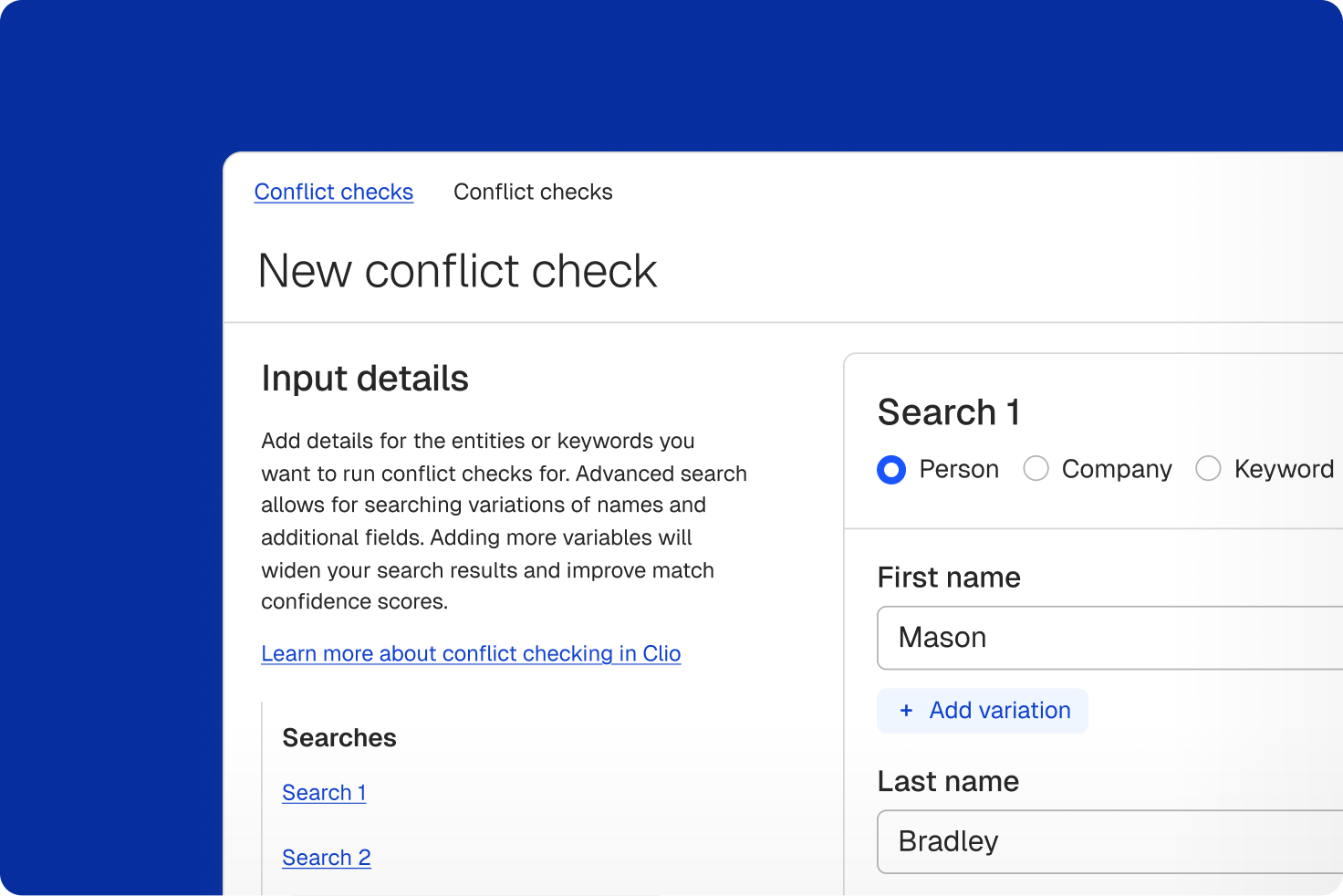
Define what has to be captured when a matter opens, so intake doesn't depend on which team handles it. The matter opens with enough structure for the team, and the practice group still controls the path the work takes.

When a matter changes hands, the current documents, deadlines, and open questions should arrive with it. Clio's legal AI can summarize recent activity for a new owner or supervising lawyer, so they see what changed without another status meeting.
Mid-sized firms can produce one-off work, repeatable document sets, and standard forms at the same time. Clio prepares matter-informed first drafts and fills reusable templates, so legal staff handle the repeatable sets while lawyers focus on bespoke language.
As more people record time, billing can turn into its own project. Time, expenses, and payments stay connected to the work as it happens, and Clio's legal AI can prepare billing work for review and route it through your firm's approval process.
Leadership needs more than total matters or revenue. Dashboards and reports bring workload, deadlines, billing, and collections into one view by office, practice, or team, so you can see where the firm is carrying risk or spare capacity.
legal professionals trust Clio
law societies and bar associations recognize Clio, including all 50 state bar associations in the US
average rating across 13,000+ reviews
Mid-sized law firm software helps firms coordinate intake, conflicts, matters, documents, workflows, permissions, offices, billing, payments, and reporting at scale. Clio connects that foundation with cited legal research, drafting, and legal AI. See Clio in action.
Matter types, custom fields, task lists, stages, templates, court rules calendaring, permissions, and workflows can be set up for each practice, while clients, financial records, and firm reporting share one foundation.
Yes. Clio supports approved templates, document sets, shared fields, conditional logic, supported court forms, and matter-informed first drafts, with version history and professional review before use. Get a demo.
Yes. Role-based and matter-level access controls mean each person sees the matters and documents their role allows, and Clio's legal AI works within the same permissions.
Yes. Dashboards and reports cover matters, tasks, time, billing, payments, and collections, and you can filter them by office, practice, or responsible lawyer.
Yes. Clio connects with email, calendar, accounting, document, and productivity tools through the App Directory, and offers an open API for custom work.
Clio's migration specialists help move data from spreadsheets, server-based systems, and other cloud platforms, and onboarding and training help each practice group adopt new workflows. Book a demo.
Clio completes independent SOC 2 Type II and SOC 1 Type II audits every year, encrypts data in transit and at rest, and supports SAML-based single sign-on and two-factor authentication. Role-based permissions and activity logs keep access under your control, and your data isn't used to train AI models.
Customer Stories