
Open the file fast
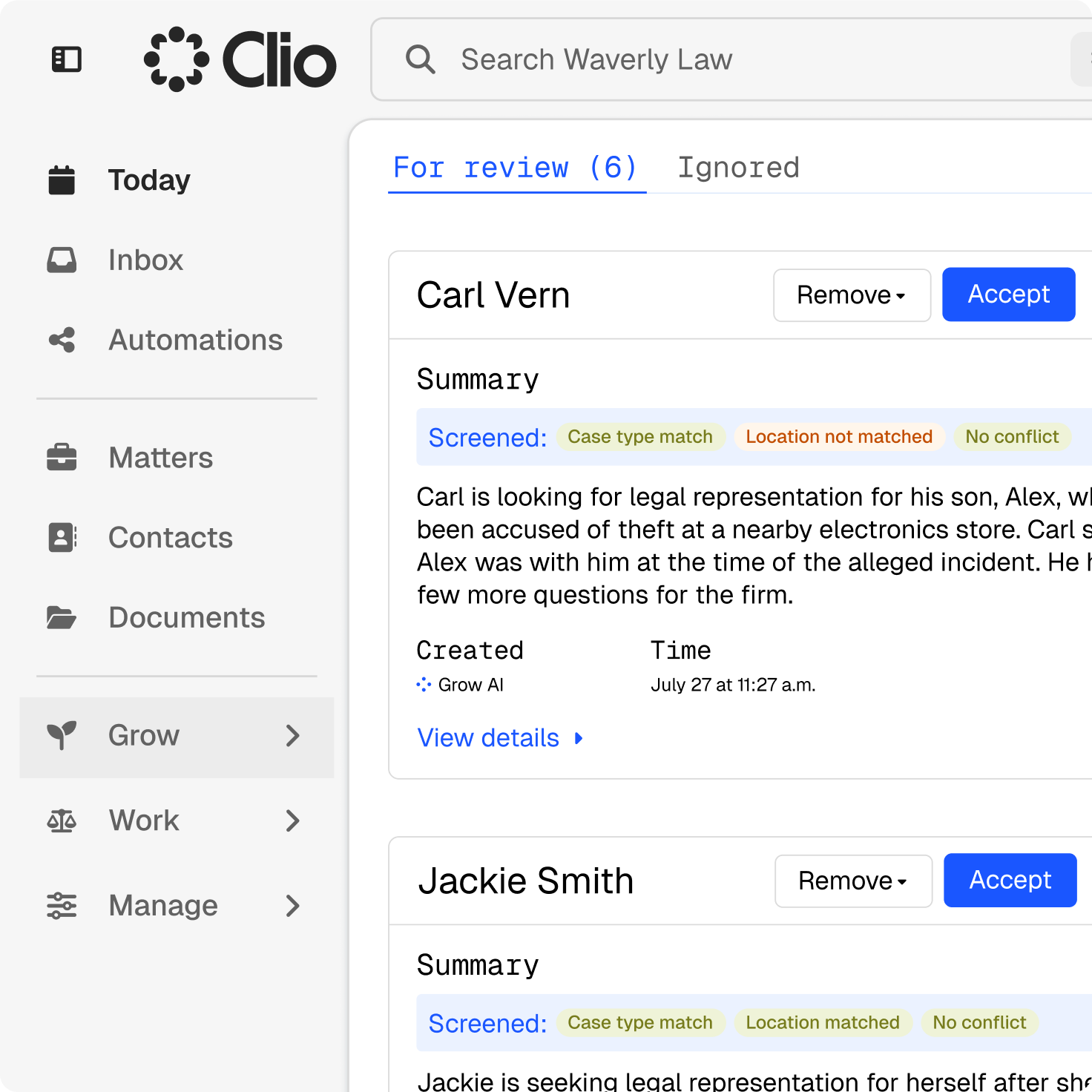
Capture the client, charges, custody or bail status, court, judge, and next appearance during urgent intake, without typing it twice.
Capture the client, charges, custody or bail status, court, judge, and next appearance during urgent intake, without typing it twice.
File police reports, video, witness material, and court records by issue, and build the chronology for review.
Research bail, admissibility, and sentencing with the charges and record connected, then prepare motions and briefs for review.
Tie notices and orders to court dates and tasks, with client updates, flat-fee milestones, and trust activity on the same file.
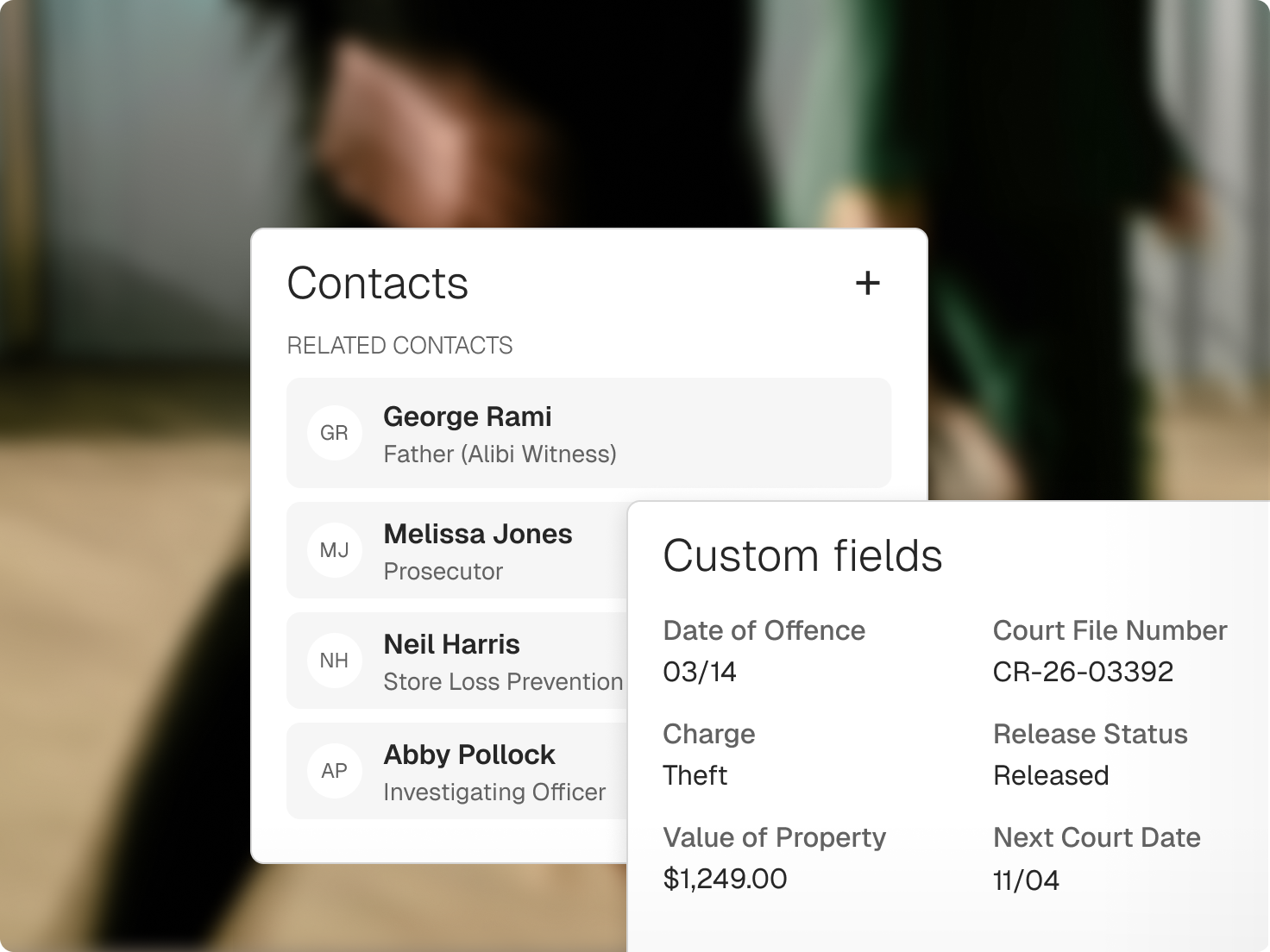
A criminal matter can open after an arrest, during an investigation, or hours before an appearance. Clio captures the client, charges, and custody status through intake and keeps the family, witnesses, and experts in related contacts, so you can decide the next move with the full picture in front of you.

Discovery arrives in pieces, from police reports and body-camera video to messages, lab results, and court records. Clio keeps each file organized by issue, and its legal AI can summarize supported files and draft a chronology for your review.
Research bail, admissibility, procedure, and sentencing with the charges and source record already linked. Clio’s legal AI returns cited authority and prepares motions, briefs, and client letters from the matter for your review.
An arraignment, a disclosure deadline, and a trial date each create work. Clio reads a scheduling order and drafts the dates onto the calendar for your firm to check, and docket tracking flags a new filing or order.
A flat fee can sit in trust and be earned in stages, from arraignment to pre-trial motions to trial. Clio tracks trust and operating accounts on separate ledgers and records each transfer to operating when a milestone bill is paid from trust.
legal professionals trust Clio
law societies and bar associations recognize Clio, including all 50 state bar associations in the United States
rating across 13,000+ reviews
If they don’t hear back from you within 5 to 10 minutes, they’ll call the next attorney. Time is really of the essence.
Law Office of Vernon Brownlee
Criminal law software keeps the client, charges, custody status, discovery, deadlines, and court dates on one defense file. In Clio, that file is the foundation of a legal AI platform, so intake carries into the matter, discovery is organized by issue, and the record is ready for the next hearing, motion, trial, or appeal.
The defense file, discovery, cited research, drafting, deadlines, communication, and trust accounting work from one record rather than separate tools. That shared context lets Clio prepare the chronology and the draft for your review and return the approved work to the matter, so the file carries from first appearance through sentencing and appeal.
Yes. Keep police reports, body-camera video, messages, lab results, and court records with the issue each one informs. Clio’s legal AI can summarize supported files and draft a chronology for your review, and your open questions stay visible beside the evidence. Large video streams from connected cloud storage.
Yes. Turn your firm’s approved documents into reusable templates, then prepare motions, briefs, affidavits, and client letters from the matter, with the charges and record connected. You review the language before anything is filed.
Yes. Clio’s legal AI researches state penal codes, rules of criminal procedure and evidence, and sentencing guidelines across federal law and all 50 states, alongside Fourth, Fifth, and Sixth Amendment case law and state appellate decisions. It returns cited authority for you to evaluate and apply.
Yes. Use tasks, matter stages, calendars, and court-rules calendaring across supported US courts to track arraignments, disclosure deadlines, motions, and trial dates, each on the same matter as the notice that set it. Court e-filing is available in Texas, Georgia, and California.
Yes. Clio tracks trust and operating accounts on separate ledgers as regulators require. A flat fee can sit in trust and be earned in stages, from arraignment to pre-trial motions to trial, with each transfer to operating recorded when a milestone bill is paid from trust. You can set a minimum balance and be notified when funds run low. Your firm stays responsible for its state bar’s trust accounting rules.
Yes. Attach files up to 5 GB each, and connect Google Drive, OneDrive, Dropbox, or Box so large body-camera video streams in its native player rather than downloading. Every file stays with the matter.
Read up on how you can use criminal law software to improve your practice.
Customer Stories

You decide who can open each matter, and Clio’s legal AI uses only the information that person may see. Firm data is not used to train third-party models, and you review every chronology, summary, and draft before it’s used.