
Legal research software covering 130+ countries
Case law, statutes, regulations, and legal commentary sit in one library, with new documents added daily.
Case law, statutes, regulations, and legal commentary sit in one library, with new documents added daily.
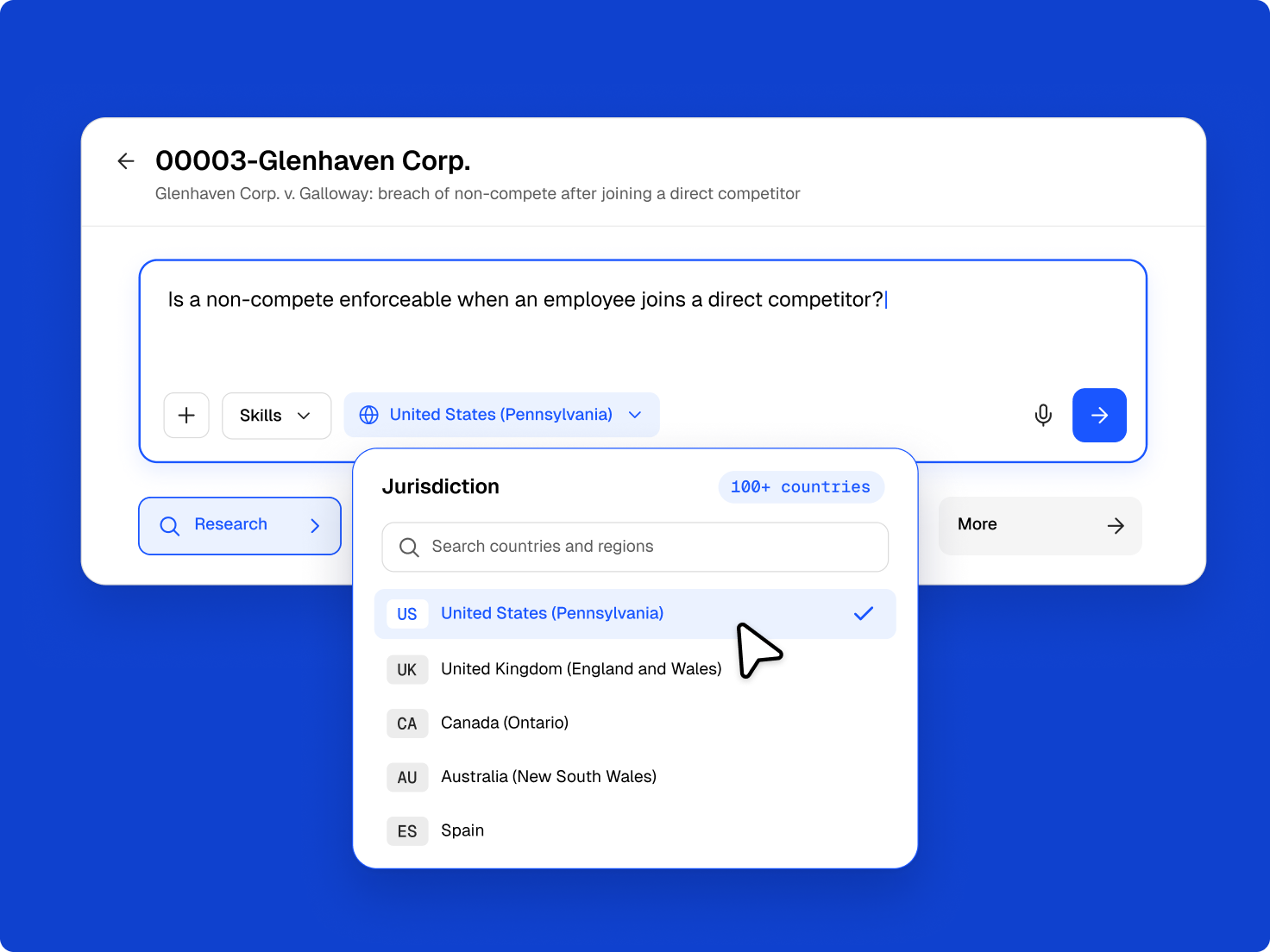
Find primary law from over 100 countries, and compare laws from different jurisdictions side by side.
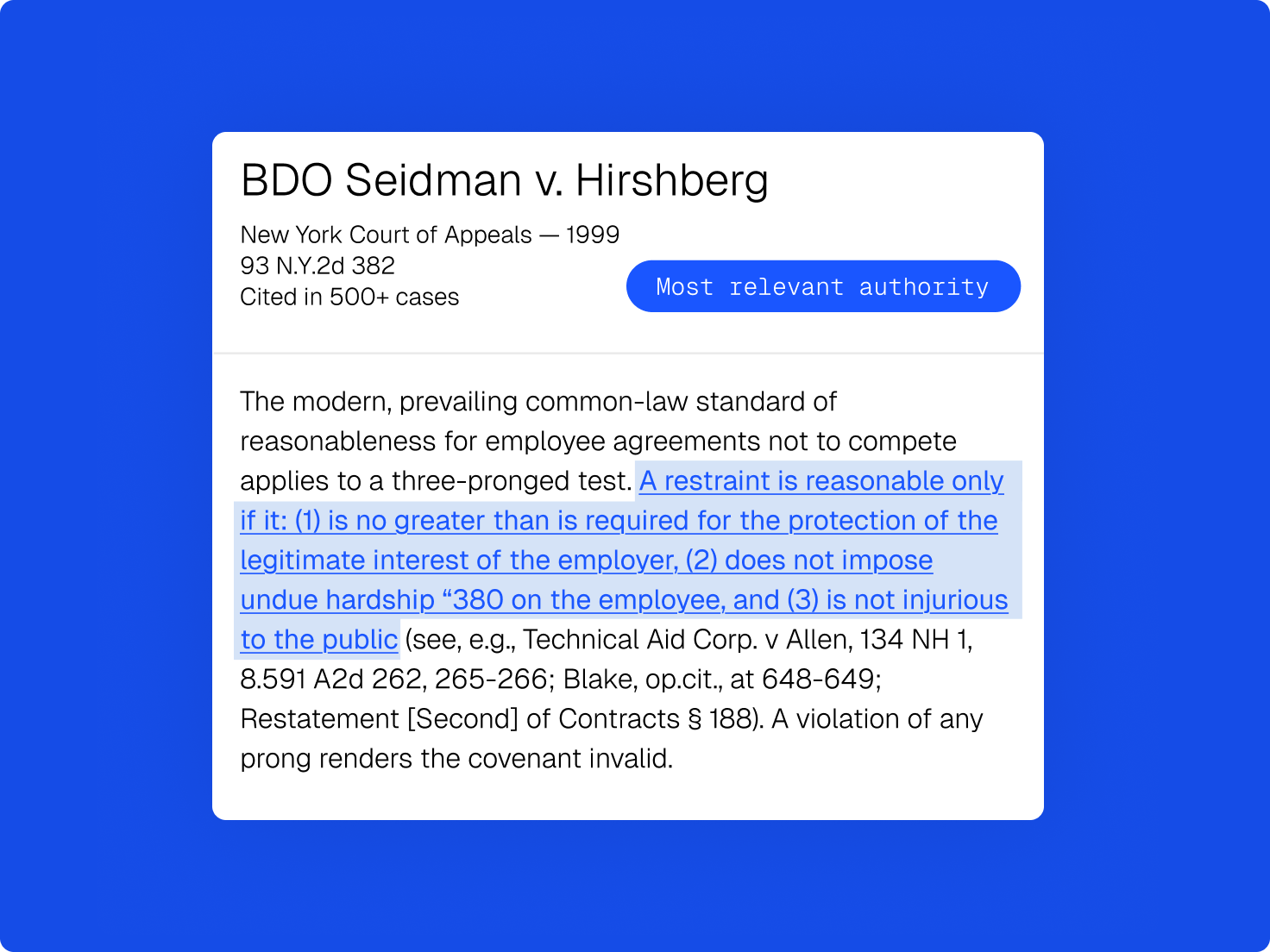
Clio highlights the passages courts cite most often, so you can focus on the reasoning with the most weight.
Color-coded signals show whether a decision has been upheld, questioned, or overturned.
Citation analysis surfaces relationships between cases that a keyword search can miss.
As I’ve transitioned into a new area of law, Clio Work has been tremendously valuable. I can count on it to provide case law, statutes, and plain-language summaries of nuances I haven’t faced since law school. Recently, a colleague needed an urgent summary while at the courthouse - within minutes, I had a comprehensive breakdown in front of me.
King Law
Clio Work is built for small and mid-sized firms that need broad coverage without the cost and complexity of legacy research tools.
Search suggestions appear as you type, and filters narrow results by jurisdiction, court, or practice area.
Advanced search handles complex queries, and filters by treatment or legal concept sharpen the results.
Secondary sources and legal commentary help you find your footing in a new area of law.

A precedent timeline shows how a legal principle developed, connecting earlier decisions to how courts apply it now.

View legislation as it existed at any point in time, so your analysis reflects the law when the case was decided.

Get alerts when a statute or regulation you rely on is amended.
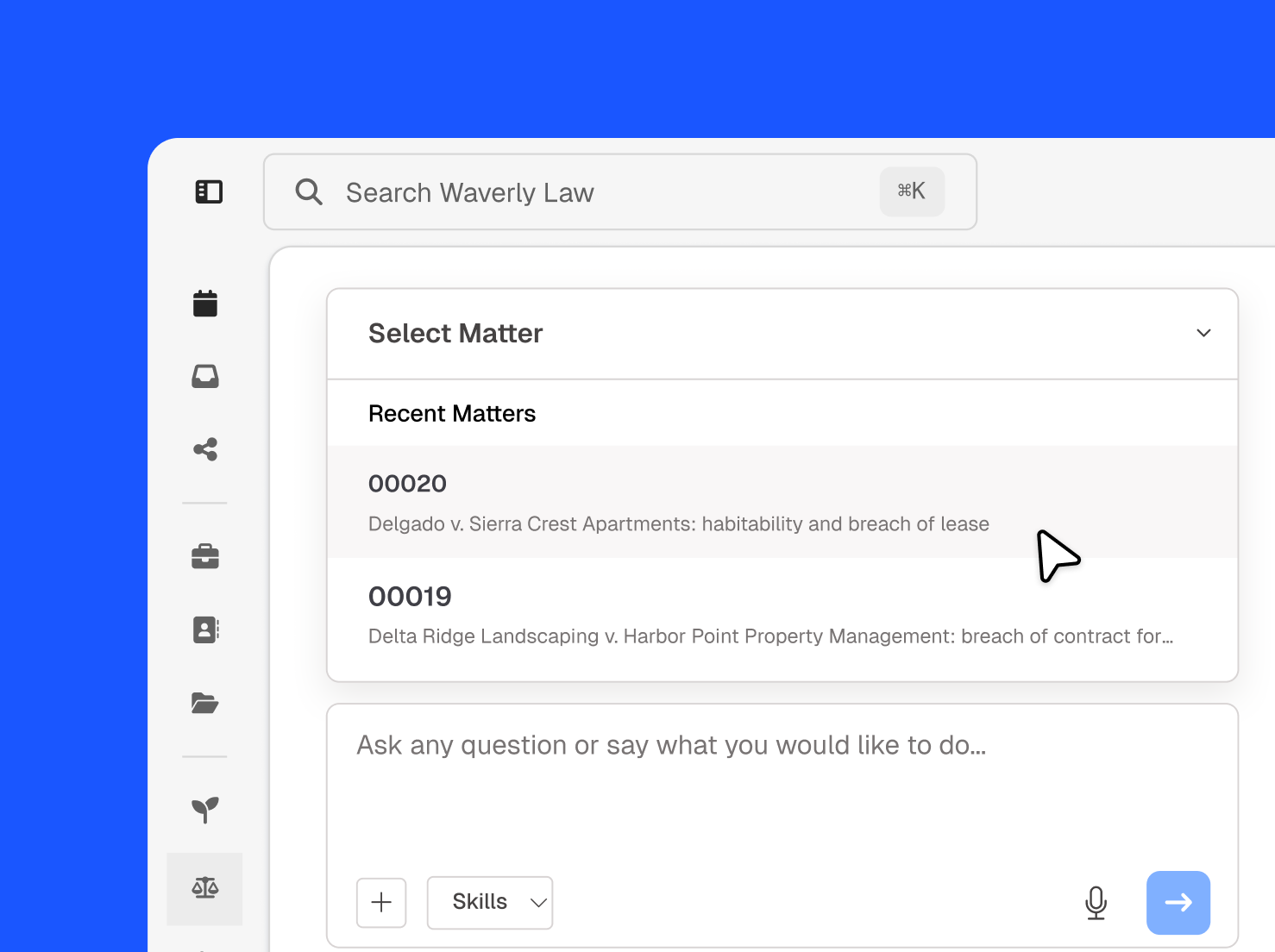
Clio Work connects to Clio Manage, so the authorities you find stay with the matter and carry into drafting and strategy.
Turn the matter’s facts and the law you’ve found into first drafts of motions, briefs, and memos for your review.
Redline in Clio Work or Microsoft Word with legal sources at hand through Clio for Word.
Pull key facts and a timeline from pleadings and discovery in Clio Work, each linked to its source.
Legal research software helps lawyers find and analyze the law that applies to a matter, including case law, statutes, regulations, procedural rules, and legal commentary. Better tools go beyond search, showing which passages courts cite most and whether a case is still good law. Clio does this from a library of more than 1 billion legal documents. Get a demo.
Look for AI legal research software that cites its sources, so each answer can be checked against the passage it came from, and that works from a dedicated legal library rather than the open web. Clio’s AI draws on more than 1 billion legal documents, and its citation signals show how each case has been treated. Get a demo.
Clio’s legal library includes case law, statutes, regulations, procedural and practice rules, and legal commentary from more than 2,500 data sources across over 100 countries, including exclusive partnerships. New documents are added daily. Start a free trial.
Clio uses citation analysis and color-coded signals to show whether a decision has been upheld, questioned, or overturned. It also highlights the passages courts cite most often and alerts you when a statute or regulation you rely on is amended, so you can confirm the authority before you cite it. Get a demo.
Yes. View legislation as it existed at any point in time, along with its historical versions, so your analysis reflects the law as it stood when it mattered to your case. A precedent timeline also shows how courts have applied a legal principle over the years. Get a demo.
Yes. Browse by jurisdiction, court, or practice area, and view multiple laws side by side in one view. Primary law from over 100 countries sits in the same library, so a comparison doesn’t mean switching tools. Get a demo.
A small firm needs the coverage of a large research platform without its complexity or learning curve. Look for case law, statutes, and commentary in one place, signals that show whether a case is still good law, and alerts when the law changes. Clio Work is built for small and mid-sized firms, with research connected to your matters. Start a free trial.
Yes. Clio Work connects to Clio Manage, so your research draws on the matter’s context, and the authorities you find carry into drafting and case strategy without switching between tools. Get a demo.
Clio Work runs on Clio’s secure, cloud-based infrastructure, and Clio holds SOC 2 Type II certification, with the report available in the Trust Center. Your firm’s data isn’t used to train third-party models, and Clio Work follows the role-based permissions set in Clio Manage. Read Clio’s AI Principles for how data is handled. Get a demo.