About This Template
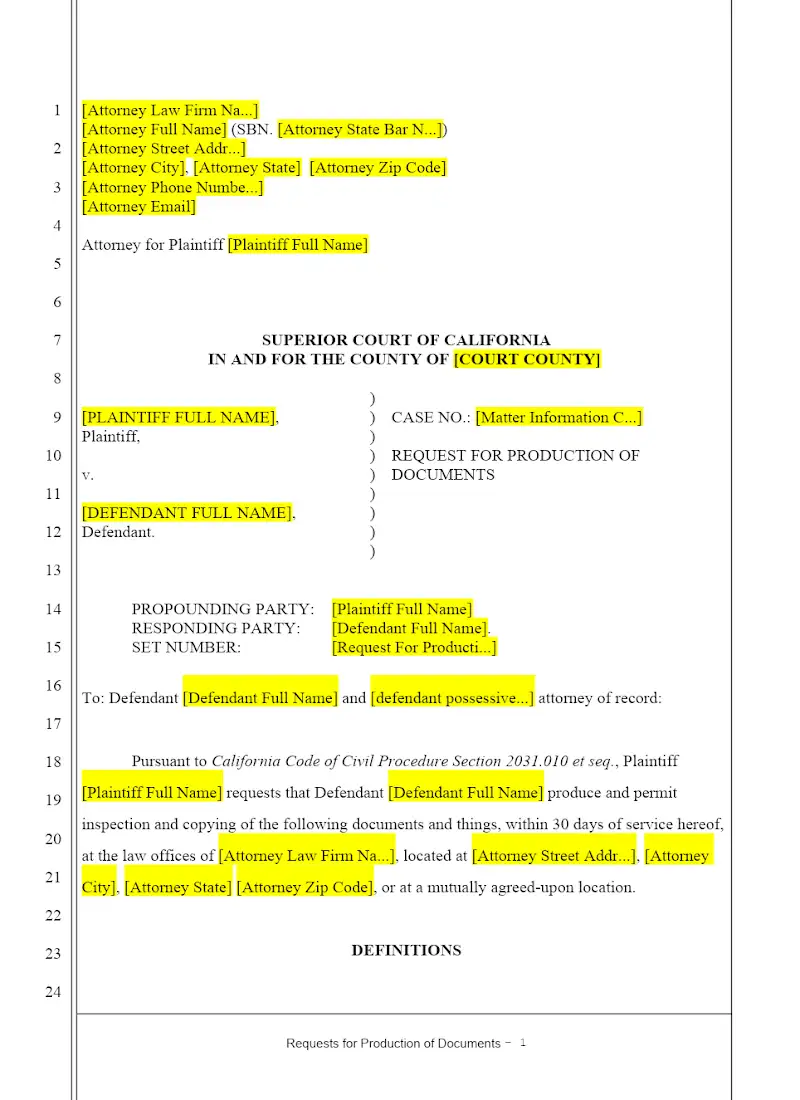
Discovery is a time-intensive process that can consume vast amounts of a litigation firm's resources. This template tackles that challenge head-on by providing a standardized, yet specific, set of Plaintiff's Requests for Production of Documents (RFP) tailored for California personal injury cases. Using this pre-drafted discovery tool dramatically reduces the time spent drafting RFPs from scratch, ensuring timely compliance with California's Code of Civil Procedure and accelerating the fact-finding process necessary to prove damages and liability. This can boost your firm's efficiency in handling a high volume of personal injury claims.
AVAILABLE FOR DOWNLOAD IN:
Clio Draft
Microsoft Word
Jurisdiction Notes
This template is designed for use in California civil courts and must strictly comply with the California Civil Discovery Act (CCP § 2016.010 et seq.). Attorneys should pay close attention to the permissible number of requests and the required format for serving and responding to discovery under the CCP. Local rules for the specific California Superior Court (e.g., Los Angeles, Orange County) may also dictate nuances in formatting or filing. Always confirm the requests are narrowly tailored to the facts of the case to avoid overbreadth objections. Consult local California counsel for complex jurisdictional matters.
What is this template?
This is a formal discovery document, a set of Requests for Production of Documents (RFP), served by the plaintiff's counsel on the defendant in a California personal injury action. The template requests categories of documents typically relevant to PI cases, such as incident reports, insurance policy limits, medical records (when relevant to the defense), photographs, surveillance footage, and documentation related to the defendant's affirmative defenses. It is structured to adhere to the formatting and specificity requirements of the California Code of Civil Procedure (CCP).
Disclaimer
This template and the information on this page are for informational purposes only and do not constitute legal advice. They are not a substitute for consulting with a qualified legal professional. The use of this template does not create an attorney-client relationship.
Customize in Clio Draft
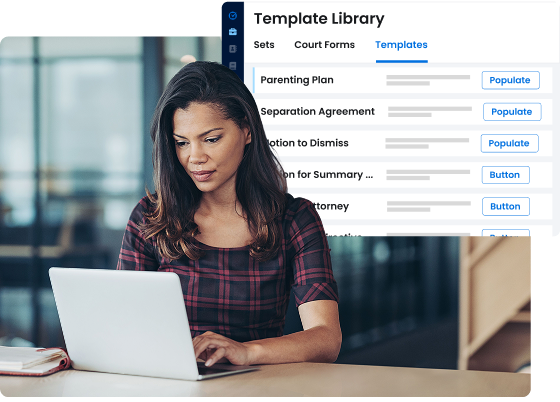
Autofill client data
Populate the fields of any legal document template with client and matter details from your Clio account. Reduce manual entry and cut errors.
Clause library
Build a reusable clause library and insert the right language every time. Keep templates current without hunting through old files.
E-signature
Send documents for secure e-signature, track status, and file the signed copy back to the matter automatically.
How to Customize
With Clio Draft

If this template is available in your region, you can activate it in your Clio Draft account. It will then be pre-filled with information from your contacts and matters, helping you save time.
- Click Request Template, and complete the Request Information form.
- Open the activation email to activate the template in Clio Draft.
- In Clio Draft, go to Library and select the Court forms subtab.
-
Select a category to view all the court forms associated with that
category.
- Find the form that you need. You can use the search bar to search by form number or form title.
- Optional: To preview the form, click the Actions dropdown and then select Preview.
- Click the Actions dropdown and then select Create form template.
-
At this stage, you can configure any fields on the template that will
remain consistent across multiple matters and specific practice areas.
- Purple fields: These fields are highlighted in purple because they are connected to linked fields that will automatically insert information entered on the Populate page. If you fill in a purple field, the data in that field will always populate when you draft a document from this form template and will not be overwritten by text entered on the populate page.
- Blue fields: These fields are highlighted in blue because they are unique to a specific matter. You will enter this information after you generate the form template, on the Populate page.
For detailed instructions for drafting form templates and more information about Clio Draft, see Clio Draft: Form Templates and Clio Draft: Draft and Manage Documents.
Without Clio Draft

You can download this template as a Microsoft Word document. You can also learn more about how Clio Draft can automate your document workflows and request a demo.
- Click Request Template.
- Open the email from Clio and download the Microsoft Word template.
- Set up Word document templates. This allows you to edit relevant merge fields in the document.

Legal Disclaimer
This template is provided for informational purposes only and should not be considered legal advice. Consult with a qualified attorney in your jurisdiction before using this template for your specific legal needs.