
Law firm accounting software without a separate bookkeeping tool
A double-entry general ledger, bank feeds, and financial reports sit in the same system as your bills and trust records.
A double-entry general ledger, bank feeds, and financial reports sit in the same system as your bills and trust records.
Bank and credit card transactions arrive through Plaid in near real time, with suggested matches you accept or correct.
Compare bank records, client trust ledgers, and trust liabilities, and keep current and past reconciliation reports on hand.
Upload a receipt and Clio pre-fills the vendor, date, and line items for you to check.
Give an outside accountant or bookkeeper access to the books without opening the rest of your account.
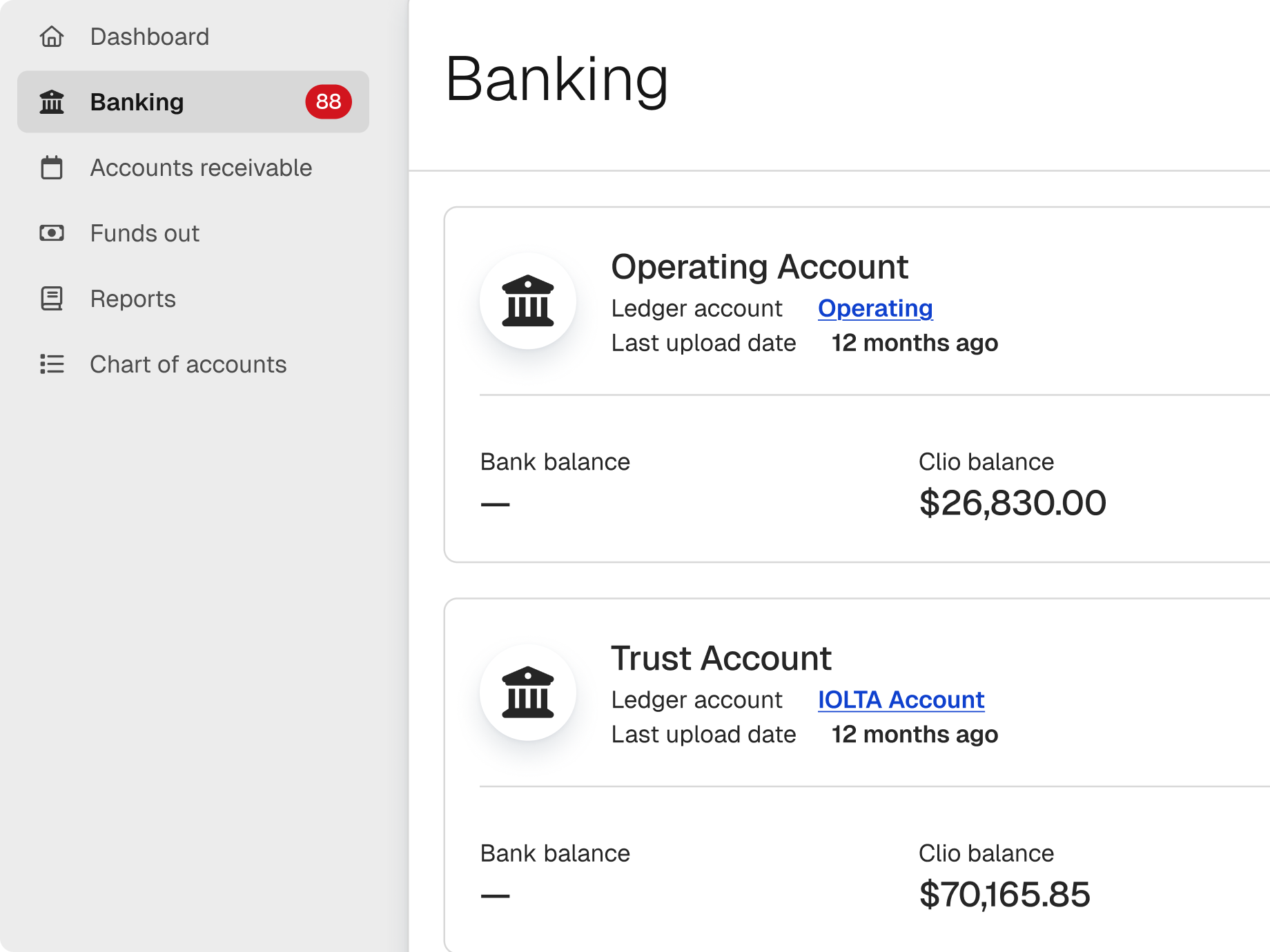
Clio records each trust transaction against its client and matter, which supports your compliance work without replacing it.
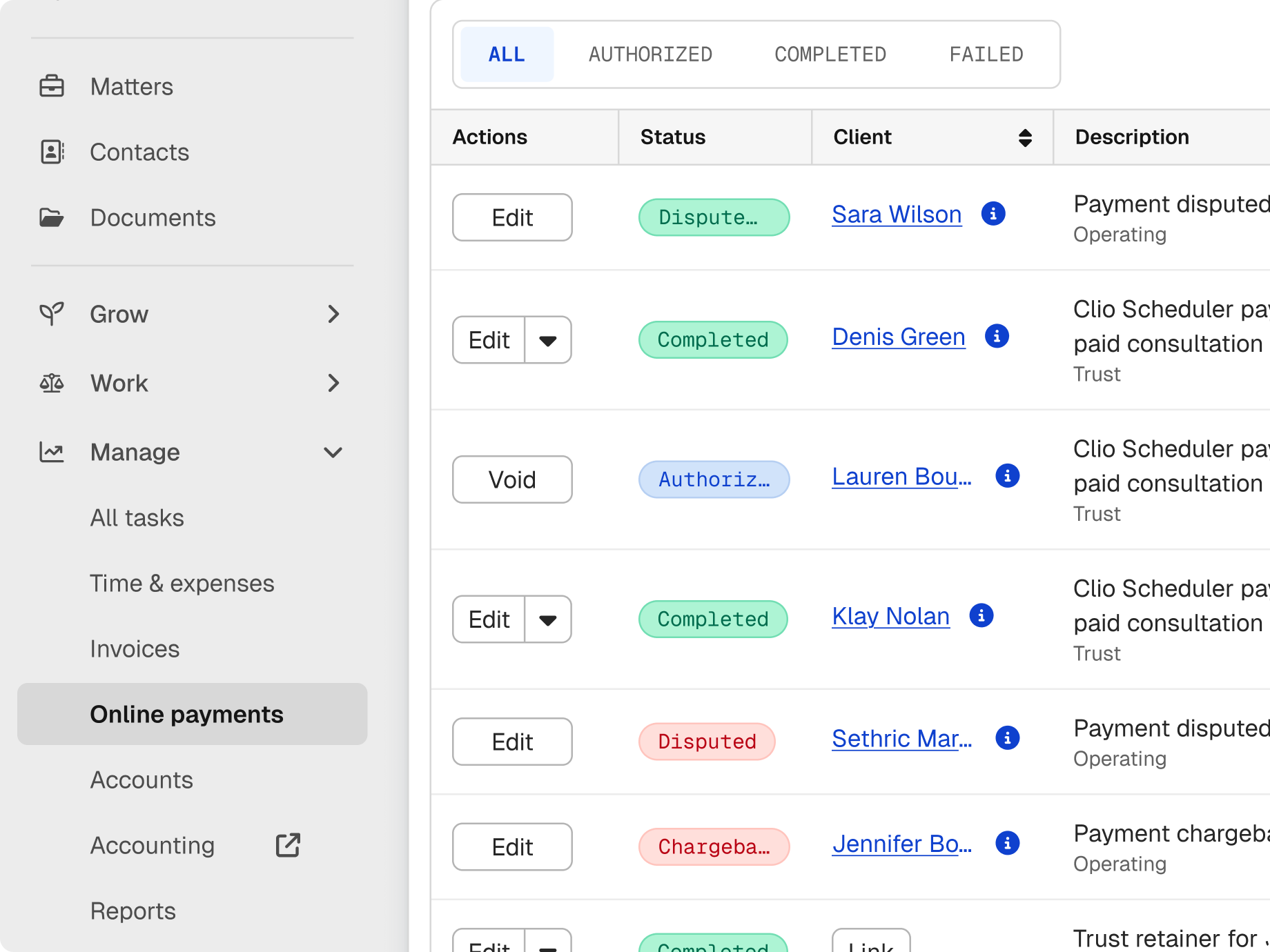
Payments apply to the bill they cover and record to trust or operating, so client funds stay where they belong.
Combine several trust payments into one withdrawal instead of moving money line by line.
Create a dedicated IOLTA account, and confirm your state bar’s requirements as you configure it.

Run a balance sheet, profit and loss, and cash flow report from the same records your bills come from.

Profitability reports break results down by matter and across the firm.

Track vendor bills and print checks without switching to another program.
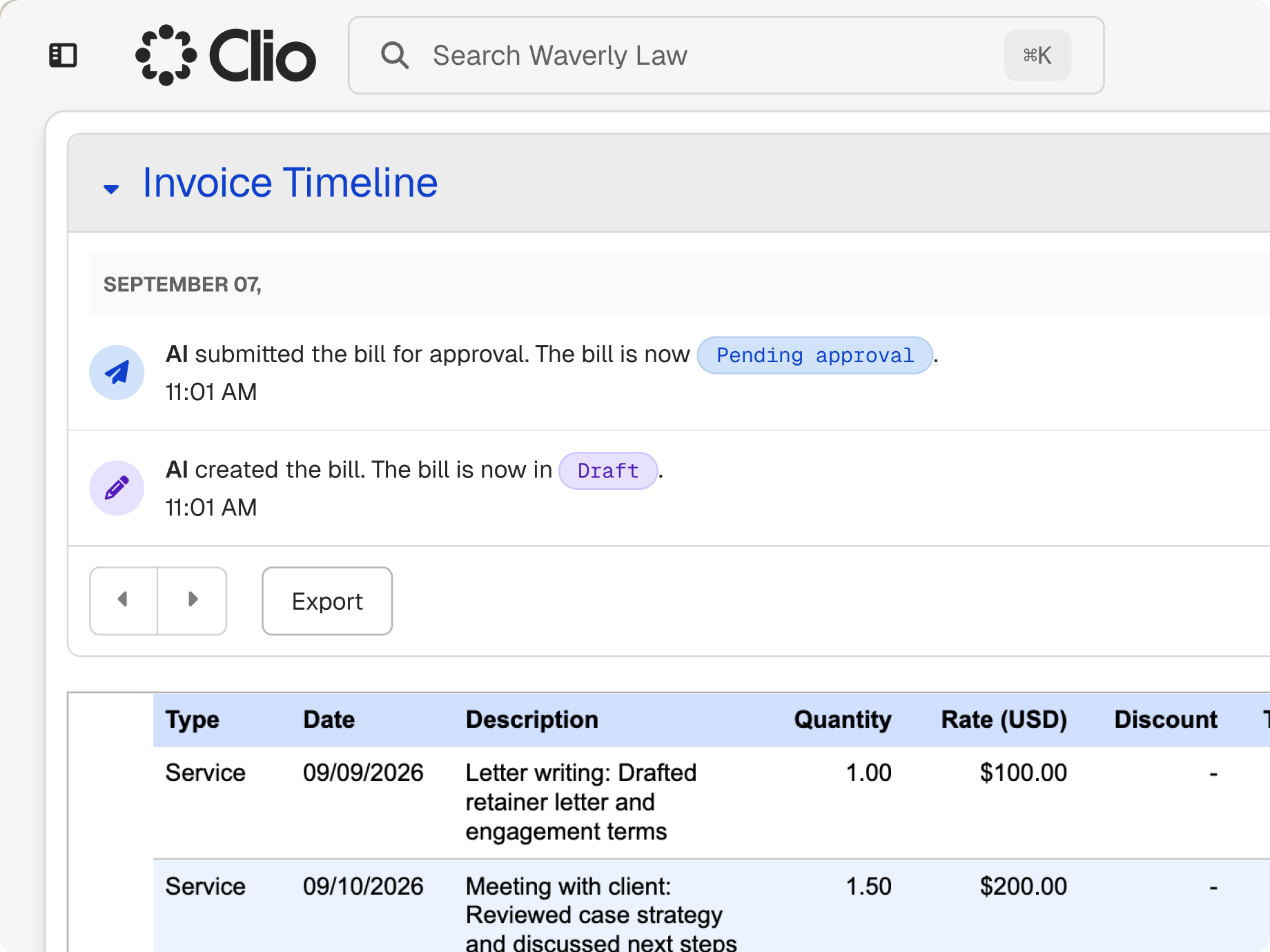
Clio’s AI handles the matching and pre-filling, and you keep the review and the approval. Clio doesn’t use your firm’s data to train AI.
Clio proposes a match for each bank transaction, and you confirm or change it.
Rules categorize repeat transactions and either confirm on their own or hold until you sign off.
On select plans, Clio’s AI drafts bills from recorded time, and your team approves each one before it goes out.
Legal accounting software records a law firm’s income, expenses, and client funds in a general ledger built for legal work, with trust money kept apart from operating money. In Clio, the ledger sits beside your bills and matters, so bills and payments reach the books as soon as they’re approved and received. Get a demo.
Law firms hold money that belongs to clients. Legal accounting tracks those trust funds by client and matter, supports three-way reconciliation, and keeps trust separate from operating income, which general bookkeeping tools aren’t set up to do. Get a demo.
Yes. Accounting is included in every Clio plan, from Starter up, rather than sold as a separate add-on, and it comes with a free accountant license. Bank feeds, reconciliation, and financial reports are part of the same subscription, so there’s no second bookkeeping product to buy. Compare plans.
Yes. Clio supports three-way trust reconciliation, comparing bank records, client trust ledgers, and trust liabilities, and reconciles operating accounts two ways. Current and past reconciliation reports stay available. Get a demo.
Clio lets you set up a dedicated IOLTA account and records each trust transaction against its client and matter. That supports compliance rather than replacing it, and your firm remains responsible for its state bar’s rules. Get a demo.
Yes. Track vendor bills, print checks, capture expenses from receipts, and match bank transactions in the same place you bill clients. You can also invite an outside bookkeeper whose access is limited to the books, so they can work without seeing the rest of your account. Start a free trial.
Yes. On every plan, Clio suggests bank matches, pre-fills expenses from receipts, and applies rules you set. On select plans, Clio’s AI also drafts bills from recorded time and builds profitability reports. You review and approve the results. Get a demo.
Clio connects bank and credit card accounts through Plaid, with transactions arriving in near real time. Banks that aren’t on Plaid can upload a bank file instead. On select plans, Clio also integrates with QuickBooks Online, Xero, and TrustBooks if your accountant prefers to keep working there. Get a demo.
Look for software that keeps trust and operating accounts separate, reconciles trust three ways, connects to your bank, and shares records with your billing. Clio does this in the same system as your matters, so the books reflect the work. Start a free trial.