ClioCon 2026: Going Beyond Limits in Boston

Content Strategist, Clio
ClioCon 2026 brought us back to Boston’s Hynes Convention Center on October 26–27, and this year we went Beyond Limits. Over 3000 legal professionals filled the venue and 8500+ more joined from around the world for two days of big ideas, hands-on learning, and plenty of new connections. Between sessions, they explored exhibitors, earned CLE credits, and yes, visited the puppy lounge.
We had a lot to share this year. If you caught Jack’s keynote, you saw it first: Clio has a brand-new look. (And if you were in New York this week, you might have spotted it on a billboard in Times Square.) We also announced new products like Clio Phones and Drafting in Clio Work, and we released the 2026 Legal Trends Report. On the main stage, Malcolm Gladwell talked about why good ideas take so long to catch on, Ethan Mollick showed how fast AI is changing work, and Mechele Dickerson challenged lawyers to help rebuild the middle class.
Whether you were in the room, attended virtually, or catching up now, here are the highlights from ClioCon 2026 and a first look at where we’re headed in 2027.
Jack Newton's opening keynote
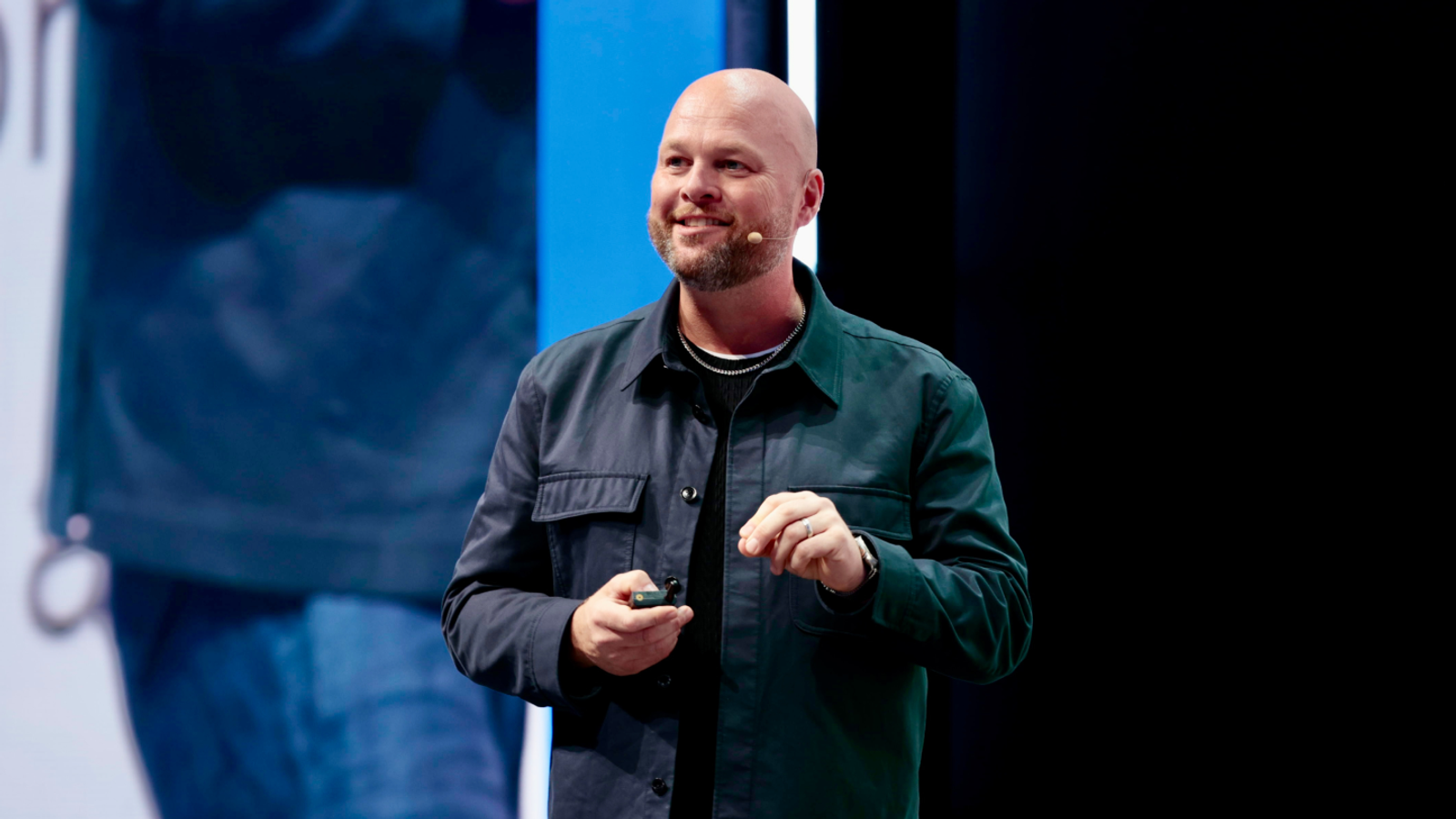
Our Founder and CEO, Jack Newton, opened ClioCon 2026 by celebrating the legal professionals who have embraced AI faster than anyone predicted. He looked back at the vision he shared last year: building the world’s first intelligent legal work platform. Today, more than 10,000 firms have adopted Clio Work, and Clio serves every part of the legal world, from solo practitioners to large firms, in-house teams, and the courts.
Jack also shared the story behind our new brand. After 18 years, and after leading the industry through the shift to the cloud, Clio’s new logo and design reflect who we are today: a single place for your entire legal world.
The idea at the heart of his keynote was simple: context creates capability. Jack showed how bringing your matters, conversations, documents, and the law together in Clio helps AI do more meaningful work for your firm. He also shared findings from the 2026 Legal Trends Report, including the biggest annual increase in billable time in the report’s history, and gave a first look at Clio Phones, drafting in Clio Work, Clio Timekeeping, and more.
Want the full story, including a walkthrough of one client’s matter from first call to court ruling? Watch Jack’s keynote below.
ClioCon 2026 product announcements
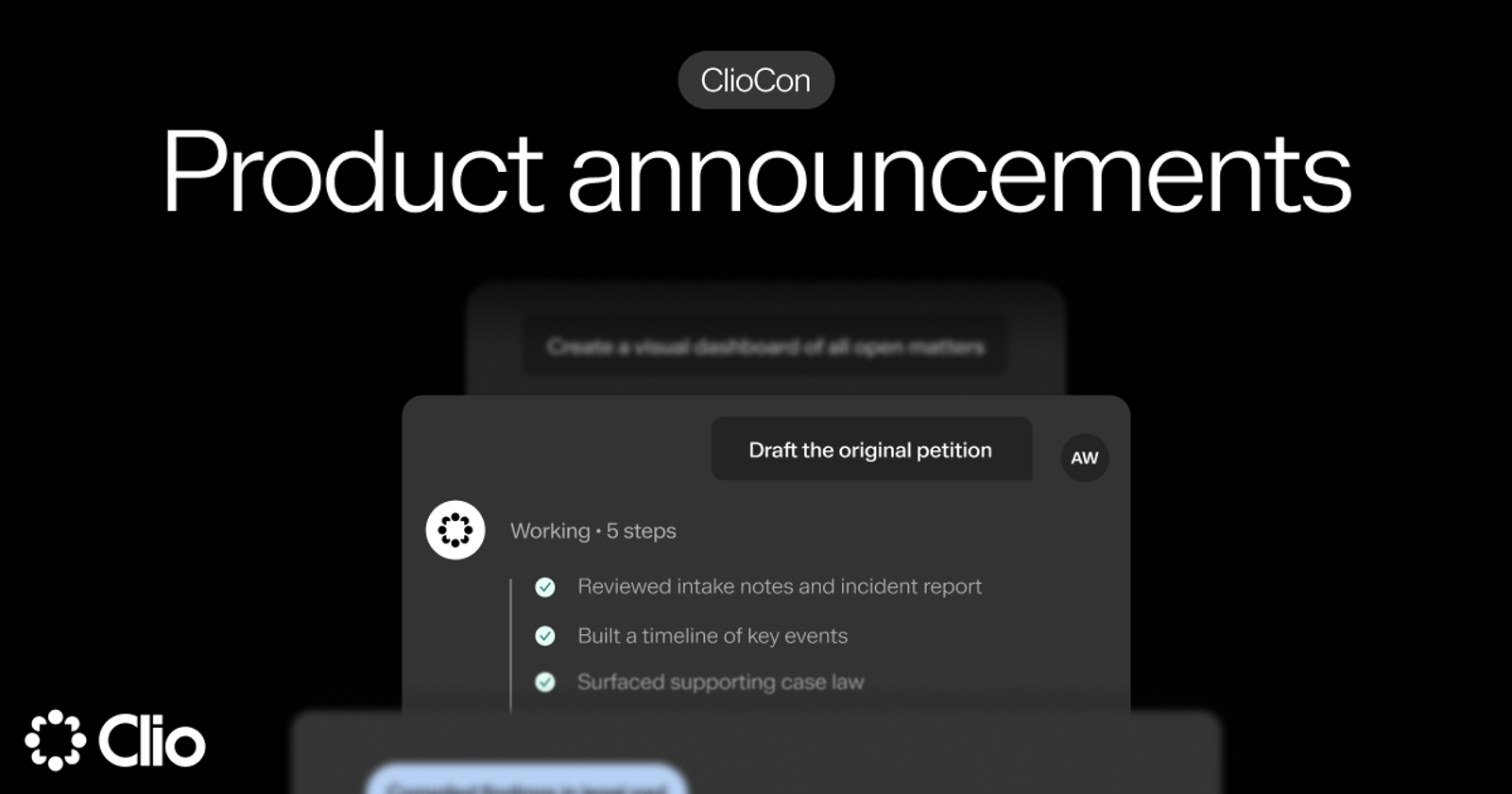
This year’s announcements all build on the idea Jack shared on the main stage: context creates capability. Here’s a quick look at what’s new and what it means for your firm.
The new Clio experience
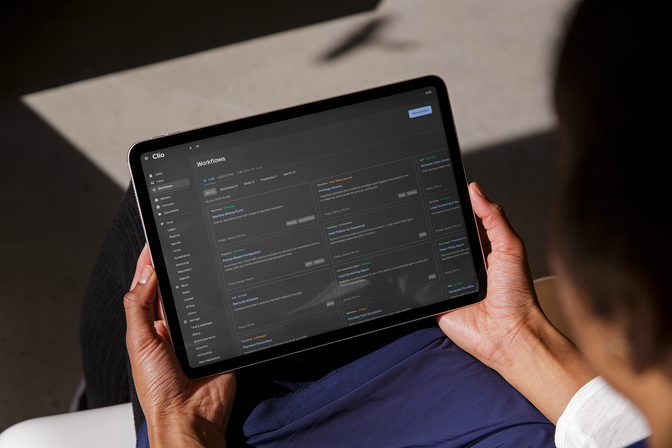
Legal work doesn’t stay in one place. It moves from intake to the matter to billing, and the new Clio experience brings the Clio products your firm uses together in one place. With one login and one view, you can go from a new lead, to working on the matter, to billing for it, without switching between products.
Your day starts on the new Today view, which shows you what needs your attention first. Client communication comes together in one inbox, and your matters, contacts, and documents stay in sync across your Clio products. You’ll also be able to use Ask Clio to get answers or hand off multi-step work with a single request.
Automations are what make it all work together. Just describe a process in plain language, and Clio builds the automation for you. It can run on a schedule or start when something happens in Clio, moving work across your Clio products, with a review step anywhere you want a person to sign off. With skills, you can tell Clio how your firm handles a task once, like a risk analysis, and Clio will follow that approach every time.
Drafting in Clio Work
Drafting in Clio Work brings every kind of drafting your matters need into one editor. Clio Work is the only platform that combines all three:
- AI drafting for complex, one-of-a-kind documents like motions and briefs.
- Document automation for the documents you create every time you handle a certain matter type.
- Court forms that stay up to date for the courts you work with.
Every draft starts with your matter details already filled in, cites its sources so you can check the law, and saves back to the matter as a Word document. Drafting in Clio Work is available now for Clio Work customers in the U.S.
Clio Phones
Clio Phones brings your firm’s phone system into Clio. When a call comes in, it matches the call to the right contact and matter, so as soon as the call connects you can see where the matter stands, without opening the file mid-conversation or asking your client to bring you up to speed. From there, you can stay focused on your client. Every call is recorded, transcribed, and summarized, so no one has to split their attention taking notes or rebuild them from memory afterward. When the call ends, a time entry is populated automatically and everything is filed to the right matter or contact.
Clio Phones is available as an add-on and will work across Clio Manage and Clio Grow, with a 90-day trial in select states. Availability for more states and Canada is coming soon.
More announcements and feature updates
- Grow AI: works around the clock to capture and screen new leads for fit and conflicts, book consultations, and follow up when leads go quiet.
- Clio Operate and Vincent: Clio’s legal AI, Vincent, is now built directly into Clio Operate, Clio’s enterprise case management system.
- Insights & Benchmarking: see how your firm’s key metrics, like utilization, realization, and collection rate, compare with similar firms. Now rolling out to U.S. firms on Advanced plans and above.
- Clio Docket: connect a matter to its court docket, get alerts when new filings come in, and save documents straight to the matter. Available now for Clio Work customers in the U.S.
- Clio Timekeeping: captures your time as you work, across the documents you write, the calls you make, and the emails you send, then creates time entries on the right matter for you to review and approve. Coming soon.
- Judiciary-Grade AI™: AI built to meet the standards courts require, starting with our acquisition of Learned Hand, so courts can keep up as legal work moves faster. More to come.
Catch up on every new release on our What’s New page, or talk to our team to see how it all works for your firm.
The 2026 Legal Trends Report: Key takeaways

The 2026 Legal Trends Report launched at ClioCon, and it shows AI is now part of almost every firm. The bigger question is what firms do next. Here’s a quick preview:
- AI is nearly universal. 85% of legal professionals report some AI adoption at their firm, up from 79% last year.
- Firms say AI is paying off. 64% of legal professionals at AI-using firms say AI has had a positive effect on revenue, up from 36% a year ago.
- AI adopters see higher revenue. Firms using Clio’s AI tools record about 8% more revenue per responsible lawyer than comparable firms that don’t.
- AI is becoming the first stop for consumers. 46% of consumers say they would consult AI before contacting a lawyer.
That’s just the start. The full report explores how firms are turning AI’s time savings into revenue, what it means for the future of pricing, how consumers really feel about lawyers using AI, and much more. Download the 2026 Legal Trends Report to get the full picture.
Our 2026 Reisman Award winners
On the first night of ClioCon, we celebrated this year’s Reisman Award winners at Clio After Dark. These firms are changing what legal services can look like for the people and communities they serve.
- Legal Innovation: Pro Legal Group Limited
- Excellence in Client Service: Rozas Law
- Best Growth Story: Quill & Arrow, LLP
- Best New Law Firm: Zachary W. Anderson Law
- Community Champion: Peter Law Group
- Diversity & Inclusion: ALH Law Group, LLC
- Legal Impact: LegalWorks, Inc.
Read the stories behind each winner on our 2026 Reisman Award winners page.
Integration Award winners
Our Integration Awards recognize the apps in Clio’s ecosystem that are making the biggest difference for law firms. Here are this year’s winners.
Best New App: RedactifyAI
Redacting documents used to mean downloading files from Clio, redacting them in another tool, and uploading them again, which was slow and left room for mistakes. RedactifyAI uses AI to find and permanently remove sensitive information from PDFs, Word files, and scanned images, right from your Clio matters. Redacted versions sync back to the matter automatically. One customer cut a half-day production task down to about 20 minutes.
Best Business of Law App: AltFee
Many firms price a matter once and never look back to see if that price worked. AltFee gives firms one place to scope, price, and analyze alternative fee arrangements, and to keep improving them. It combines Clio’s matter, billing, payment, and time data with its own pricing engine, so every matter makes the next quote smarter. AltFee says its customers see an average 11.6% pricing uplift from value-based pricing. As AI helps firms work faster, AltFee helps make sure their pricing keeps up.
Best Practice of Law App: Querious
Querious listens during client conversations and prompts attorneys in real time with clarifying questions, legal issues, and relevant content. After the call, it drafts a billing entry, fact summary, preliminary legal analysis, and follow-up task list, and sends them all to the Clio matter. Its new two-way integration also pulls past meeting summaries back from Clio, so each conversation builds on the last. Querious says attorneys save 10 to 15 minutes of admin per client conversation.
Explore more apps that work with Clio in our App Directory.
Keynote speaker highlights
Malcolm Gladwell: Weak Links, Strong Links: How AI Will Reshape Justice
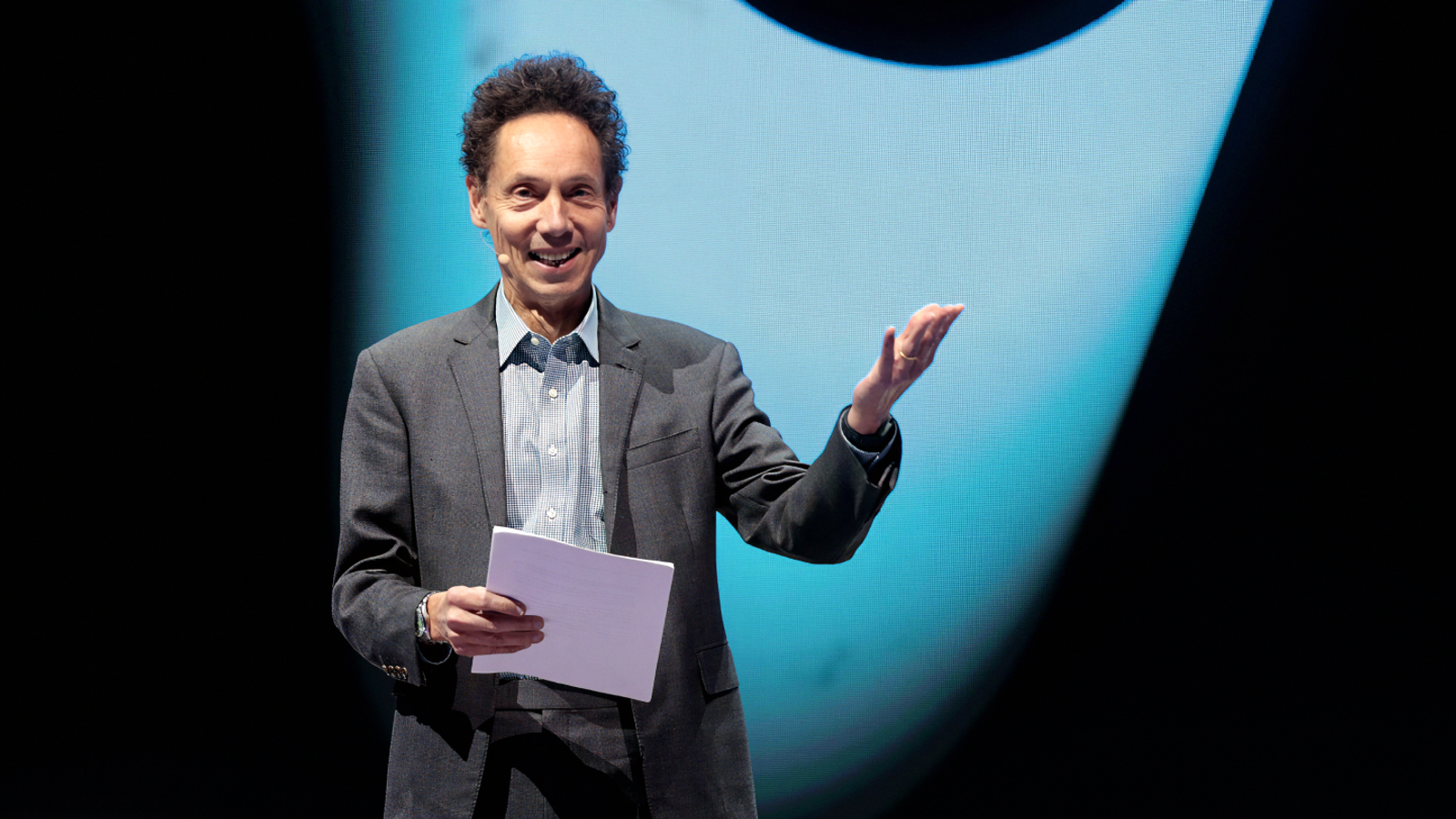
Malcolm Gladwell closed out day one of ClioCon with stories about why good ideas spread so slowly. One was Boston’s Operation Ceasefire, which dramatically cut gun violence in the 1990s. The other was a less invasive heart surgery that leads to faster, safer recoveries. Both were proven to work, yet Baltimore is the only other city to properly adopt Ceasefire, and most heart surgeons still haven’t switched.
His message for the legal profession: people usually know the better way. What holds them back is that change asks them to rethink their routines and even their identity. As AI opens new ways to practice law, Malcolm encouraged attendees to keep asking one question: is the client better off?
In a conversation with Jack Newton afterward, he suggested AI’s biggest promise for legal may be strengthening the weakest links in the system, while human judgment and connection stay at the center.
Ethan Mollick: From Disruption to Opportunity: Embracing the AI Revolution

Ethan Mollick opened day two with a reminder that “everyone is making it up as we go along” with AI. He walked through how quickly AI has moved from chatbots to agents that can work on their own toward a goal. He also explained AI’s “jagged frontier,” where AI can be remarkably good at some tasks, including parts of legal work, and surprisingly weak at others. In a live demo, he showed AI building a full business plan and financial model in minutes for a former lawyer’s startup idea.
His message for legal professionals: your expertise matters more now. Deep knowledge helps you spot the edge cases AI misses, and your judgment and taste decide what good work looks like. He encouraged firms to treat AI like an outside team, with humans stepping in for expertise and sign-off. He also urged firms to start experimenting now, since AI keeps outpacing even expert predictions.
Mechele Dickerson: The Middle-Class Moment: How Law Can Rebuild What It Helped Break
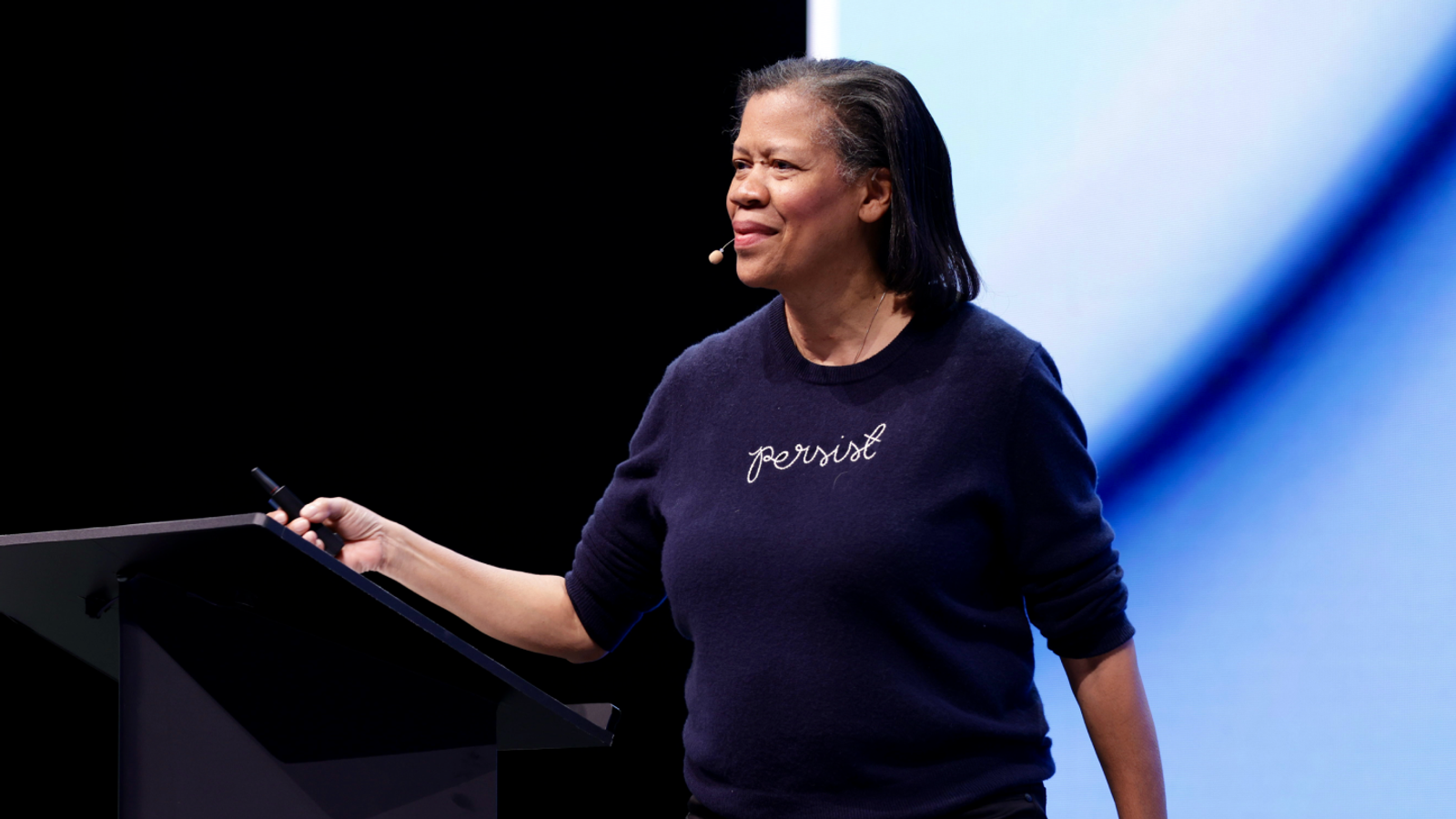
Mechele Dickerson delivered the final keynote of ClioCon with a look at why life has become so hard for middle-class and lower-income families. She described a group facing student debt, rising costs, and less job security all at once, and noted that 42 million Americans now owe $1.7 trillion in student loans. As she explained, these pressures are all connected, and each one makes the others harder.
Her challenge to the room was simple: pick one thing you can do to make life better for middle-class families, and do it. She reminded attendees that access to legal services leads to access to justice, which leads to access to economic mobility. She also encouraged them to get involved with their law schools as those schools prepare students for AI. Her closing message: lawyers can’t fix everything, but each of them can help restore people’s hope in the American dream of upward mobility.
Highlights from ClioCon 2026 sessions and workshops
Across two days in Boston, attendees could choose from many sessions and workshops. Topics ranged from the business of law and legal tech to client experience, firm culture, and hands-on Clio training. Tracks were built for solo and small firms, mid-to-large firms, and everyone in between, and many sessions were CLE-eligible. More than 30 sessions were streamed for virtual attendees, and 20+ networking sessions gave everyone a chance to connect with peers in their practice area.
Here are a few of the highlights.
Signal vs. Noise: Winning Plays for Law Firms in the AI Era
AI is changing what clients expect, who firms compete with, and how legal services are found, priced, and delivered. In this CLE-eligible session, Jae Um, Co-Founder, Chief Growth Officer, and Head of Knowledge at Lumio, shared a practical framework for standing out in a crowded, fast-moving market. Attendees learned how to define who they serve, build a value proposition that sets them apart, and think about positioning, pricing, and growth as AI transforms the industry. They left with a clearer view of where their firm fits and how to talk about it.
Leading AI Adoption: Governance, Guardrails, and Expectations for Law Firm Leaders
Bringing AI into a firm comes with risks and responsibilities that a typical software rollout doesn’t. Kathy Sheehan, Vice President and Associate General Counsel of Business Conduct & Ethics at Amazon, walked firm leaders through the decisions AI requires. She covered how to set clear rules for acceptable use, decide where oversight is needed, and assign responsibility for review, risk, and compliance. This CLE-eligible session gave leaders a practical framework for adopting AI responsibly and keeping their teams aligned.
Pricing with Confidence: 4 Steps to Charging What Your Work Is Worth
As AI speeds up legal work, the limits of hourly billing are becoming harder to ignore. Molly Kremer, The Billing Coach, argued that most firms have trouble explaining the value of their work, and that this is where pricing goes wrong. She shared the seven “quiet discounts” firms give away without realizing it, and a four-step approach for pricing expertise and results: Price it, Like it, Quote it, Hold it. For firms exploring flat fees or subscriptions, or defending their hourly rates, this CLE-eligible session pairs well with this year’s Legal Trends Report findings.
The $1M Roadmap: Scaling a Small Firm
Many small firms hit a growth ceiling when their workflows can’t keep up with demand. Patricia Mancabelli, Founder of Her Corporate Counsel, and David Krenkel, Managing Member of Krenkel & Krenkel, LLC, joined Ryan Lyster, Clio’s VP of Customer Success, to show solo and small firm owners how to grow toward $1M and beyond while keeping control of their time and client experience. They covered building a clear revenue model and pricing structure, simplifying intake, and deciding what to delegate, automate, or standardize before making the next hire.
Winning the Talent War with AI: The New Retention Playbook
AI can make a firm a better place to work. Vedika Mehera Ahlgren, Director of Orrick Labs at Orrick, shared how firms are using it to cut the admin work that drives burnout, modernize their workflows, and keep their best people. Attendees learned how to make technology part of their recruiting and retention strategy, and how to bring new hires into workflows that support their growth.
Jack Newton’s closing keynote: 3 takeaways from ClioCon 2026
Jack closed out ClioCon 2026 by bringing the week’s biggest ideas together. More than 11,000 people joined us in Boston and online, and three themes stood out:
- Context creates capability. In legal work, context wins. The more AI understands your matters, your clients, and your firm, the more it can help.
- The client is the North Star for change. Malcolm Gladwell showed how long good ideas can take to spread, and Mechele Dickerson reminded us that the measure of our work is the person on the other end.
- We get to decide what comes next. As Ethan Mollick put it, no one knows exactly what the future of AI looks like, so we shouldn’t be passengers. We get to shape what the legal profession and its use of technology look like.
As Jack put it, we’re not waiting for the future of legal to arrive. We’re building it together.
Join us at ClioCon 2027 in Seattle
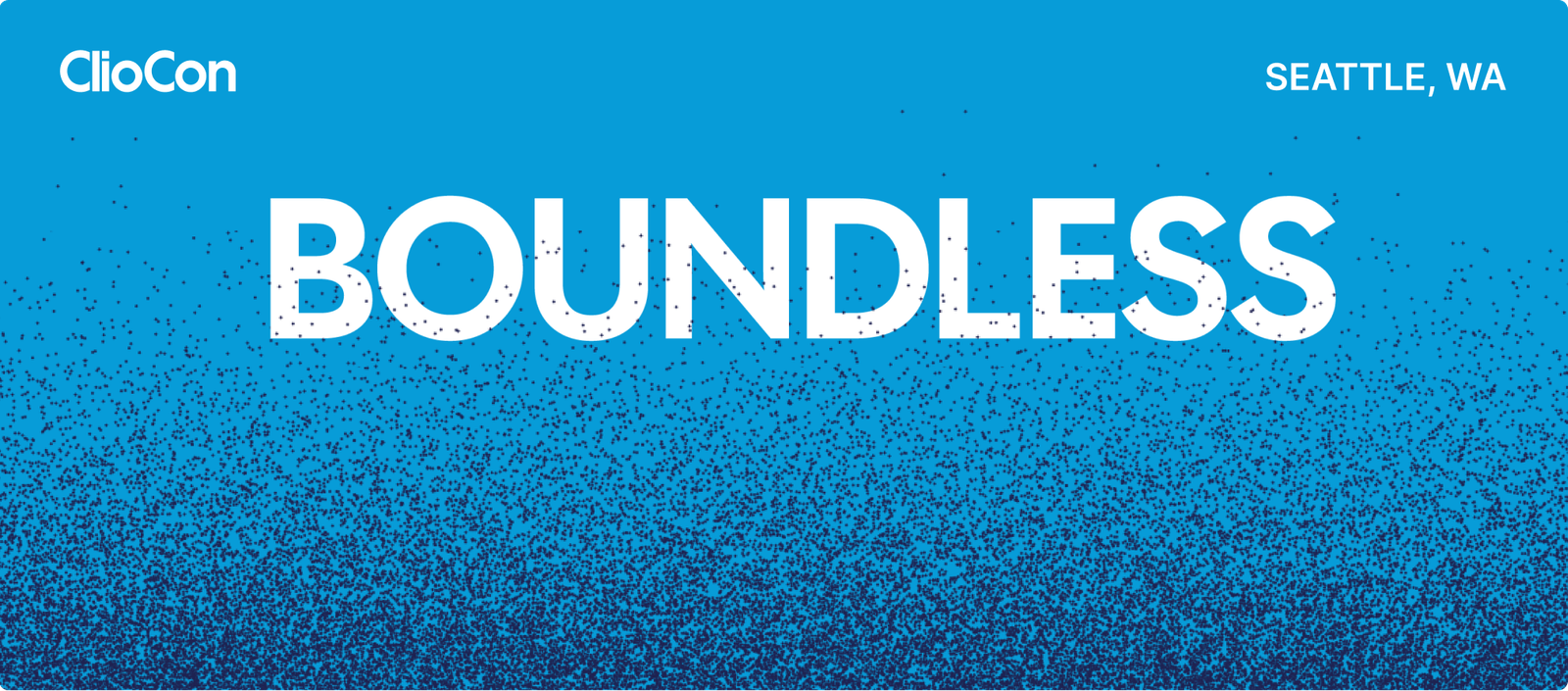
We’ll miss you, Boston, but the coffee in Seattle is calling. ClioCon 2027 lands in the Pacific Northwest on October 7–8, with a theme that says it all: Boundless.
Get ready for two more days of inspiring keynotes, practical sessions, and the connections that make ClioCon the legal industry’s favorite event. Whether you join us in Seattle or tune in virtually, there’s something for every legal professional.
Early bird pricing is available for a limited time, so register now to lock in your discounted rate.
ClioCon 2026 FAQs
What is ClioCon?
ClioCon (also known as Clio Cloud Conference) is Clio’s annual legal industry conference. It brings together thousands of legal professionals for keynotes, CLE-eligible sessions, networking, and the latest Clio product announcements. In-person attendees can also meet the Clio team for hands-on account support, preview new features, and learn how to get more out of Clio.
What did Clio announce at ClioCon 2026?
At ClioCon 2026, Clio revealed a new brand identity and announced the new Clio experience with Automations, Drafting in Clio Work, Clio Phones, and Clio Timekeeping. Clio also launched the 2026 Legal Trends Report.
Who were the ClioCon 2026 keynote speakers?
The ClioCon 2026 keynote speakers were Clio Founder and CEO Jack Newton, bestselling author Malcolm Gladwell, Wharton professor Ethan Mollick, and University of Texas School of Law professor Mechele Dickerson.
Where is ClioCon 2027?
ClioCon 2027 will take place in Seattle, Washington, on October 7–8, 2027. The theme is Boundless.
What is the Clio Legal Trends Report?
The Legal Trends Report is Clio’s annual study of the legal industry, published since 2016. It combines aggregated, anonymized data from tens of thousands of law firms with surveys of legal professionals and consumers.
Is ClioCon CLE eligible?
Yes. Many ClioCon sessions are eligible for CLE and CPD credits, both in person and virtually. On-demand sessions aren’t eligible for credit.
Can you attend ClioCon virtually?
Yes. ClioCon offers a virtual experience where attendees can stream sessions live or on demand.
Can I watch ClioCon 2026 sessions on demand?
Yes. More than 30 ClioCon 2026 sessions, including the keynotes, are available to watch on demand with free registration for the ClioCon virtual experience.