Get oriented without asking
See the key documents and deadlines behind the assignment, with the source a click away.
See the key documents and deadlines behind the assignment, with the source a click away.
Ask the legal question with the matter facts in view, open every citation, and see whether a case was overruled.
Draft from matter context and cited law, or from an approved template. You verify, refine, and own the final work.
Comments, tracked revisions, and approved versions stay connected, so the next draft reflects the feedback.
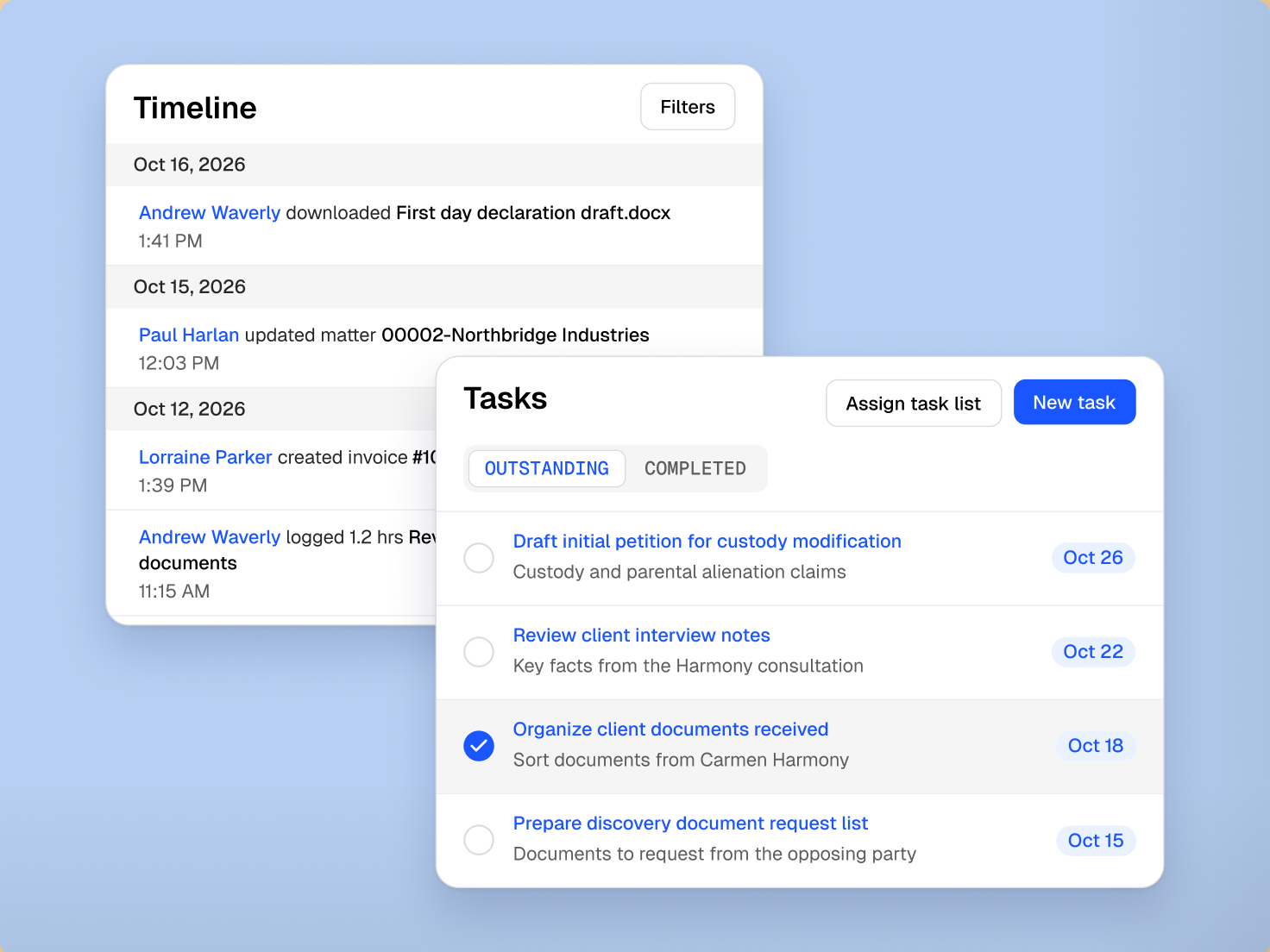
Clio can pull recent activity, deadlines, open tasks, and documents into one summary, with the source behind every point ready to open.

Clio brings case law, statutes, and citations into the matter. Research a jurisdiction-specific question, open and check the citations, and have the argument set out against your facts, then keep the result for the draft or advice that follows.
A first draft is stronger when it starts with the actual parties, facts, documents, instructions, and law. Clio can prepare motions, agreements, letters, memos, and briefs for review, with citations linked to the source, while you decide the argument, structure, and final language.
Partner feedback makes more sense when the comment, source clause, earlier version, and client instruction stay together. Clio keeps the draft and its review history on the matter, so the reasoning doesn’t scatter across orphaned files and email.
Recent matter activity already shows what changed and what needs attention next. Clio can prepare a client update from that context for your review, so you add the judgment and nuance the relationship needs. Capture time as you work, while you still remember what you did and why.
legal professionals trust Clio
global legal documents
years serving legal professionals
Clio Work raises the baseline for our junior attorneys. They’re able to work at a much higher level, much faster, reducing how often senior attorneys need to step in.
King Law
Associate attorney software helps you understand matters, organize documents, research, draft, collaborate through review, manage deadlines, communicate with clients, and capture time. Clio connects those responsibilities to the current matter and to the case law, statutes, and citations behind it. See Clio in action.
Yes, on Core and above. Clio can pull the operational detail, recent activity, upcoming deadlines, open tasks, and financial position of a matter into one view, summarize the documents on it, organize a chronology, and surface the issues for your review. The underlying records stay available to open. See Clio in action.
Yes. Clio’s legal research returns cited authority you can open and check, and every case carries a color-coded flag: red where it has been overruled or reversed, orange where another court has criticized it or declined to follow. The flags combine citation parsing with editorial review of appellate history. See Clio in action.
Yes. Clio can prepare a motion, agreement, letter, memo, brief, or pleading from the matter’s facts and the law that applies, with case law and statutory citations embedded inline and hyperlinked to the source so you can check each one. You verify, revise the analysis, and finalize the work. See Clio in action.
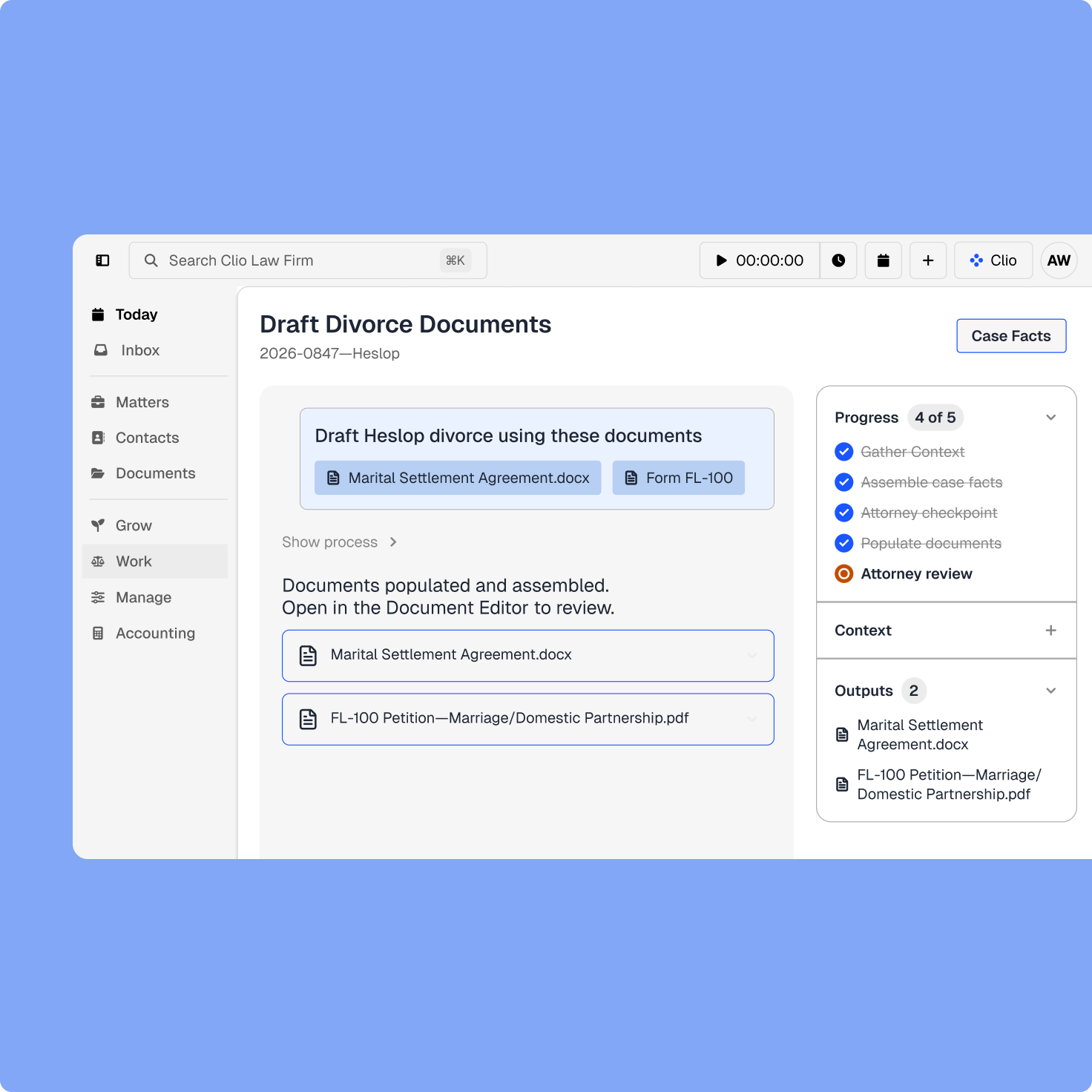
Yes. An approved template or document set populates from the matter record, and the court forms Clio maintains for all fifty states and the federal immigration forms begin with the matter data already in place. Your firm’s own precedents can become templates too. Get a demo.
Yes. Rather than reading across from the authority to the matter yourself, Clio can take the facts already on the file, query the case law, and return a structured memo setting the argument against them. You test the reasoning and decide what survives. See Clio in action.
Yes. You can draft and review in Microsoft Word with the matter’s context available, and proposed changes arrive as tracked redlines you accept or reject. The document and its history come back to the matter. See Clio in action.
Yes. You can record time and expenses against the matter as you work, so research, drafting, calls, and review are captured while you still remember what you did and why, not reconstructed at month end. See Clio in action.
Yes. Summaries, research, drafted documents, and suggested next steps are prepared for your review, with the underlying sources available to open and check. You apply the law, choose the argument, and own the final work. See Clio in action.