Clio Launches Legal Pad, a Drafting Workspace for Clio Work
March 26, 2026
Clio introduces a connected drafting workspace in Clio Work where lawyers organize, refine, and iterate on AI-generated insights in one place
Clio, the global leader in legal AI, today announced the launch of Legal Pad, a dedicated drafting workspace within Clio Work that brings legal analysis and structured drafting together in one place.
Lawyers are increasingly using AI to analyze legal issues, review documents, and develop arguments. But turning those insights into a finished memo, advisory note, or contract language often means switching between AI conversations and external word processors, forcing lawyers to reassemble ideas and lose the context behind their work.
Legal Pad addresses this gap by giving lawyers a dedicated space within Clio Work to draft, refine, and organize documents while staying connected to the prompts, sources, and analysis that informed them.
“Documents are the atomic unit of legal work,” said John Foreman, Chief Product Officer at Clio. “The most important information in a legal matter lives inside a firm’s document system, and the deliverable is always the document.”
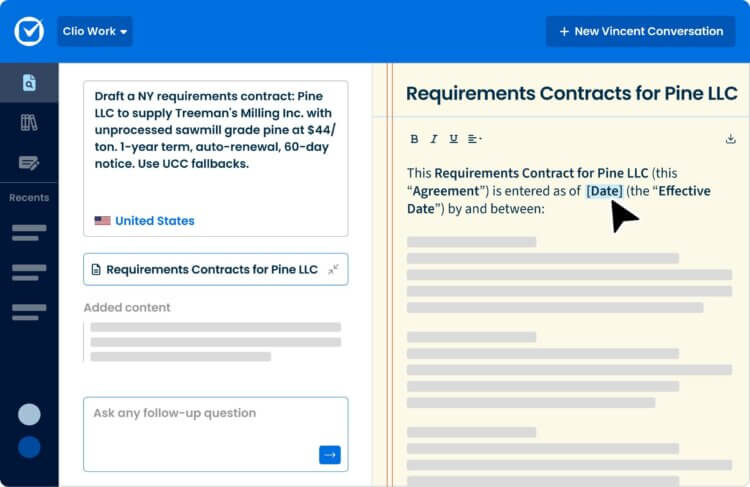
With Legal Pad in Clio Work, lawyers can:
- Assemble multiple Clio Work outputs into a single draft
- Revise sections while referencing the prompts and materials that informed the analysis
- Develop early versions of research memos, advisory guidance, and legal arguments in one workspace
- Export documents for final formatting in a word processor
This launch marks an important step in the continued evolution of Clio Work as a platform where legal reasoning develops alongside the tools lawyers use to examine information and produce written guidance.
By bringing drafting directly into Clio Work, Legal Pad helps lawyers move from analysis to first draft more efficiently, without losing the context that shapes strong legal work.