

The legal industry is at an inflection point, where leveraging emerging technology is vital for law firms to innovate and ensure future success. By adopting legal-specific, matter-aware AI and cloud-based tools, legal professionals can optimize their practices and navigate the evolving landscape of 2026 with confidence.
What are the top tech tools for lawyers in 2026? The legal industry is at an inflection point shaped by emerging technology, with an abundance of tech tools available to help law firms innovate and set themselves up for success.
From the rise of legal-specific, matter-aware AI to cloud-based tools that support remote work, law firms have more technology options than ever. But success doesn’t come from stitching together disconnected tools. The most effective firms are adopting connected platforms that reduce context switching and keep work flowing. As a result, boosting efficiency with legal technology is easier than ever.
In this post, we’ll cover the top tech tools for lawyers based on data from industry reports and trends we’ve observed in the legal profession.
By understanding what lawyer tools and equipment other legal professionals are using, and what actually works, you can decide what your firm can use to help it operate as effectively as possible.
Manage AI takes the hassle out of managing casework and client communication, giving you back precious hours in your day. Book a demo today.

What tools do lawyers use?
The most successful law firms today aren’t relying on disconnected tools. They’re using integrated, cloud-based platforms that bring core workflows together in one place—reducing context switching and streamlining work. For most firms, that starts with a legal practice management platform as the foundation, with additional capabilities layered in to enhance productivity and client service.
AI tools for lawyers
Artificial intelligence is quickly becoming a core part of how legal work gets done, but the biggest shift isn’t just the rise of AI tools. It’s where that AI lives.
Today, the most effective firms aren’t using generic, standalone AI tools. They’re adopting legal-specific, matter-aware AI built directly into the platforms they already use. This allows lawyers to work faster and more accurately without switching between tools or re-entering information.
For example, with AI embedded in a connected platform like Clio, firms can:
- Summarize documents and case details instantly
- Draft and refine legal documents using firm-specific context
- Surface matter-specific insights to support legal strategy
- Capture time automatically as work happens
- Automate routine administrative tasks without leaving their workflow
By keeping AI connected to your matters and daily workflows, firms can reduce friction, improve accuracy, and turn efficiency gains into real productivity.
There many legal AI tools that law firms can adopt to improve bottlenecks across their workflow: Explore the legal AI landscape here.
Whether you start small and build or adopt AI within your practice management platform, AI is becoming table stakes in legal, much like the cloud before it.
Word processors
As a lawyer, a word processor is a necessity for drafting documents and letters. But, to take your document and letter drafting up a notch, we recommend using a cloud-based word processor that lets you work and access your legal documents remotely.
Microsoft 365 (formerly known as Office 365) is a popular business tool for lawyers that offers word processing via Word, as well as numerous other productivity tools.
Did you know that Microsoft 365 came in second place for being the most-used cloud-based service for lawyers (at 59%) in the American Bar Association’s 2022 Legal Technology Survey Report? This shows that cloud-based word processing tools are quickly becoming an indispensable part of a lawyer’s arsenal of tools. Microsoft Office 365 also connects with Clio Manage for even more streamlined productivity between tools.
Virtual receptionist service

Missing a call—whether because your law firm office is working remotely or you’re just away from the phone—means lost business.
A virtual receptionist service like Ruby (which offers live virtual reception and chat options) eliminates unanswered calls. This means better service for clients (and cuts the cost of having a full-time in-house staff member fielding calls).
Document management
Paperwork is an inextricable part of practicing law, but dealing with documents doesn’t have to be as tedious or time-consuming as it has been in the past. Document automation tools for lawyers streamline document creation (like letters and motions) by using the information you’ve already collected (like key dates or contact information) to populate forms for you. Document management tools then help you safely store and access those documents.
Legal practice management software like Clio Manage offers a simple, all-in-one solution for dealing with legal documents with document management and advanced legal document automation features. Clio Manage lets you compile documents with easy-to-use templates, then keeps documents secure in the cloud, so you can edit, store, and organize files as needed.
Time tracking and billing solutions
Accurate time tracking and billing are key to law firm profitability. However, spending a lot of time manually monitoring time and dealing with billing takes away from your productivity.
Using legal technology tools to improve billing processes can also improve law firm collections. According to the 2023 Legal Trends Report, for example, law firms using automated bill reminders collected, on average, 49% more revenue each month per lawyer than those that didn’t use automated bill reminders.
If you aren’t using lawyer tools to help with time and billing, start by looking at your practice management software, which may offer features to cover this. Clio Manage, for example, includes legal time and expense tracking and billing features.
If you aren’t using practice management software or simply want to consider your options, you should also check out our legal software list for our reviews of the top practice management software.
eDiscovery tools
Today, the majority of discovery is electronic, or eDiscovery. While the move towards more electronic discovery saves time, you can also use tech tools for lawyers to streamline your discovery process.
Logikcull’s cloud-based eDiscovery software, for example, automates thousands of previously manual steps (such as Bates Stamping and virus scanning) while also offering smart filtering options to save you time and effort. Plus, it integrates with Clio to automatically “mirror” your Clio matters into Logikcull.
Learn more about conducting eDiscovery effectively at your law firm.
Legal research tools
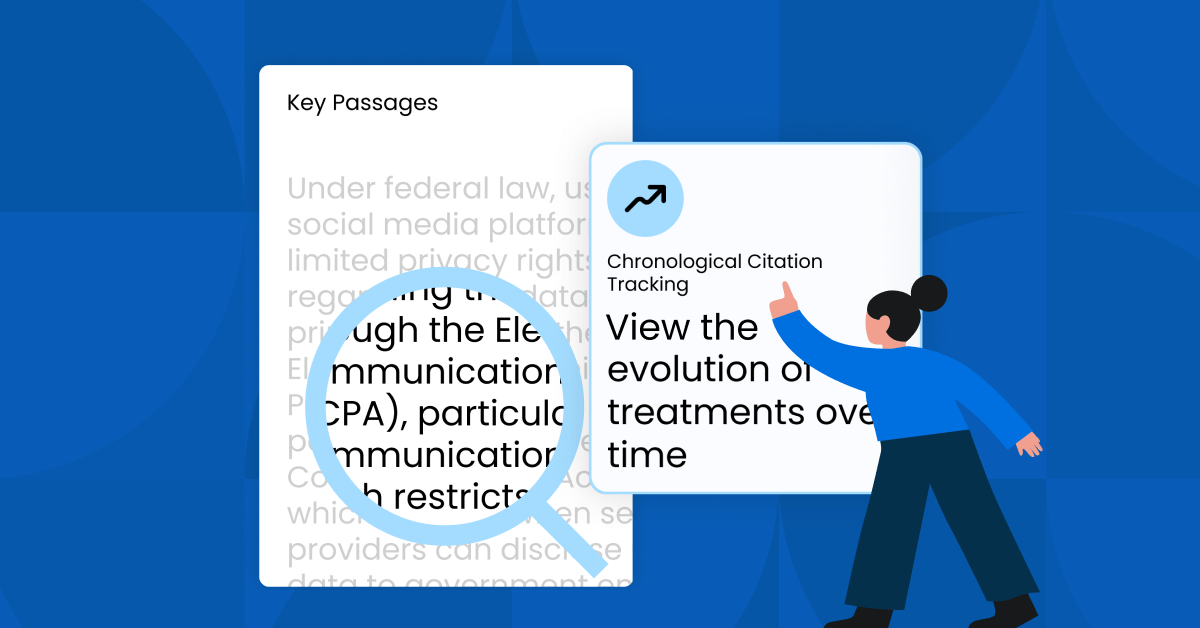
High-quality legal research is essential for your law firm’s success, but how lawyers conduct research is rapidly evolving. Today’s tools combine comprehensive legal databases with advanced search and AI capabilities to help lawyers find answers faster and with greater confidence.
Many firms are used to paying for legal research subscriptions like Thomson Reuters Westlaw and LexisNexis. While these platforms remain effective for traditional legal research, they’re often limited to that function—requiring lawyers to switch between tools to analyze information, develop strategy, or draft documents.
Modern legal technology like Clio Work goes further. Instead of stopping at research, it enables lawyers to interpret results, summarize complex documents, build legal strategy, and draft memos—all within a single workflow.
With a database of +1 billion legal documents from +100 countries (including case law, statutes, regulations, and secondary sources) Clio Work enables:
- Matter-aware research connected directly to your cases
- Verified, source-grounded answers instead of generic AI outputs
- Built-in summarization and analysis to quickly understand key rulings
- Integrated drafting tools to move from research to work product faster
E-signature tools
Electronic signatures are more convenient to coordinate than physical signatures, and less back-and-forth means less room for human error. They also make legal work faster and more efficient for lawyers and clients. And, they save paper, which is important as more firms go paperless.
While e-signatures don’t work in every instance, they are legally binding in many situations, as long as they meet the right criteria. However, some states require wet signatures for documents like wills.
Legal technology can help make e-signatures easier and more secure. Clio Expand, for instance, offers easy online document signing tools as part of Clio Grow’s client intake and legal client relationship management (CRM) software and Clio Manage’s document management functionality. Clio’s mobile e-signature functions also empower clients to sign legal documents remotely—which means a more user-friendly experience.
Mobile apps
Mobile apps, whether they’re designed specifically for lawyers or just support a lawyer’s needs, can instantly give your productivity a boost by allowing you to work from anywhere—a must for 2025.
A few of our favorite mobile apps that double as tools for lawyers?
- Clio’s Mobile App. Keep your law firm in your pocket with Clio’s top-rated mobile app. Available for Apple or Android users, the mobile app lets you track time, pull up cases and key documents, view client information, create new matters and contacts, accept payments, and more—all from your mobile device.
- iAnnotate. Review and mark up documents from anywhere with iAnnotate, which also lets you access documents from multiple sources online.
- Feedly. Stay informed on the industry’s trending topics and content that you care about with easy-to-consume (and share) content streams curated by Feedly AI.
Practice management software
Legal practice management software is an essential tool for law firms in 2025, especially for small firms.
Clio’s 2025 Legal Trends for Solo Law Firms report noted that cloud-based practice management software use was higher for small law firms, compared to solo attorneys. Specifically, the report found that 81% of small firms use cloud-based legal practice management software, compared to 79% of small firms.
The mid-sized market is falling further behind with only 57% of mid-sized firms have moved to managing their practice with cloud-based platforms, as found in our 2026 Legal Trends for Mid-Sized Law Firms report.
While 86% of mid-sized firms have adopted AI, the ones seeing the greatest impact are those that have also moved their data and operations to the cloud.
A similar pattern exists among solo and small firms. While many already use cloud-based practice management software, only 5% of solo firms and 3% of small firms report widespread AI adoption.
The real advantage comes when firms bring these together, connecting AI with their core systems in a single, seamless platform. Firms that do this unlock a new level of efficiency and revenue potential, putting clear distance between themselves and competitors.
Cloud-based practice management software like Clio Manage brings your firm’s work into one connected platform, combining case management, client collaboration, and built-in AI. With everything in one place, it’s easy to get started and quickly begin seeing the real efficiency and revenue gains legal technology can deliver.
Clio also integrates with many other apps, making it an even more useful tech tool for lawyers.
Online payments
Online payments—accepting credit card, debit card, or eCheck payments through an online platform like Clio Payments—make it easy and more convenient for clients to pay, so lawyers can get paid faster.
How much quicker can accepting online payments help lawyers get paid? According to the 2023 Legal Trends Report, law firms that offer online payments get paid twice as fast. Specifically, law firms accepting online payments waited a median of seven days to get paid. In comparison, law firms that do not accept online payments waited a median of 15 days.
Beyond improved collections for lawyers, tools that allow law firms to accept online payments benefit clients by giving them the payment options they want. As the same Legal Trends Report notes, 46% of clients most prefer to use a credit card when paying a lawyer.
Furthermore, since 2016, flat fee billable amounts have grown by 20%, and billed amounts have grown by 34%. With the rise in AI, firms moving away from the billable hour are over five times more likely to get bills out almost immediately than those billing hourly.
Flat fees combined with online payment options will get law firms paid faster.
Set yourself up for success with our free Guide to Starting a Law Firm.
Get the Guide
Client intake and CRM
Client intake and CRM solutions like Clio Grow help firms streamline how they attract, engage, and convert new clients. By centralizing communications and automating intake workflows, firms can deliver a faster, more seamless experience, from first contact to signed engagement.
This matters more than ever. Clio’s 2024 Legal Trends Report found that many law firms still struggle to respond to potential clients across channels like phone, email, and online forms, highlighting a major gap in how firms capture new business. Firms that implement structured, technology-driven intake processes are better positioned to convert that demand.
Today, leading firms are going beyond basic intake forms. They’re using connected, cloud-based systems to handle online booking, document collection, e-signatures, and payments. This reduces manual work, improves responsiveness, and delivers the modern, client-centered experience clients expect.
Security and ethics considerations for lawyer tools
Remember: As with any measure involving law firm data, it’s critical to vet any tools for lawyers that you’re considering for their security before using them. Know (and abide by) your ethical and regulatory obligations regarding security.
Always follow best practices for keeping law firm and client data secure to ensure that no legal technology tools will do more harm than good, including when it comes to AI tools for lawyers.
Check out these resources as a start, but it’s your responsibility to properly evaluate any potential tools for your firm:
- Understanding Law Firm Compliance Requirements
- Cloud Due Diligence Checklist
- AI Legal Compliance for Law Firms
- Law Firm Data Security Guide
Legal technology tools promote law firm growth
Using the right tools for lawyers can make all the difference for law firm growth. Adopting some (or all) of these tools can help your law firm be more efficient, profitable, and client-centered.
However that doesn’t mean that you can, or should, adopt them all at once. Instead, vet each tool carefully and start with the essentials. Then, you can add in more legal technology tools strategically to create a tech stack that helps your firm run more efficiently. And, you can always reach out to a consultant if you need help setting up a tech stack for your firm.
Whatever tools you choose, ensure that they’re secure, and then watch your firm become its most efficient, profitable, and best self this year and beyond.
Ready to have every legal tech tool you need in one-platform? Book a Clio demo today!
Book a Clio demoWhat tools and technology are used in being a lawyer?
Lawyers use a variety of tools and technology in their daily practice. These include legal research databases, legal practice management software, document management software, e-discovery software, court filing systems, and virtual meeting platforms, as well as laptops and mobile devices.
What tools do criminal lawyers use?
Criminal lawyers use a range of tools. They rely on legal research tools to understand and apply the law, litigation tools to prepare for and present cases in court, negotiation tools to resolve cases without going to trial, and practice management software to run their firms.
What tools for discovery are available to lawyers?
During the pre-trial discovery stage, lawyers use e-discovery software to identify, collect, and produce electronic data relevant to that particular case. Data backup software, document management software, practice management software, and case management software also support the discovery process.
What technology skills do you need to be a lawyer?
Lawyers should be proficient in technology skills including computer skills (such as how to use word processors), communication skills (like using email and video conferencing services), cloud-computing skills (like how to navigate legal practice management software and how to use document management software), and legal research skills (like how to conduct legal research using online databases). Lawyers should also be able to assess technology for cybersecurity risks and to ensure they meet compliance regulations.
What technology do lawyers use?
Lawyers use many different types of legal technology to work more efficiently and give their clients a better client experience. These technologies can include cloud-based software and services like legal practice management software, legal research databases, document management software, AI-powered legal tools, and more.
Subscribe to the blog
-


Software made for law firms, loved by clients
We're the world's leading provider of cloud-based legal software. With Clio's low-barrier and affordable solutions, lawyers can manage and grow their firms more effectively, more profitably, and with better client experiences. We're redefining how lawyers manage their firms by equipping them with essential tools to run their firms securely from any device, anywhere.
Learn More