

You don’t need a dedicated AI rule to have an ethics problem. That’s what many solo attorneys are missing, and bar associations are starting to notice.
Nationwide, state bars have issued formal opinions clarifying that the rules you already agreed to follow apply directly to how you use AI tools. The American Bar Association, California, New York, Florida, and dozens of other jurisdictions have weighed in. The consensus is consistent: Rule 1.1 (competence), Rule 1.6 (confidentiality), and Rule 5.3 (supervision) don’t have AI carve-outs. They cover AI because they cover your professional conduct.
For solo attorneys, this lands differently than it does for large firms. You don’t have an ethics committee down the hall, or a general counsel reviewing your tech stack. You’re the one deciding whether to paste client facts into ChatGPT, which AI research platform to trust, and whether to file that brief without checking every citation it generated. Every one of those decisions is an ethics decision, even when it doesn’t feel like one.
According to the Legal Trends for Solo and Small Law Firms, 71% of solos and 75% of small law firms use AI, but more than half lack a policy on the use of AI.
Below, we cover what existing state bar AI ethics rules mean for solo attorneys specifically: where your exposure is highest, how state bar guidance applies when you’re the only one making these calls, and what practical compliance looks like without a support structure.
Why existing rules already govern your AI use as a solo attorney
The ABA’s Model Rules of Professional Conduct weren’t written with large language models in mind, but they don’t need to be. Competence, confidentiality, and supervision are technology-neutral by design. Rule 1.1’s Comment 8, added in 2012, already requires lawyers to keep up with “changes in the law and its practice, including the benefits and risks associated with relevant technology.” AI qualifies.
Although the rules don’t call out AI by name, bar guidance has made the connection explicit. The ABA’s Formal Opinion 512, issued in 2024, addressed generative AI directly, and California, Florida, New York, and Texas have all issued opinions interpreting existing rules in the AI context. For solo attorneys, that guidance carries extra weight. There’s no in-house ethics counsel tracking ethical developments for you, and ignorance of the rules is no excuse.
How ethics rules apply when you practice alone

The core Model Rules that govern AI use—Rules 1.1, 1.6, 5.1/5.3, 1.4, and 3.3—apply to every attorney. But their practical weight is different for solos, because every compliance decision falls to one person.
Rule 1.1, Competence. Large firms have IT departments that vet tools, negotiate enterprise agreements, and set usage policies before software reaches an attorney’s desk. As a solo, you’re the vetting process. Competence here means understanding your AI tools well enough to catch their failures. That means knowing whether a tool is grounded in verified legal data, or instead regurgitating general internet text (e.g., Twitter, Reddit), and recognizing that plausible-sounding output can be factually wrong, including citations that look real but don’t exist.
Rule 1.6, Confidentiality. This is the most immediate and underappreciated risk for solo practitioners. When you paste a client’s name, dispute summary, or case facts into a consumer AI tool, you may be transmitting confidential information to a third-party platform. Whether that violates Rule 1.6 depends on where the data goes, how it’s stored, whether it’s used for model training, and what the contents of the platform’s terms of service. Most attorneys have never read those terms. Many consumer tools may retain prompts and use them for model improvement by default.
Rules 5.1 and 5.3, Supervision. Even if you’re a solo, supervision obligations apply. AI-generated work product must be reviewed the same way you’d supervise a junior paralegal’s draft. At a large firm, multiple people may touch a document before it’s filed. As a solo, you’re the only check. Unlike a paralegal, AI won’t flag its own uncertainty or tell you when it’s guessing.
Rule 1.4, Communication. Several state bars have suggested that disclosure may be required when AI plays a substantial role in producing work product. Even where disclosure isn’t strictly mandated, transparency with clients about your tools is consistent with Rule 1.4’s requirement to keep clients reasonably informed.
Rule 3.3, Candor Toward the Tribunal. This is where AI failures and inadequate supervision carry the most severe consequences. The rule prohibits making false statements of law or fact to a court, and AI creates multiple ways to cross that line: not just fabricated citations but mischaracterized holdings, misstated statutes, and invented procedural history. The Mata v. Avianca sanctions order remains the clearest warning in the case law. Attorneys submitted a brief containing multiple citations to cases that did not exist, fabricated by AI and filed without verification. The court imposed sanctions and a public reprimand. “The AI wrote it” is not a defense.
State bar AI guidelines: What your jurisdiction requires
There is no single national standard for state bar AI rules. The ABA provides guidance, but binding obligations come from your state bar, and they vary widely.
- California has been among the most active. The State Bar’s Practical Guidance for the Use of Generative Artificial Intelligence in the Practice of Law addresses competence, confidentiality, and supervision with unusual specificity. It explicitly flags the risk of inputting confidential client information into third-party AI platforms that lack appropriate data agreements, and it calls out hallucinations as a competence issue.
- New York has, thus far, taken a judicial approach—with several federal district courts issuing standing orders requiring attorneys to disclose AI use in court filings and certify that AI-generated content has been reviewed for accuracy. For solo attorneys practicing in New York federal courts, check individual judges’ standing orders.
- Florida has moved toward mandatory disclosure, making it more assertive than most states. The Florida Bar’s guidance and related court rules require attorneys to affirmatively disclose AI-generated content to tribunals.
- Texas has addressed AI use through a combination of ethics opinions and court-level rules. Several federal courts in Texas now require filings to have AI certifications.
If your state hasn’t issued formal AI guidelines yet, the existing Model Rules still apply in full. Silence isn’t permission, and a fabricated AI citation is a Rule 3.3 problem, regardless of whether your state bar has published an AI-specific opinion.
The best way to find your state bar’s current position is to go directly to the source. Start at your state bar’s website, navigate to the ethics section, and search for “artificial intelligence,” “generative AI,” or “large language model.” This is worth checking frequently. An opinion that didn’t exist when you set up your AI workflow could be in place before your next matter.
Confidentiality: The highest-risk area for solo firms

Picture this: you’re working late on a demand letter. You paste your client’s name, the opposing party’s name, the injury details, and the relevant dates into a free AI chatbot. The output is solid. You clean it up, send it, and move on.
What you may not have considered is that the moment you submitted that prompt, your client’s confidential information may have left your control entirely. It may now be used to train the AI model, stored on servers you have no agreement with, and shared with a vendor whose terms of service you’ve never read. Under Rule 1.6, that’s a potential ethics violation.
Rule 1.6 prohibits revealing information relating to representation without informed consent, and courts and bar associations have interpreted “revelation” broadly. Submitting client facts into a commercial AI platform that stores, processes, or uses that data for training can qualify as an unauthorized disclosure. Understanding how AI tools handle your data is a prerequisite.
Large firms typically have data processing agreements (DPAs) in place before any AI tool reaches an attorney’s workflow. A DPA is a contract specifying how your data is collected, stored, processed, and protected, and it’s the critical distinction between tools you can use with client data and tools you can’t. Enterprise-tier products and legal-specific platforms built for regulated industries typically offer DPAs, data isolation, and explicit commitments not to use your inputs for model training. Consumer products like ChatGPT, especially free versions, generally don’t.
As a solo, you’re the one who has to ask. Before using any AI tool that will touch client data, go directly to the vendor: Will you sign a DPA? What data do you retain? Is my data used for model training? If you can’t get clear answers, that’s your answer.
Three steps to reduce exposure:
- Anonymize your prompts. Instead of “My client John Smith was injured on March 3rd at 400 Main Street,” use placeholders: “My client was injured on [date] at [location].” The output is nearly as useful and no identifying information leaves your office.
- Review terms of service. Focus on at least three things: data retention, model training opt-outs, and how the vendor serves regulated industries.
- Move client-data work to legal-specific platforms. The market for legal AI has matured rapidly. Purpose-built tools now cover drafting, research, and intake with the compliance infrastructure that solo attorneys need. Unlike general-purpose AI, these legal AI tools are designed to comply with attorney confidentiality obligations.
Supervision, verification, and the hallucination problem
Mata v. Avianca should be required reading for every practitioner. The attorneys involved didn’t write the fake citations; ChatGPT did. That distinction carried no weight with the court. The attorneys certified the filing, and certification means standing behind the content. AI doesn’t sign briefs; you do.
Large language models, especially general-purpose AI tools, generate text by predicting what plausible output should look like. They don’t retrieve information from a verified legal database. When asked for a relevant case, a general-purpose AI may produce a citation with correct format, plausible case name, and a realistic court and year, while referring to a case that doesn’t exist. The model has no mechanism for knowing the difference between a real holding and a fluent fabrication.
Legal-specific AI tools with retrieval-augmented generation and verified citation databases reduce this risk significantly, but they don’t eliminate it. Even purpose-built tools can mischaracterize holdings, omit negative treatment, or miss recent developments. Verification remains necessary regardless of your chosen tool.
A workable verification process for a one-person practice:
- Never use case citations directly from AI output. Pull and read every case yourself through Clio Work, Westlaw, Lexis, or Google Scholar. Confirm that the case exists, the holding matches the AI’s description, and it hasn’t been overruled.
- Verify statutory references independently. AI tools can cite outdated versions or misstate current codification.
- Treat AI-generated analysis as a beginning, not a conclusion. The reasoning may be directionally useful even if individual analyses are wrong.
- Run a final citation review before every filing. If you cannot verify it, it does not go in.
- Document your review. A simple notation in your matter file (what tool was used, what it produced, how you verified) builds discipline in the moment and creates a record if your process is ever questioned.
To learn more, our guide on how to verify legal AI output walks through what that process should look like in practice.
Disclosure to clients and courts
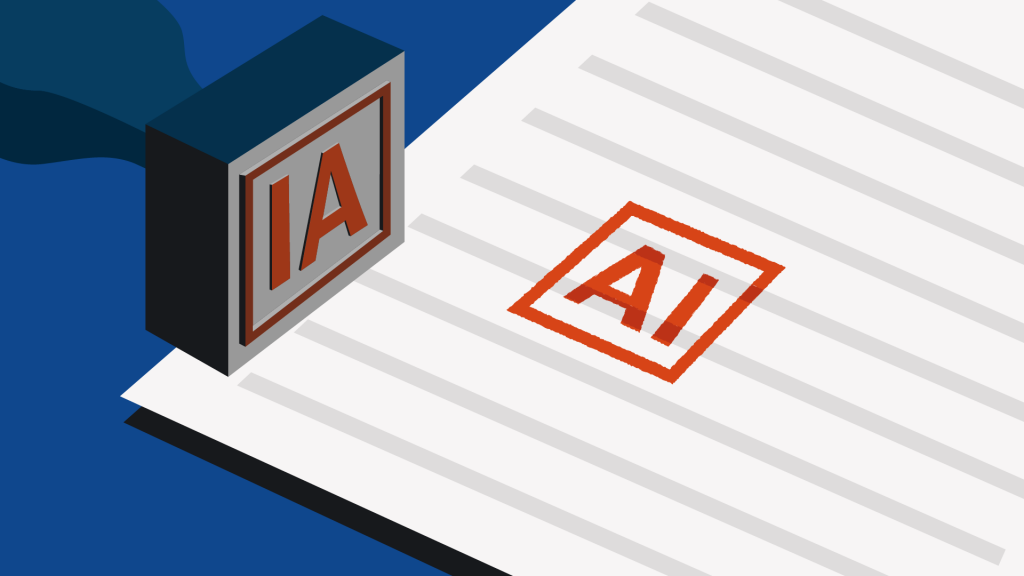
A growing number of federal district courts now require attorneys to disclose AI use in legal filings. Early adopters included the Northern District of Texas and the Eastern District of Pennsylvania, but standing orders have since spread across circuits. State courts are following.
Requirements aren’t uniform. Some orders cover only substantive content drafting. Others extend more broadly to include research. A few require disclosure only when you cannot certify that AI-generated content was independently verified. Because these orders change frequently and without much fanfare, check local rules and standing orders before every filing.
On the client side, no state bar currently mandates explicit disclosure every time you use an AI drafting tool. But Rules 1.4, 1.6, and 1.5 together create an environment where disclosure is the more defensible posture. Clients who learn mid-matter that you’ve been using AI, especially if something went wrong, will feel differently than clients who were told upfront and consented. Trust is easier to maintain than rebuild.
Sample disclosure language for engagement letters:
Use of AI-Assisted Tools. This firm may use artificial intelligence tools to assist with legal research, document drafting, and case analysis. All AI-generated work product is reviewed and verified by a licensed attorney before use. We do not input personally identifiable client information into unsecured AI platforms without your consent. If you have questions about how AI tools are used in your matter, please ask.
This language normalizes AI use rather than treating it as an admission. It emphasizes attorney oversight, which is the core ethical requirement. And it invites dialogue rather than closing it down.
Building a simple AI ethics policy for your solo practice
You don’t need a compliance department or a 20-page manual. What you need is a short written protocol that you and your personnel actually follow. A one-page document is enough, and you can draft it in an afternoon. Our law firm AI policy template gives you a starting structure you can tailor for your firm.
Your protocol should address four things:
- Approved tools. Name the platforms specifically. Note whether each offers a lawyer-specific or enterprise tier with better data terms. Flag tools that are off-limits because their ToS allow training on user inputs.
- Data boundaries. Categories of client information that will never be input into AI tools without explicit consent and data-security assurances.
- Verification steps. What you do before any AI-generated legal content leaves your office.
- Disclosure defaults. Your standard language for engagement letters and your protocol when court filings involve AI assistance.
Commit to revisiting the policy at least once a year. State bar AI guidelines are still actively developing, and a protocol written in early 2024 may already be missing something relevant. When you review it, check whether your state bar has issued new opinions and whether the tools you’ve approved have changed their data practices.
Staying compliant doesn’t have to be complicated
The rules that govern your AI use as a solo attorney are already in place. They don’t require a dedicated AI provision, and they don’t make exceptions for one-person practices. What they require is the same thing they’ve always required: competence, confidentiality, supervision, and candor.
What’s changed is the pace of guidance updates. State bars are issuing new opinions, courts are adding standing orders, and the tools themselves are evolving. For solo attorneys without institutional support, staying current is a personal responsibility, and a manageable one.
A one-page policy, a consistent verification habit, and a proactive disclosure posture are enough to move from exposed to defensible. You don’t need a compliance team. You need a clear process and the discipline to follow it.
What ethics rules apply to lawyers using AI?
ABA Model Rules 1.1 (competence), 1.6 (confidentiality), 5.3 (supervision), 1.4 (communication), and 3.3 (candor) all apply, plus ABA Formal Opinion 512 and state-specific guidance. No new rules are needed; existing duties cover every AI tool.
Do I have to tell clients I'm using AI?
No state bar currently mandates disclosure every time, but several have issued guidance suggesting it’s required when AI plays a substantial role. Proactive disclosure in your engagement letter is the safer and more trust-building approach.
Can I use ChatGPT for legal work?
Consumer AI tools carry significant confidentiality risk because they may retain inputs and use them for model training. For client information, use legal-specific platforms with data processing agreements and no-training commitments.
What happens if AI generates fake case citations?
You face potential sanctions under Rule 3.3. The Mata v. Avianca case resulted in sanctions for attorneys who filed AI-fabricated citations without verification. Every AI-generated citation must be independently confirmed.
Which state bars have issued AI ethics opinions?
California, New York, Florida, Texas, North Carolina, Michigan, and dozens of others have issued formal guidance. The ABA issued Formal Opinion 512 in 2024. Check your state bar quarterly for updates.