
Manage your cases more efficiently with Clio
-
Keep cases on track
Set the status of a case to Open, Pending, or Closed. Use notes and secure messages to easily share updates on a case.
-
Improve collaboration
Collaborate efficiently to do the best work for your clients. Track every change, time entry, and document in any legal case.
-
Centralize cases and clients
Manage cases, clients, documents, and more all in one place—and from anywhere, anytime with Clio’s mobile app.
-
Get paid faster
Access a built-in online and in-person payment processing solution to improve your collection rates and firm efficiency.
With Clio, you get firm-wide visibility into how matters progress across each stage with kanban-style boards. Book a demo to learn more about Clio’s case management software.

Explore Clio’s legal case management system features
Tap into the industry’s most-trusted case management solution.
Book your demo
-
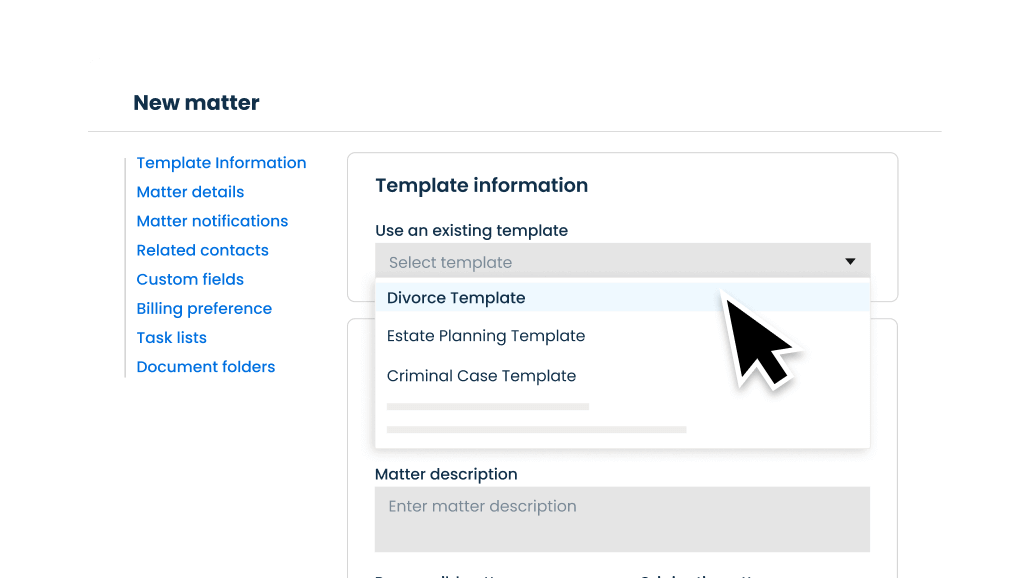
Reduce redundant tasks
Optimize your law firm with Clio: Manage documents, bill, track time, and more. Automate tasks, matter set up, and document creation to complete them more efficiently so you can focus on work that is the most important to your legal practice.
Learn more about task management
-
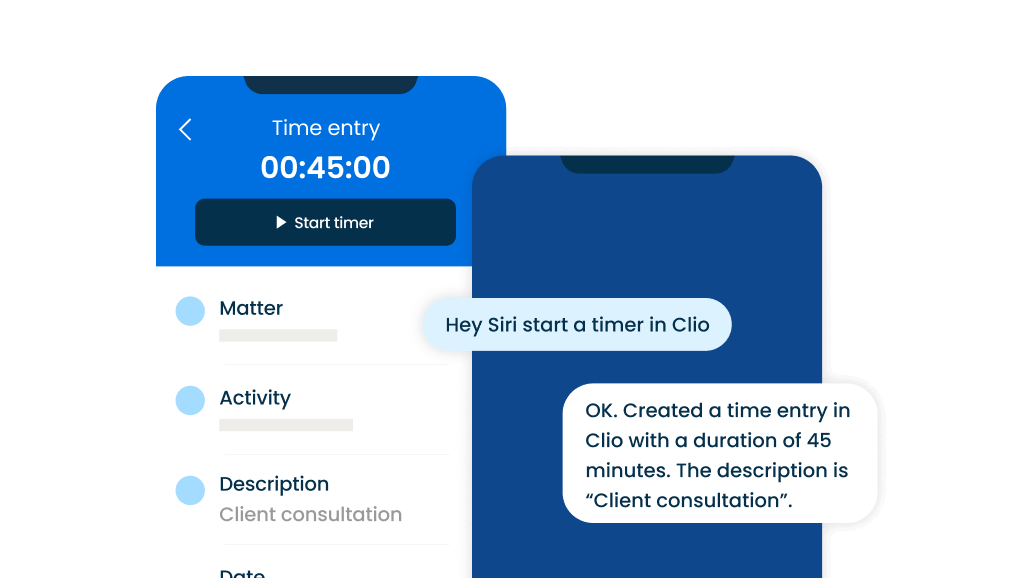
Access every case detail from anywhere
Securely access documents, bills, client info, and more from any device with an internet connection. With Clio’s law firm mobile app, you can manage your cases anytime, anywhere and keep your entire practice in your pocket.
-
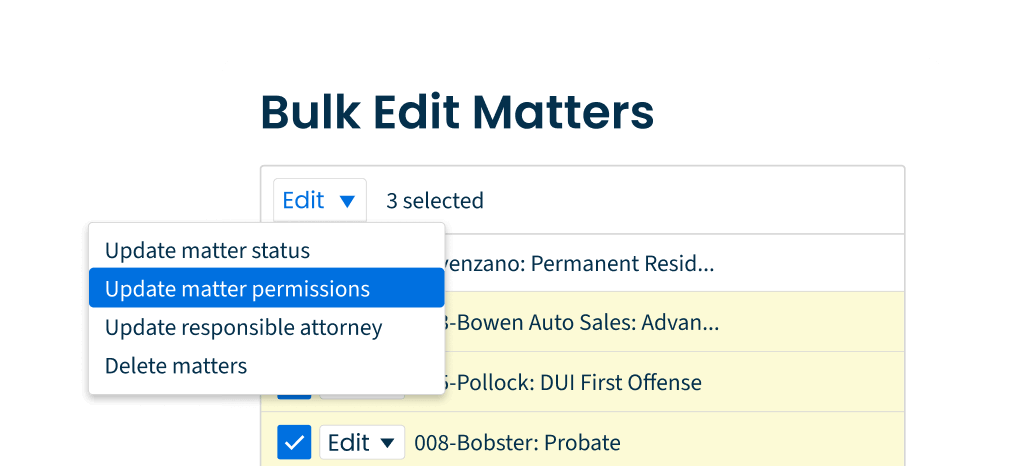
Improve client and colleague communications
Keep your firm aligned with a single source of truth. Set permissions to protect sensitive case details and communicate with clients and co-counsel with Clio’s secure online portals, Clio for Clients, and Clio for Co-Counsel.
Learn more about Clio for Clients
-
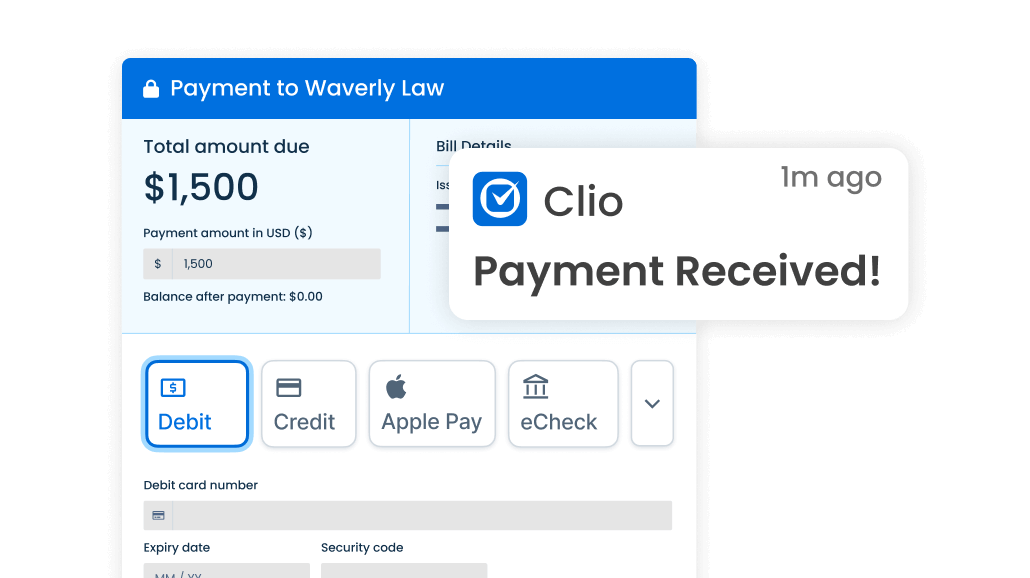
Make it easy to pay and get paid
Gets paid faster with built-in online and in-person payment processing solutions, a proven way to improve your collection rates and firm efficiency.
Learn more about online payments
Amplify firm productivity with
artificial intelligence
Level up your casework. Manage AI automates everyday tasks like generating bills, extracting key details from documents, planning your day, and creating events or adding time entries and expenses—all you have to do is ask.
What lawyers say about Clio
“I would absolutely recommend Clio because of how easy it is to use. It simplifies your law firm practice and makes it less stressful.”

ARIQUE DROSS III
Founder and Managing Attorney at the Dross Law Firm
-
#1
legal practice management software
-
4.7
star rating across 11,000+ reviews
-
400K
legal professionals from firms of all sizes
-
300+
apps and integrations
Run your entire law firm from one central place
Legal case management software FAQs
Overview
What is legal case management software?
Legal practice and case management software is a digital tool that law firms use to manage their legal cases and clients and keep cases organized. It allows for a more streamlined workflow and smoother billing, time tracking, and document management processes, so you can focus on billable work. Book a demo.
What does law case management software do?
Law case management software provides you with an overview of your law firm’s cases and their affiliated details, including deadlines, documents, notes, bills, and more. Legal case management solutions cover accounting, scheduling, time tracking, and more.
All these are features that will help you manage your practice more efficiently, contribute to better cash flow management, and ease collaboration on cases. This will give you more time to work on tasks that will bring money into your legal practice. Book a demo.
Why should my law firm use case management software?
From automation to document creation, law firm case management software keeps you organized on matters and cases, so you can manage more clients in less time and streamline your business at every step. Case management solutions help lawyers spend more time focusing on practicing law and serving clients, and less time doing administrative and non-billable tasks. See how.
Evaluating features, benefits, and costs
What features should a good case management software for lawyers include?
A good case management software for attorneys should offer a comprehensive suite of tools that enhance client service, boost productivity, and streamline day-to-day law firm operations. Key features to look for include:
Case management: The ability to manage clients and cases and keep all case information organized. This enables you to quickly refer to notes about the case and prepare for court in the most efficient way possible.
Client/contact management: Case management also takes place on a per-client or per-contact basis, so managing your face to face meetings and calls with the client is crucial.
Task management: The ability to create and assign tasks to different staff and lawyers. Sophisticated solutions like Clio’s legal case software can automate parts of this process when a case is created. Clio’s software suite even allows you to automate the billing process so you can reduce any potential cash flow problems you might encounter.
Calendar: Your case management tool needs a full calendar with capabilities to manage your busy schedule, as well as sharing your calendar with colleagues. That way you can avoid possible dreaded meeting room clashes.
Timekeeping: The ability to enter time as you work or after the fact. A case management solution with timers helps you capture more billable time while you work. This means you will be able to streamline your billing process and keep on top of all the cases your practice handles.
Email: Your legal case software should integrate with your chosen email provider. This makes it easier for lawyers to file emails to cases and follow-up on any developments. Another email feature you might be interested in is whether your chosen software can create a database of email addresses for each case the lawyers at your practice are currently working on.
Document management: Can you use it to organize and store documents, and collaborate on them? Does it integrate with Google Workspace or your Microsoft Office package? These are questions that need answering so you can fully integrate your chosen software solution into your workflow.
Document automation: Many case management tools allow you to use templates to automatically create new documents, saving lawyers valuable time.
Accounting: Your legal case software may not have a full accounting solution, but you should be able to reconcile accounts and view balances and transactions. You can also use the software to set up invoice reminders and automate the collections process. Therefore, this reduces the time you spend chasing up invoices, asking lawyers to send out invoices or getting invoices validated.
Trust accounting: The ability to track transactions related to operating accounts and trust accounts separately. The software should also allow you to send notifications through to trustees when their account has reached the minimum amount and needs topping up.
Invoicing and billing: Your practice management software should help you seamlessly generate bills and send them to clients. This saves you considerable time and money and allowing you to focus on the more important tasks like answering client questions and reassuring clients.
Online credit card payments: More and more clients want to pay their lawyers via credit card or online. Your practice management software should offer the option to process payments via credit card, making it more convenient for your clients.
Client portal: For sharing sensitive files and communications, an encrypted client portal with your case management platform is the best option for ensuring client information is kept confidential. This portal should also allow you to schedule client appointments and phone calls so that you can make sure they are well looked after, therefore, contributing to building up a solid business relationship with your clients.
Integrations: Your practice management software is the central hub for your law firm, but it needs to connect with the tools you already use and tools you might want to use in the future. You need to make sure it connects to your email client, your accounting software, and any other tools you need. Integrating all those tools will allow for a smoother workflow and increased productivity.
Reports: How is your firm doing financially? How are you tracking against your goals? Your practice management software should be able to give you key business insights to answer these questions. It should provide you with options to automate these reports or to email them through to you on a scheduled date.
What makes Clio the best case management software for law firms?
Clio is the best case management software for law firms, offering a comprehensive platform with centralized case management, advanced document management, accurate time and expense tracking, streamlined billing and invoicing, and secure client communication.
Clio’s cloud-based platform ensures secure, on-demand access to your data, while its seamless integrations with over 250+ applications and robust security measures enhance overall efficiency and productivity. Clio’s exceptional customer support and industry-leading security further solidify its position as the top choice for legal professionals.
How much does a case management system cost?
The cost varies greatly, depending on whether you’re using an on-premise or cloud-based solution. Cloud solutions tend to be more cost-effective for most firms, with their low monthly pricing models, free support, and free updates. Clio’s case management system offers different pricing plans starting at $49 a month. Clio wants to ensure firms of all sizes and requirements can find a solution that meets their needs.
How do you choose a law office case management software?
To choose the right law office case management software, start by identifying gaps in your current workflows—such as inefficiencies in case tracking, client communication, or document handling. Look for a platform that integrates with your existing legal tech stack, allowing seamless sharing of case and contact information to minimize duplicate data entry and reduce errors.
Attorney case management software like Clio offers a comprehensive solution that can help streamline daily operations, improve collaboration, and ensure your firm has the tools it needs to work efficiently.
Using Clio in practice
Is Clio suitable for small law firms looking for simple case management software?
Absolutely! Clio’s user-friendly design and scalability make it perfect for small law firms. With an easy setup process and customizable features, Clio enables small firms to tailor the software to their unique needs effortlessly.
Its intuitive interface ensures that even legal practices with limited technical resources can manage their cases efficiently and effectively, without the complexity often associated with other law firm software.
What software do lawyers use?
Lawyers typically use several different types of software to run their firms. Your chosen legal software suite is the central and most important piece of the tech stack, but lawyers also use accounting software, such as QuickBooks Online or Xero, document software such as Microsoft Word, and an email provider such as Microsoft Outlook or Gmail. Law firms may also add other tools to fulfill needs more closely related to their practice area. The Clio App Directory has over 300+ integrations to explore, so you can find out how it will integrate with the tools you are currently using.
How do I transfer my current cases into Clio?
Clio’s data migration team helps move your information from another legal case management system into Clio so you don’t have to do it manually.
What kind of customer support is included with Clio?
Clio offers unlimited support 24 hours a day, 5 days a week, so you can get answers to any questions you might have without impairing your working day.