

Contents: Your Legal Technology Buyer’s Guide

What are the top tools for lawyers in 2026? In today’s rapidly evolving legal technology landscape, there is an abundance of tech tools available to help set law firms up for success.
From the rise of generative artificial intelligence (AI) tools to cloud-based options that enable lawyers to operate more efficiently while working remotely, many firms are adopting more technology at present. However, it can be challenging to keep up with the latest options to find the tools that best fit your firm’s needs.
In this post, we’ll cover the top tools for lawyers based on data from industry reports and trends we’ve observed in the legal profession. By understanding what lawyer tools and equipment other legal professionals are using, you can decide what your firm can use to help it operate as effectively as possible.
What tools and technology do lawyers use?
The most successful law firms today utilize a range of technology tools to work more efficiently and securely in an increasingly remote workplace. While each law firm’s optimal tech stack depends on factors like firm size and practice area, it’s a good bet to start with the basics, then add in tech tools to fill gaps, enhance productivity, and better serve your specific client base.
For example, legal practice management software is an essential starting point for most modern law firms (more on that below).
Let’s look at the key types of tools for lawyers that thriving firms are using today.
AI tools

The recent rise of AI technology has already unlocked remarkable opportunities (and ethical considerations) for law firms. The latest Legal Trends Report reveals that AI is now widely embedded in legal practice, with 79% of legal professionals using it in their day-to-day work. And the firms using AI most extensively are already seeing results: 69% report revenue growth driven by AI-enabled efficiencies.
As legal AI tools multiply, the most valuable options are those that enhance both legal work and firm operations, improving efficiency by automating routine, time-consuming tasks.
For example, Clio Work brings the practice and business of law together in a single, AI-powered workspace. By unifying matter context, research, drafting, and firm operations, it reduces tool switching and administrative friction so lawyers can:
- Move from insight to action faster with matter-aware AI
- Spend less time on routine, administrative tasks
- Reduce interruptions caused by disconnected tools
- Focus more on high-value legal work and client service
In addition, Manage AI (formerly Clio Duo) brings generative AI directly into Clio Manage, helping lawyers and their teams work with less friction and fewer administrative distractions. Integrated into everyday workflows, it supports legal professionals by anticipating next steps, automating routine actions, and keeping work organized without adding complexity.
Online file storage

Whether you’re working remotely or collaborating across teams, online file storage tools are now essential for modern law firms. Cloud adoption is widespread, with about three-quarters of lawyers using cloud-based technology to manage firm data, according to the 2024 Legal Trends Report. When choosing a file storage solution, look for tools that are cloud-based, secure, and easy to use, while supporting collaboration from anywhere.
As one of the most widely used document storage tools, Dropbox is a familiar choice for online file storage, and it integrates seamlessly with Clio.
Word processors

As a lawyer, a word processor is a necessity for drafting documents and letters. But, to take your document and letter drafting up a notch, we recommend using a cloud-based word processor that lets you work and access your legal documents remotely.
For example, Clio Draft helps lawyers and their staff save time drafting legal documents by transforming Word docs into easy-to-fill online templates, now made even easier with the power of AI. You’ll be able to auto-fill client or matter information, reduce mistakes, speed up the process, and take advantage of the built-in e-signature capabilities.
Microsoft 365 (formerly Office 365) is a widely used productivity suite for lawyers, combining familiar tools like Word with cloud storage and collaboration through OneDrive. The American Bar Association’s 2024 Legal Technology Survey Report shows that cloud computing is now used by most attorneys, with Microsoft 365 and Dropbox among the most commonly adopted services. Microsoft 365 also integrates with Clio Manage, making it easier to move between documents and matter management.
Scanners

From legal documents to expense receipts, lawyers deal daily with papers that they need to easily access on demand, from anywhere, making the ability to digitize documents essential for lawyers in 2026. This is why a scanner (or scanner app functionality on your phone) is key.
For a physical scanner, this guide for choosing a scanner for your law firm can help you pick the right model.
If you go the app route, Clio’s Mobile App, and integration partners like iXware are great options. Both connect to your smartphone camera allowing you to capture (and organize) notes, files, and documents, syncing directly to your Clio Manage account.
VOIP phone provider

No matter where you’re working, you need to be reachable at your business phone number. A Voice Over Internet Protocol (VOIP) phone service (options like Vonage, Corvum, and GoTo are good choices) lets you answer phone calls remotely by forwarding calls made to your business line to wherever you are.
Virtual receptionist service

Missing a call—whether because your law firm office is working remotely or you’re just away from the phone—means lost business.
A virtual receptionist service like Ruby (which offers live virtual reception and chat options) eliminates unanswered calls. This means better service for clients (and cuts the cost of having a full-time in-house staff member fielding calls).
Document management

Paperwork is a constant in legal work, but managing documents doesn’t have to be inefficient. Document automation tools help lawyers create letters, pleadings, and forms using existing client and matter information, while document management tools keep files secure, organized, and easy to access.
With Clio Work, document management is built into a single, matter-centric platform. Documents are automatically linked to the right matters and supported by AI-powered tools that make it easier to find, review, and update files as work progresses.
Clio Manage provides secure cloud-based document storage, while Clio Draft supports advanced document automation, helping firms reduce repetitive work and stay organized.
Time tracking and billing tools for attorneys
Accurate time tracking and billing are key to law firm profitability. However, spending a lot of time manually monitoring time and dealing with billing takes away from your productivity.
Using legal technology tools to improve billing processes can also improve law firm collections. The 2025 Legal Trends Report shows that firms embracing billing automation and other workflow efficiencies generate meaningfully higher revenue per lawyer than firms that rely on manual billing processes, driven by faster invoicing, shorter lockup, and improved collections.
If you aren’t using lawyer tools to help with time and billing, start by looking at your practice management software, which may offer features to cover this. Clio Manage, for example, includes legal time and expense tracking and billing features.
If you aren’t using practice management software or simply want to consider your options, you should also check out our legal software list for our reviews of the top practice management software.
eDiscovery tools

Today, the majority of discovery is electronic, or eDiscovery. While moving away from paper saves time, lawyers can further streamline discovery by using legal technology that keeps documents, tasks, and context connected.
With Clio Work, discovery stays grounded in the full context of each matter, making it easier to manage documents, track progress, and collaborate without switching systems. For large-scale document review and production, tools like Logikcull automate traditionally manual steps such as Bates stamping, virus scanning, and document filtering. Logikcull’s integration with Clio allows matters to sync automatically, helping firms maintain continuity throughout the discovery process.
Learn more about conducting eDiscovery effectively at your law firm.
Legal research tools

High-quality legal research is essential for your law firm’s success. Today’s legal research tools go far beyond static law libraries. Modern platforms combine authoritative sources with AI-powered search and summarization, helping you find relevant case law, statutes, and insights faster and with greater confidence.
With Clio Work, legal research is embedded directly into your everyday workflows. You can search across trusted legal sources, ask natural-language questions, and generate clear summaries that stay grounded in real law, all while keeping your research connected to the matters you’re working on. That context reduces time spent switching tools and helps ensure your research stays relevant to the client work at hand.
By reducing context switching between tools, Clio Work helps lawyers spend less time searching for information and more time applying it.
E-signature tools
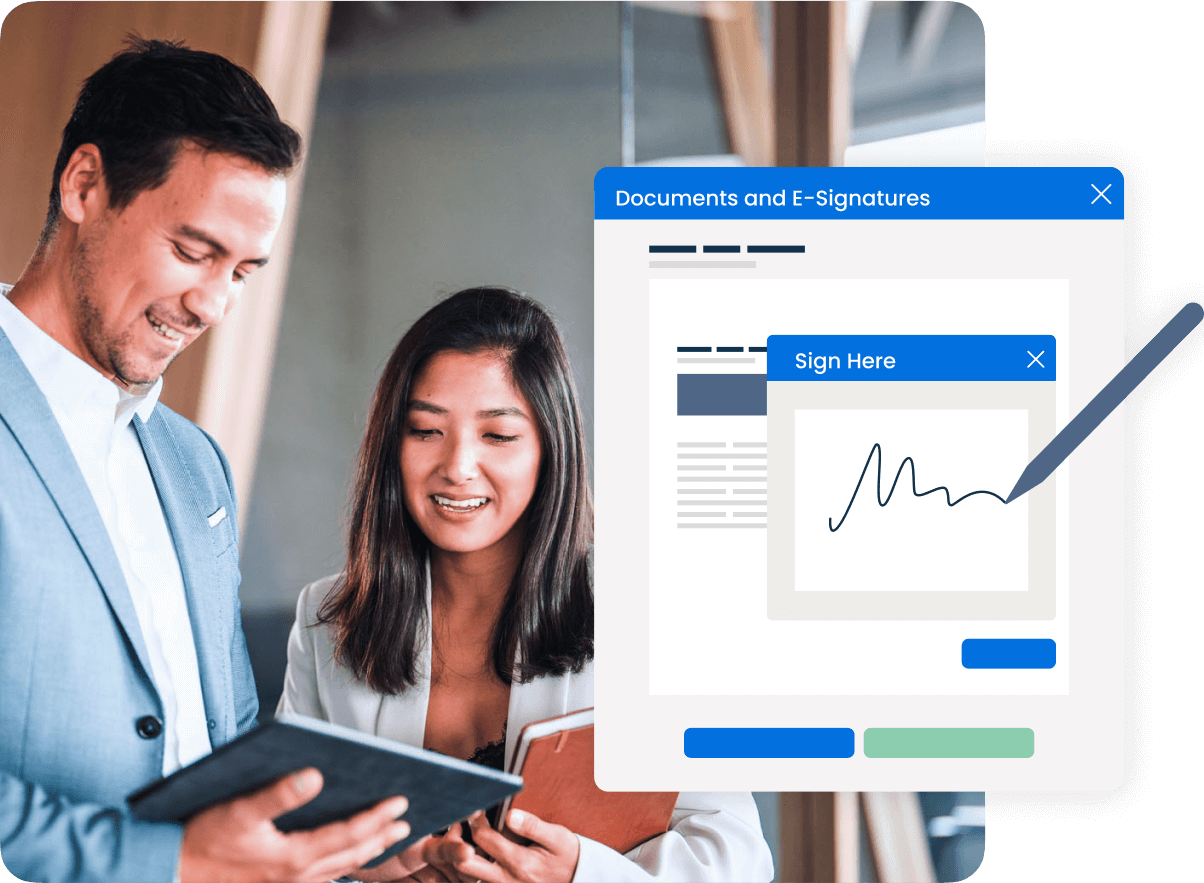
Electronic signatures are more convenient to coordinate than physical signatures, and less back-and-forth means less room for human error. They also make legal work faster and more efficient for lawyers and clients. And, they save paper, which is important as more firms go paperless.
While e-signatures don’t work in every instance, they are legally binding in many situations, as long as they meet the right criteria. However, some states require wet signatures for documents like wills.
Legal technology can help make e-signatures easier and more secure. Clio Elite, for instance, offers easy online document signing tools as part of Clio Grow’s client intake and legal client relationship management (CRM) software and Clio Manage’s document management functionality. Clio’s mobile e-signature functions also empower clients to sign legal documents remotely, which means a more user-friendly experience.
Video conferencing software

Communication and collaboration are central to a lawyer’s success, but today’s clients expect flexibility in how they connect. The most recent Legal Trends Reports show that clients are broadly open to virtual interactions and hold law firms to higher standards around responsiveness, accessibility, and convenience.
These expectations are closely tied to technology adoption. Lawyers in mid-sized firms using cloud-based legal practice management software are far more likely to prefer working remotely (53% versus 35% of those without cloud tools) underscoring how modern platforms enable better collaboration, faster communication, and more client-centered service.
As our guide to video conferencing for lawyers explains, the best video tools for lawyers should be secure, easy to use, and clear (in both audio and video quality). Legaler fits the bill with encryption using AES-128 keys and simple online meeting solutions.
Mobile apps

Mobile apps, whether they’re designed specifically for lawyers or just support a lawyer’s needs, can instantly give your productivity a boost by allowing you to work from anywhere, a must for 2026.
A few of our favorite mobile apps that double as tools for lawyers?
- Clio’s Mobile App. Keep your law firm in your pocket with Clio’s top-rated mobile app. Available for Apple or Android users, the mobile app lets you track time, pull up cases and key documents, view client information, create new matters and contacts, accept payments, and more—all from your mobile device.
- iAnnotate. Review and mark up documents from anywhere with iAnnotate, which also lets you access documents from multiple sources online.
- Feedly. Stay informed on the industry’s trending topics and content that you care about with easy-to-consume (and share) content streams curated by Feedly AI.
Practice management software for law firms

Legal practice management software is an essential tool for law firms in 2026. These platforms serve as the operational backbone of modern firms—centralizing matters, documents, billing, communication, and reporting in one place.
The Legal Trends Report consistently shows that firms adopting integrated, cloud-based systems are better positioned to handle higher workloads, reduce operational friction, and scale without proportionally increasing headcount
Running a practice is complex, and practice management software makes managing a firm easier. Cloud-based practice management software like Clio Manage centralizes and streamlines running your firm, organizing cases, and collaborating with clients. Clio also integrates with many other apps, making it an even more useful tech tool for lawyers.
Online payments

Online payments accepting credit card, debit card, Pay Later or eCheck payments through an online platform like Clio Payments, make it easy and more convenient for clients to pay, so lawyers can get paid faster.
The Legal Trends Report reinforces that client expectations around convenience continue to rise, and payment flexibility plays a meaningful role in overall client experience.
Client portals
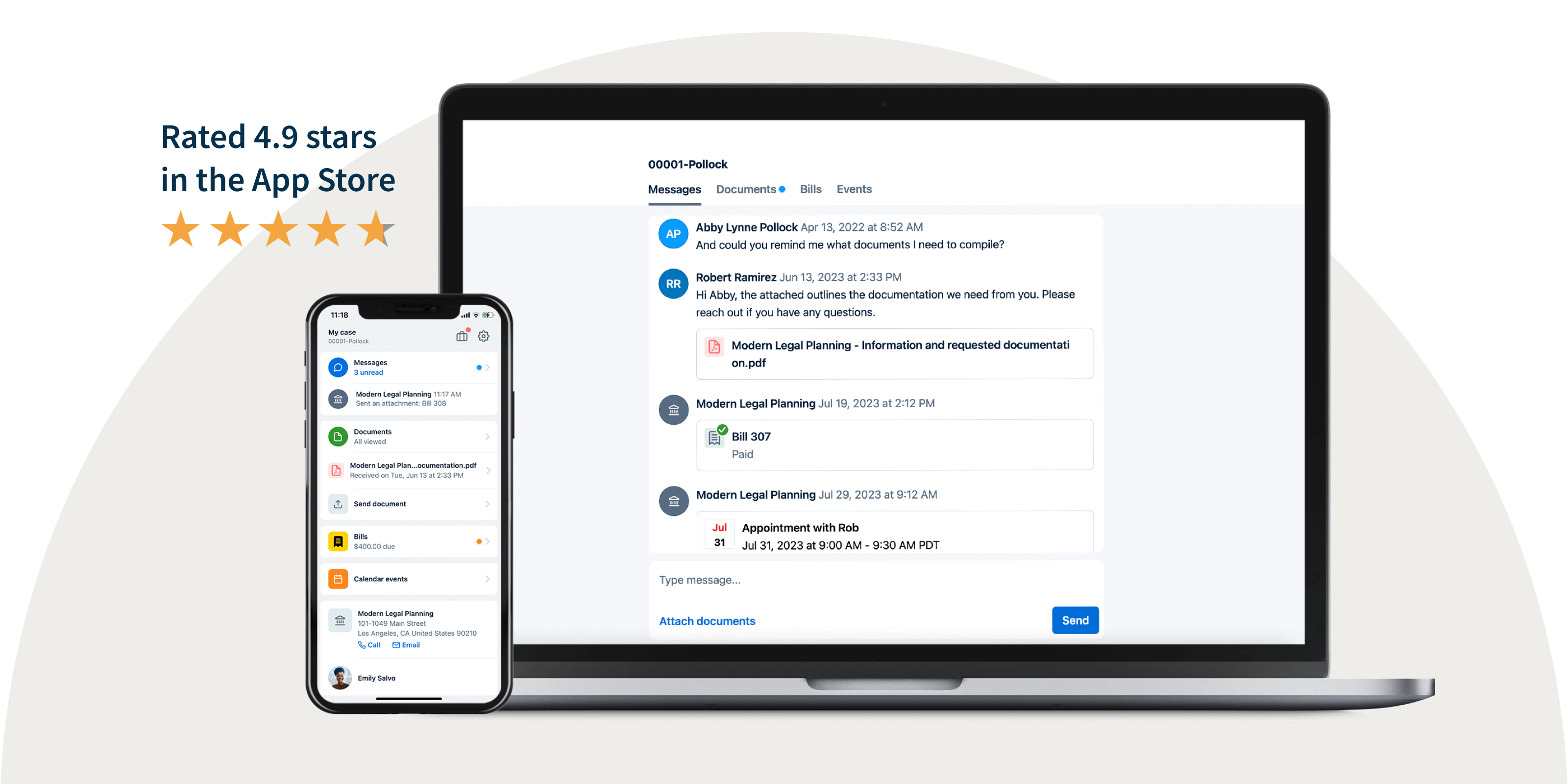
Client portals like Clio for Clients allow lawyers to securely share messages and documents with clients. Making this information accessible to clients helps them stay in the loop on their cases—with less manual updating from lawyers.
While client portals are useful tools for lawyers during remote work, they also offer a way for lawyers to offer more client-centered services.
Client intake and CRM

Client intake and CRM solutions like Clio Grow help firms coordinate communications and intake before a contact becomes a client. This enables firms to create a more efficient and seamless intake experience for new clients by allowing them to handle initial tasks—such as filling out forms, paying upfront fees, or booking consultations—online.
Security and ethics considerations for lawyer tools
Any technology your firm uses should meet the same security, confidentiality, and ethical standards that apply to the rest of your legal work. That means understanding where your data is stored, how it’s protected, who can access it, and how it’s used—especially when AI is involved.
Lawyers should evaluate tools through the lens of their existing professional obligations, including duties of competence, confidentiality, supervision, and client communication. For AI-powered tools, this also includes understanding how models are trained, whether client data is used to improve systems, and what safeguards exist to prevent unauthorized disclosure or inaccurate outputs.
Before adopting new software, firms should conduct appropriate due diligence around data security, privacy controls, auditability, and vendor transparency.
Resources like our Law Firm Data Security Guide can help structure that review, but ultimately, it’s the firm’s responsibility to assess risk and ensure technology use aligns with applicable ethical rules and regulatory requirements.
Legal technology tools promote law firm growth
Using the right tools for lawyers can make all the difference for law firm growth. Adopting some (or all) of these tools can help your law firm be more efficient, profitable, and client-centered.
While there are plenty of tools for lawyers to choose from in 2026, that doesn’t mean that you can, or should, adopt them all at once. Instead, vet each tool carefully and start with the essentials. Then, you can strategically add more legal technology tools to create a tech stack that helps your firm run more efficiently. And, you can always reach out to a consultant if you need help setting up a tech stack for your firm.
Whatever tools you choose, ensure that they’re secure, and then watch your firm become its most efficient, profitable, and best self this year and beyond.
Recommended Reads



Be the first to see where legal is headed
Sign up now to get the Legal Trends Report in your inbox the moment it drops, and you’ll be automatically entered to win a one-hour strategy session.
Join the waitlist